
The textile and garment industry is one of the export sectors that has benefited greatly from the implementation of the Vietnam-EU Free Trade Agreement (EVFTA). However, these benefits only materialize when Vietnamese exporters meet the regulations in the EVFTA, with the rules of origin being the most important.
The challenge of overcoming "rules of origin" for goods.
According to statistics from the General Department of Customs, Vietnam's total textile and garment exports to global markets in the first six months of 2024 reached over US$16.52 billion, an increase of 5.04% compared to the same period in 2023. Of this, exports to the EU accounted for 11.54% of the total export value, reaching nearly US$1.91 billion, an increase of 1.63%.
This achievement is due to businesses seizing market opportunities as EU consumer demand increased. In addition, businesses have made relatively good use of the EVFTA agreement, including rules of origin, helping textile and garment products enhance their competitiveness in the EU market.
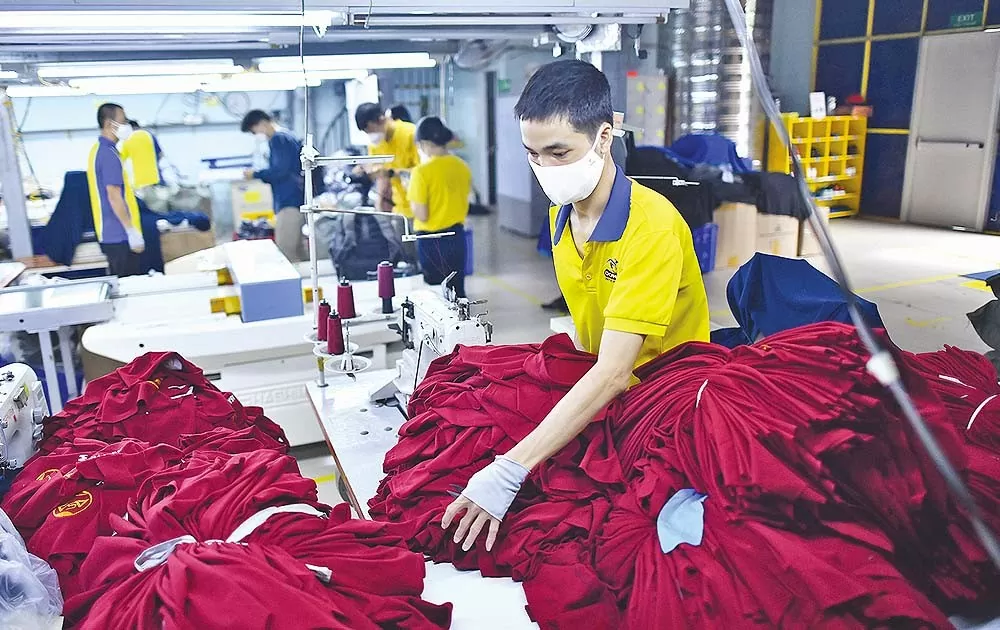 |
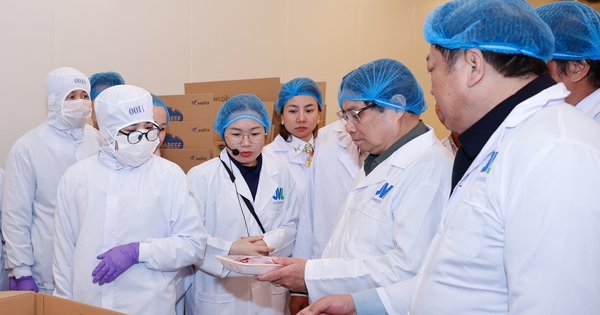
| Textile products that require traceability down to the yarn level could pose difficulties for businesses. Photo: Le Phu |
In bilateral or multilateral free trade agreements (FTAs), rules of origin are used to control the export and import of goods from different regions, with a dual objective: to protect the interests of member countries while preventing goods from countries outside the FTA from enjoying preferential tariff benefits.
To fully leverage the advantages of FTAs, a thorough understanding and effective application of rules of origin, including cumulative rules of origin, is a crucial requirement for both customs authorities and businesses. This contributes to promoting international trade, enhancing competitiveness, and successfully integrating the Vietnamese economy into the regional and global economies.
For textile and garment exports to the EVFTA market, rules of origin are extremely important. According to the EVFTA commitments, the EU will eliminate tariffs on 77.3% of textile and garment exports within 5 years, and the remaining 22.7% will also have tariffs eliminated after 7 years. The EU is currently Vietnam's third largest importer of textiles and garments, and there is still significant potential in this market, as our market share in the EU is currently less than 2% (US$4 billion out of US$250 billion).
To qualify for the stipulated import tariff rates, Vietnamese textile products must be woven in Vietnam or the EU and cut and sewn in Vietnam. Currently, the two-stage rules of origin requiring "from fabric onward" are considered much stricter than those in the ATIGA or RCEP agreements that Vietnam is a party to. It can be said that the EVFTA has addressed a weakness in Vietnam's garment industry, as the production of raw materials and components for the textile and garment sector is not a strength of Vietnamese businesses.
Supporting businesses in removing "bottlenecks"
To address the weakness in textile raw material supply, Vietnam negotiated with EU countries to include a clause in the EVFTA allowing Vietnamese businesses to cumulate the origin content of textile raw materials imported from South Korea (a country that has signed an FTA with the EU) into textile products manufactured in Vietnam in order to benefit from preferential tariffs when exporting to EU countries.
Mr. Tran Thanh Hai, Deputy Director of the Import-Export Department ( Ministry of Industry and Trade ), stated that with such a flexible approach to considering the origin of goods, the cumulative rules of origin will help promote intra-bloc trade, strengthen regional supply chains, and thereby contribute to enhancing the competitiveness of goods from member countries participating in FTAs.
 |
Textile and garment exports benefit from the cumulative rules of origin. Photo: Vitas |
According to Truong Van Cam, Vice President of the Vietnam Textile and Garment Association (Vitas), the Vietnamese textile and garment industry is currently focusing about 85% of its production capacity on exports. "The goal for the textile and garment industry in the near future is to diversify markets, diversify products, increase competitiveness, and make good use of opportunities from free trade agreements (FTAs) to boost exports," Mr. Cam said.
Meanwhile, market standards are becoming increasingly stringent; for example, some countries, such as the US and the EU, have introduced very high regulations on product origin and environmental standards. Therefore, to maintain market share, the Vice President of Vitas proposed that foreign trade missions provide more support in terms of information from markets and host country policies, so that domestic businesses can orient and adjust their production and business activities accordingly.
"Currently, many countries are implementing trade protection measures, so businesses need information sharing and warnings to help them find solutions to respond," said Mr. Truong Van Cam.


According to economic experts, for Vietnam to successfully take advantage of the opportunities arising from the signed FTAs and proactively participate in the FTA "playing field," both regulatory agencies and businesses must understand the "rules of the game."
First and foremost, in addition to understanding the opportunities and potential negative impacts in order to prepare accordingly, businesses need to carefully study the commitments of FTAs. This is especially important for commitments related to production and business activities, particularly those concerning rules of origin.
The draft Strategy for the Development of the Textile, Garment, and Footwear Industries for the period 2021-2030, with a vision to 2035, has oriented towards promoting investment in the production of raw materials and auxiliary materials for the textile, garment, and footwear industries, meeting the requirements of rules of origin for goods under new-generation FTAs, as well as accelerating the localization process; and promoting the shift from processing and manufacturing to forms requiring higher capabilities in supply chain and value chain management.
The combined efforts of businesses and the involvement of state management agencies will create a strong impetus to resolve the issue of rules of origin in FTAs.
Source: https://congthuong.vn/nganh-det-may-giai-bai-toan-xuat-xu-hang-hoa-trong-hiep-dinh-evfta-336634.html