
According to the Vietnam Textile and Garment Group, based on statistics from the General Department of Customs, textile and garment export turnover in July reached US$4.29 billion, an increase of 12.4% compared to the same period last year. This is the first month in 2024 with textile and garment export turnover exceeding US$4 billion and also the highest turnover since August 2022.
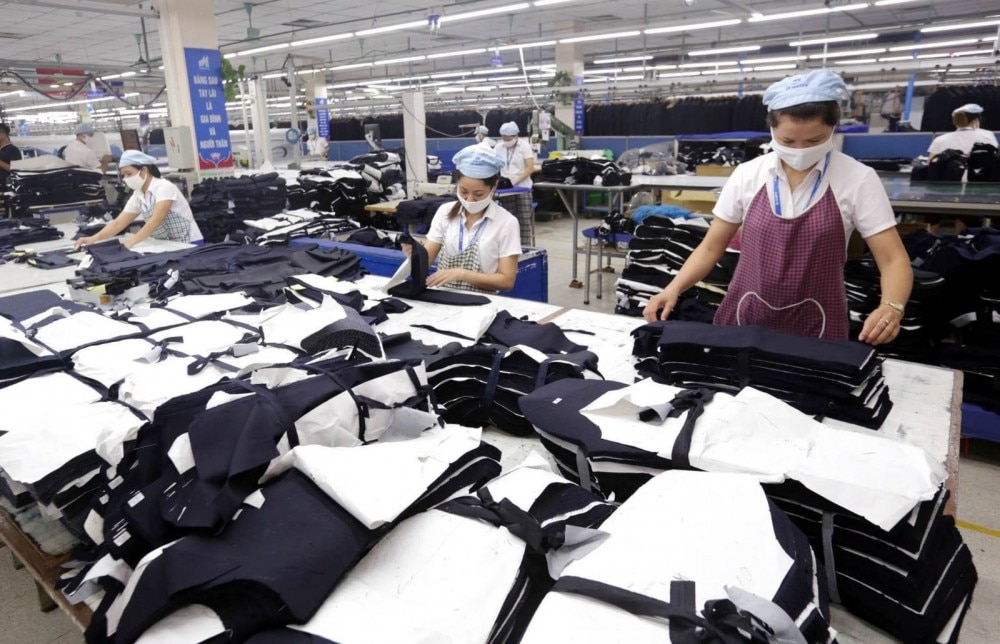 |
| According to the Vietnam Textile and Garment Group, textile and garment exports in July reached US$4.29 billion, an increase of 12.4% compared to the same period last year. (Source: Tin Tuc Newspaper) |
In the first seven months of 2024, textile and garment exports reached US$23.9 billion, an increase of 5.9% compared to the same period last year, equivalent to an increase of US$1.33 billion; of which, textile fibers reached US$2.53 billion, an increase of 3.5% compared to the same period; textiles and garments reached US$20.2 billion, an increase of 6.3% compared to the same period; fabric pieces and other technical fabrics reached US$458 million, an increase of 18% compared to the same period; and raw materials and accessories for textiles, garments, leather, and footwear reached US$878 million, an increase of 11.4% compared to the same period.
Currently, Vietnam exports textiles and garments to 113 countries and territories, but the main export markets for Vietnam's textile and garment industry remain the US, EU, Japan, South Korea, and China.
However, according to experts, despite the positive results of Vietnam's textile and garment exports, the volatile global economic situation will impact export industries, including the textile and garment industry. Therefore, domestic businesses need timely information support from Vietnamese trade offices in foreign markets.
Currently, domestic businesses lack information about these technical measures, such as: the US Act against Forced Labor of Uyghurs, Germany's Supply Chain Audit Act, the EU's Supply Chain Audit Directive, etc.
The Vietnam Textile and Garment Association requests that Vietnamese trade offices abroad, especially in areas that are major export markets for the industry, gather information and provide early warnings so that domestic businesses can take appropriate countermeasures.
According to information from the Vietnam Textile and Garment Association, the textile and garment industry of Bangladesh – the world's second-largest exporter of textiles and garments (after China) – is facing difficulties. Many Bangladeshi textile and garment export businesses are seeing a 25-40% reduction in orders. Furthermore, they are under pressure from temporarily reduced production capacity and the pressure to increase wages for textile workers, which will diminish their cost advantage.
Therefore, Vietnamese textile and garment businesses need to leverage their competitive advantages. From now until the end of the year is the peak shopping season, and businesses are striving to introduce many new products in terms of materials and designs, meeting the stringent standards of partners, in order to achieve the industry's export target of 44 billion USD this year.



To achieve the above goals, in the coming period, textile and garment businesses need to diversify their markets, customer segments, and products, and increase their competitiveness. In particular, they need to find ways to better utilize the opportunities offered by free trade agreements.
Source: https://baoquocte.vn/kim-ngach-det-may-vuot-moc-4-ty-usd-cao-nhat-ke-tu-thang-82022-282304.html