
Ukrainian and Russian leaders blamed each other after a fire broke out at the Zaporizhzhia nuclear power plant – Europe's largest nuclear power plant, which has been under Russian military control since March 2022.
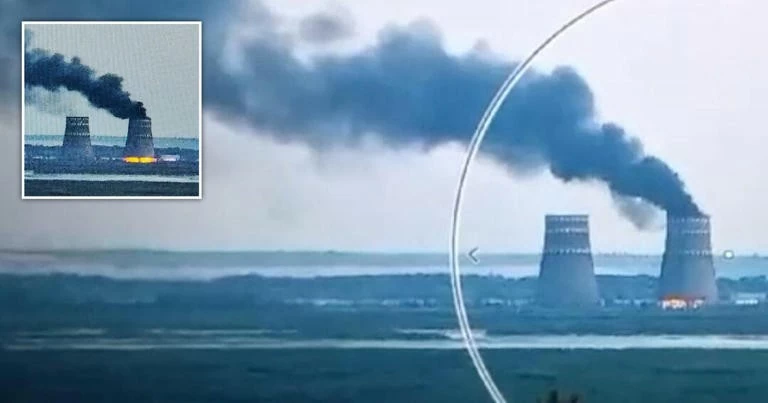 |
| Black smoke rises from the cooling tower at the Zaporizhzhia nuclear power plant. (Source: Getty Images) |
The International Atomic Energy Agency (IAEA), the United Nations' nuclear watchdog, said in a statement that experts saw “thick black smoke rising from the northwest area of the plant, following multiple explosions throughout the evening.”
Operators told the IAEA that the fire broke out after a drone struck one of the plant's two cooling towers.
Despite the dramatic scene, both the IAEA and the Ukrainian government said there was no reason for an immediate alarm. “Currently, radiation levels remain within normal limits,” Ukrainian President Volodymyr Zelensky said in a social media post.
Operators at the Zaporizhzhia plant told the IAEA that there was no radioactive material near the site of the recent attack, and a UN team independently verified that radiation levels in the area remained unchanged.
The Zaporizhzhia plant, the largest nuclear power plant in Europe, has been under the control of the Russian military since 2022. The IAEA confirmed that six of the plant's reactors have been put into "cold shutdown" mode.
President Zelensky blamed Russia, writing in X that, from the very first days of Russian control, the Zaporizhzhia nuclear power plant has been a tool to pressure Ukraine, all of Europe, and the world . “We are waiting for the world’s reaction, waiting for the IAEA’s reaction. Russia must take responsibility for this. Only with Ukraine controlling the Zaporizhzhia nuclear power plant can a complete and safe return to normalcy be guaranteed.”
Ukrainian officials said this was a provocation by Russian forces and called on Western allies and the UN nuclear watchdog to take action.
According to Yevhen Yevtushenko, head of the military administration in Nikopol, located across the river from the factory, the Russian military burned car tires in the cooling towers to create the illusion of a fire.
"This was probably a provocation or an attempt to sow panic in the settlements on the right bank of the former reservoir," Yevtushenko said.
Meanwhile, Rosatom, Russia's state-owned energy corporation tasked with operating the plant, blamed the Ukrainian military.
In a statement published by the Russian state news agency TASS , Rosatom accused Ukraine of nuclear intimidation. The company also blamed Ukraine for a similar attack that occurred at the plant in June.

Yevgeny Balitsky, the Russian-appointed governor of Zaporizhzhia province, blamed the fire on Ukrainian shelling of the nearby city of Enerhodar, CNN reported.
The IAEA has so far refused to assign responsibility for the most recent fire. “These reckless attacks endanger nuclear safety at the plant and increase the risk of a nuclear accident,” Director General Rafael Mariano Grossi said on August 11. “They must stop now.”
The fire in Zaporizhzhia occurred just days after Ukrainian troops launched a counteroffensive into Russian territory. The fighting brought Ukrainian forces closer to the Kursk nuclear power plant, prompting the IAEA to issue another warning on August 9th.
Source: https://baoquocte.vn/bat-chap-canh-tuong-day-kich-tinh-vu-chay-lon-o-nha-may-dien-hat-nhan-zaporizhzhia-ukraine-va-nga-van-khong-ngung-vach-la-tim-sau-282285.html