
| Coffee export prices have surged, returning to historical highs. With scarce supply, coffee exports are expected to gradually decline month by month. |
According to the latest report from the Ministry of Agriculture and Rural Development , in July 2024, Vietnam exported 62,000 tons of coffee, earning $340 million. For the first seven months of 2024, the country exported 964,000 tons of coffee, worth $3.54 billion, a decrease of 13.8% in volume but a sharp increase of 30.9% in value compared to the same period last year.
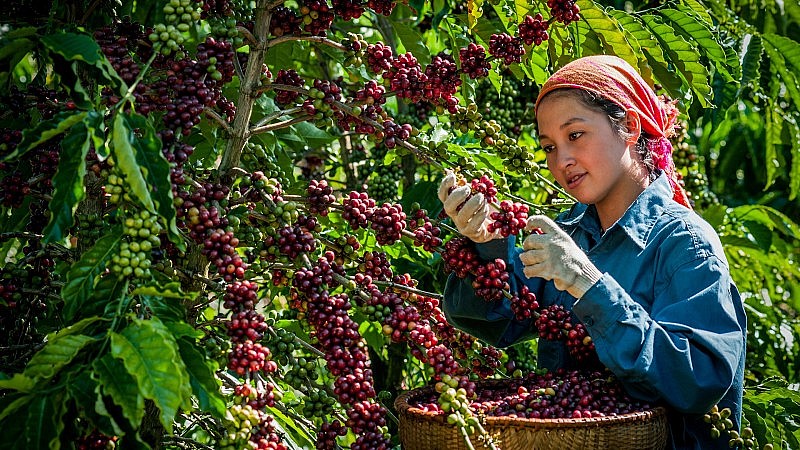 |
| In July 2024, Vietnam exported 62,000 tons of coffee. |
According to the Vietnam Coffee and Cocoa Association (VICOFA), Vietnam currently has only about 148,000 tons of coffee left for export in the remaining two months of the 2023/2024 crop year (from August to the end of September), until the new crop year begins harvesting in October this year. The supply of coffee for export is depending on the new crop year harvest, and it is predicted that coffee exports for the whole year could set a record of 5.5 - 6 billion USD...
Vietnamese coffee is currently in high demand due to its limited supply, and major players like Germany, Italy, and Japan are constantly seeking this agricultural product. Because of this scarcity, Vietnamese coffee is very expensive. In early July, Hungary sought to buy Vietnamese coffee at a very high average price of over $6,800 per ton, while Israel purchased it at nearly $6,100 per ton.
According to the VICOFA Chairman, import prices in markets such as Spain, Russia, the US, Indonesia, the Philippines, the Netherlands, and China have increased by approximately 30% compared to the previous year. Therefore, these markets are all among the export markets for Vietnamese coffee with a turnover of $100 million.
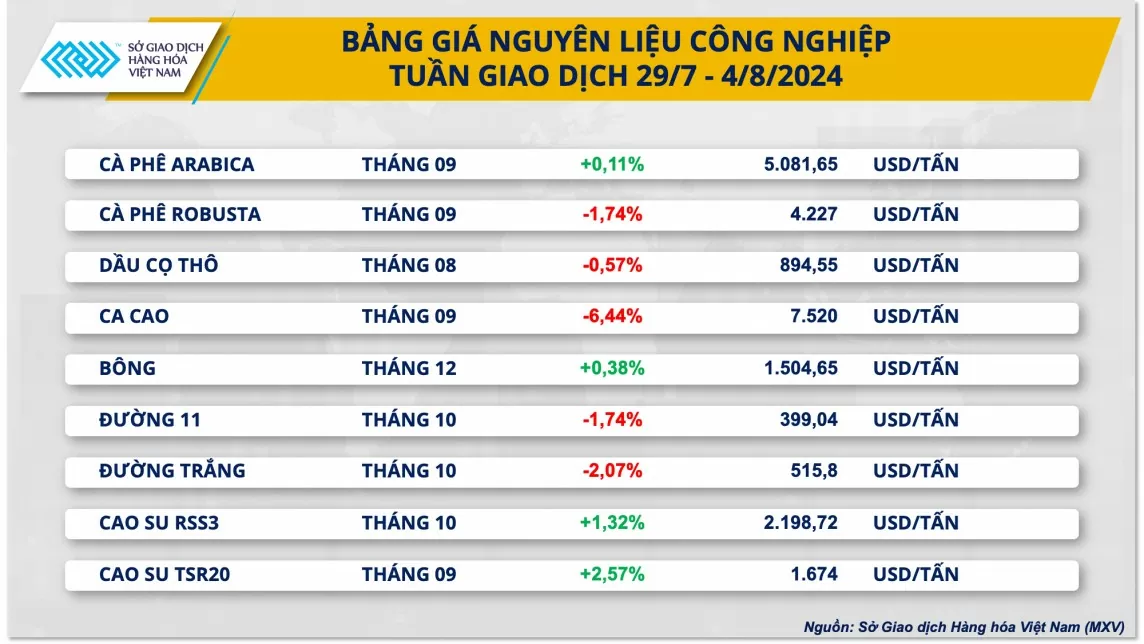
On the derivatives market, according to the latest update from the Vietnam Commodity Exchange (MXV) on the morning of August 5th, Robusta coffee prices fell for the third consecutive week, losing 1.74% compared to the reference price, reaching US$4,227/ton. Meanwhile, Arabica coffee prices fluctuated and increased slightly by 0.11% compared to the previous week, reaching US$5,081.65/ton. The sharp increase in the USD/BRL exchange rate continued to be the main pressure on coffee prices.
MXV analysis indicates that the weakening of the Brazilian Real has led to a 1.27% increase in the USD/BRL exchange rate, reaching its highest level in two and a half years. This higher exchange rate encourages Brazilian farmers to sell more coffee, as they will receive more foreign currency. This leads to expectations of increased supply in the market, thereby putting pressure on prices.
However, concerns about shrinking coffee supplies in major producing countries are somewhat limiting the price decline. In Brazil, the world's largest coffee exporter, coffee farmers are worried about the supply outlook for the 2024 harvest. The Coffee Trading Academy (CTA) said that most coffee growers assess this year's crop as worse than in a previous survey. Robusta coffee production is expected to decrease by about 11% compared to last year, due to coffee plants being more affected by hot, dry weather, impacting the bean formation process.
 |
Furthermore, Cooxupe, Brazil's largest coffee production and export cooperative, reported that major coffee-producing regions are experiencing temperatures at least 2 degrees Celsius higher than normal, with nearly 50% of the area suffering from water shortages. This prolonged period could lead to leaf drop and other pest and disease problems, negatively impacting the 2025 coffee harvest.
At the close of last week's trading, Robusta coffee prices fell for the third consecutive week, losing 1.74% compared to the benchmark. Meanwhile, Arabica coffee prices fluctuated and increased slightly by 0.11% compared to the previous week. The sharp rise in the USD/BRL exchange rate continued to be the main pressure on coffee prices.



The weakening Brazilian Real has led to a 1.27% increase in the USD/BRL exchange rate, reaching its highest level in two and a half years. This higher exchange rate has encouraged Brazilian farmers to sell more coffee, as they are now receiving more foreign currency. This has led to expectations of increased supply in the market, thereby putting pressure on prices.
However, concerns about shrinking coffee supplies in major producing countries are somewhat limiting the price decline. In Brazil, the world's largest coffee exporter, coffee farmers are worried about the supply outlook for the 2024 harvest. The Coffee Trading Academy (CTA) said most coffee growers assess this year's crop as worse than in a previous survey. Robusta coffee production is expected to decrease by about 11% compared to last year, due to coffee plants being more affected by hot, dry weather, impacting the bean formation process.
Furthermore, Cooxupe, Brazil's largest coffee production and export cooperative, reported that major coffee-producing regions are experiencing temperatures at least 2 degrees Celsius higher than normal, with nearly 50% of the area suffering from water shortages. This prolonged period could lead to leaf drop and other pest and disease problems, negatively impacting the 2025 coffee harvest.
Source: https://congthuong.vn/xuat-khau-ca-phe-tang-vot-309-336884.html