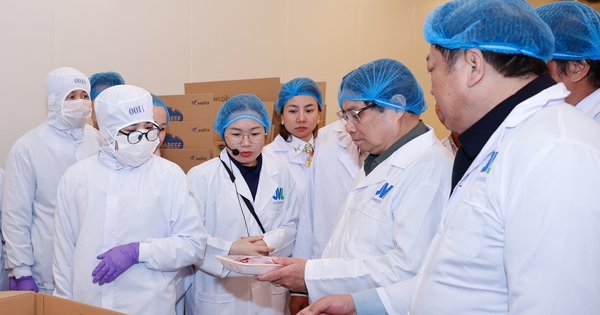

DNVN - According to a survey by S&P Global, Vietnam's manufacturing output growth rate in July reached its highest level since March 2011, with significant improvements across all sectors including consumer goods, intermediate goods, and basic investment goods.
According to the Vietnam Purchasing Managers' Index (PMI) report for July, published by S&P Global, the strong growth in Vietnam's manufacturing sector in June continued into July.
Specifically, the PMI index reached 54.7 in July, indicating that business conditions in Vietnam's manufacturing sector continued to improve significantly. In fact, the last time growth was recorded at a faster pace was in November 2018.
Significant improvements were observed across all sectors of consumer goods, intermediate goods, and basic investment goods.
New orders rose for the fourth consecutive month in July, and the pace of growth was only slightly slower than the near-record levels of June. In areas where new orders increased, survey respondents attributed the rise to stronger market demand and a larger customer base.
The number of new export orders also increased, albeit at a weaker rate compared to the overall number of new orders. Some companies reported that export demand had been affected by high shipping costs.
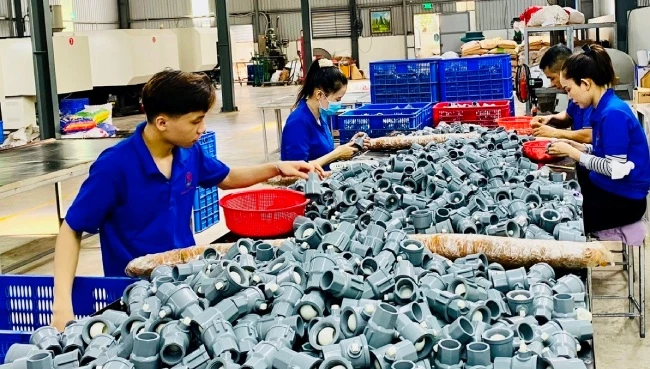
The PMI index reached 54.7 in July, indicating that business conditions in Vietnam's manufacturing sector continued to improve significantly.
Amid a surge in new orders, manufacturers significantly increased production in July. Furthermore, the rate of production increase was faster than in June and the second fastest recorded, surpassed only by the rate of the first month for which data was collected, March 2011.
Despite a sharp increase in production, according to S&P Global, companies still need to utilize existing inventories to fulfill new orders. In fact, finished goods inventories have fallen to the second-lowest level ever recorded, surpassed only by the level of February 2014.
Companies attempted to increase capacity by boosting both purchasing and employment at the start of the third quarter. Purchasing of input goods increased significantly, at the fastest rate since May 2022. On the other hand, the number of employees increased only slightly, at a slower rate than in June. Meanwhile, the backlog of work increased for the second consecutive month.
Manufacturers found it easier to procure raw materials as supplier delivery times shortened for the second consecutive month, although improvements in vendor performance were minimal, with some reports indicating continued delays in sea freight.
Inventories of purchased goods have decreased for the 11th consecutive month, at the fastest rate since April.
Input costs continued to rise sharply in July, with the rate of increase only slightly slower than the two-year high recorded in June. Suppliers are believed to have increased selling prices, while rising transportation costs were also a factor.
Rising raw material and transportation costs forced manufacturers to increase selling prices for the third consecutive month in July. The rate of increase was sharp, although slower than in the previous survey period.



Andrew Harker, Director of Economics at S&P Global Market Intelligence, commented: "Vietnam's manufacturing sector experienced strong growth in June and July. This has added to optimism that Vietnam is beginning a period of strong growth that will propel the economy forward."
The main challenge for companies right now is keeping up with demand. While production is ramping up, companies are still forced to use existing inventory to meet new orders, leading to one of the sharpest declines in inventory ever recorded. Manufacturers will need to increase their workforce faster and continue to secure additional raw material if the current trend of new orders is to continue in the coming months.
Minh Thu
Source: https://doanhnghiepvn.vn/kinh-te/sp-global-nganh-san-xuat-viet-nam-thang-7-tang-cao-nhat-13-nam/20240802074237406