
The amended Capital City Law strongly decentralizes power to Hanoi City.
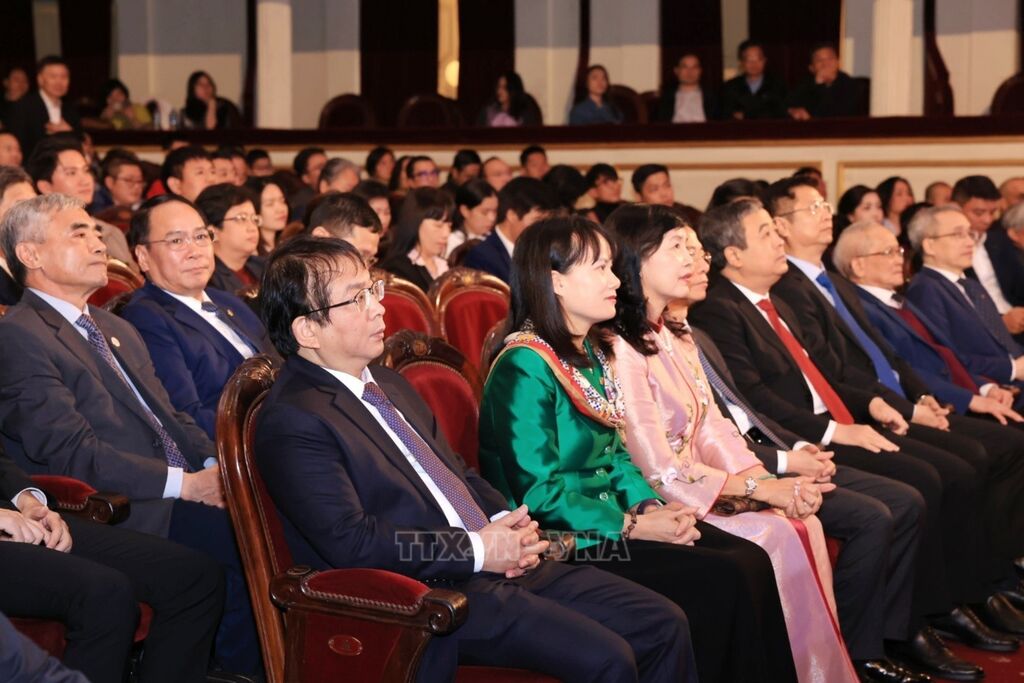
At the conference, Vice Chairman of the Hanoi People's Council Pham Qui Tien briefed attendees on the new points and key contents of the Law on the Capital City and other Laws and Resolutions passed by the National Assembly at the 7th Session of the 15th National Assembly.
Accordingly, at the 7th Session (May 2024), the National Assembly passed 11 laws and 21 resolutions; gave initial opinions on 11 draft laws, and considered many other important reports. The contents considered and decided covered many fields with many important issues, contributing to building a complete and comprehensive legal system, fundamentally resolving bottlenecks, inadequacies, and obstacles in practice; creating momentum to promote economic recovery and development, meeting the requirements and tasks of the country in the new development period.
Of the 11 laws, 1 law will take effect from August 1, 2024; 7 laws and 2 resolutions will take effect from January 1, 2025; and 3 laws will take effect from July 1, 2025.
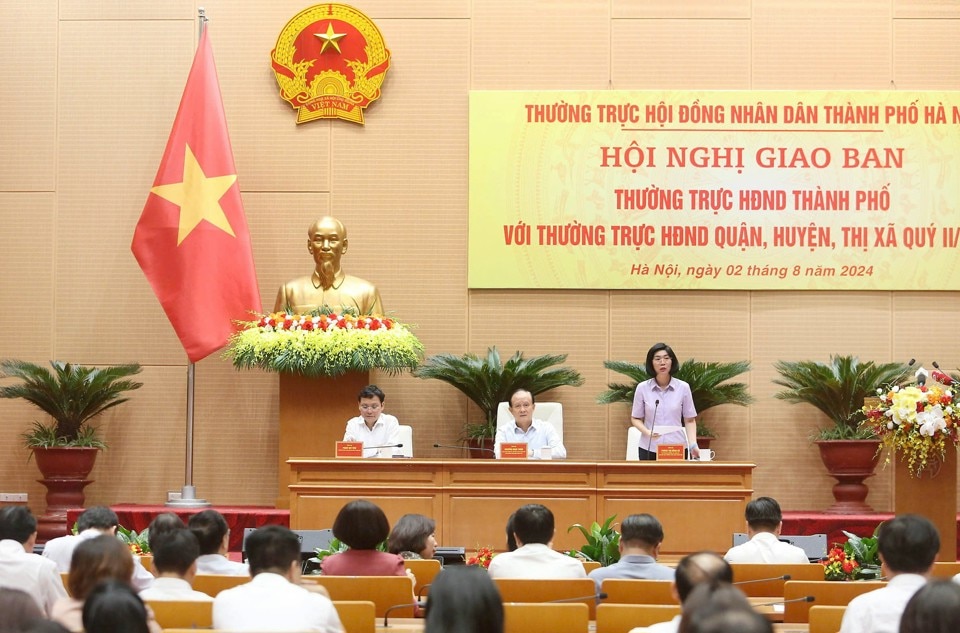
At the 7th Session of the 15th National Assembly on June 28, 2024, the Law on the Capital City was officially passed by the National Assembly, comprising 7 Chapters and 54 Articles (an increase of 3 Chapters and 27 Articles compared to the 2012 Law on the Capital City). Key and prominent contents include: the organization of the government in Hanoi will be streamlined, professional, modern, and operate effectively and efficiently.
The regulations are designed to strongly decentralize power from the central government to the city (regarding investment, urban planning, culture, health, education, science and technology, etc.), innovate the governance model, and enhance the autonomy and accountability of the capital's government in managing and operating all aspects of the city's socio-economic life.
To enhance the effectiveness, efficiency, and quality of the People's Councils at all levels, ensuring their substance and meeting the requirements and tasks of the new era, the Law stipulates that the Hanoi City People's Council will elect 125 delegates (an increase of 30 delegates compared to the current number), of which at least 25% will be full-time members. The Standing Committee of the Hanoi City People's Council will have no more than 11 full-time members, including the chairman and no more than 3 vice-chairmen (an increase of 1 vice-chairman and 4 members of the Standing Committee); the Committees of the Hanoi City People's Council will be established in maximum of 6 committees (an increase of a maximum of 2 committees compared to this term).
For district and town People's Councils, there are 2 Vice-Chairmen (an increase of 1 Vice-Chairman); the total number of full-time People's Council representatives shall not exceed 9 people as decided by the district, town, or city People's Council (an increase of 3 people compared to the maximum number stipulated in the Law on Organization of Local Government); no more than 3 committees may be established to advise on specific areas (an increase of 1 committee compared to the current Law). Committees may have full-time members as decided by the district, town, or city People's Council (currently there is no regulation on this).
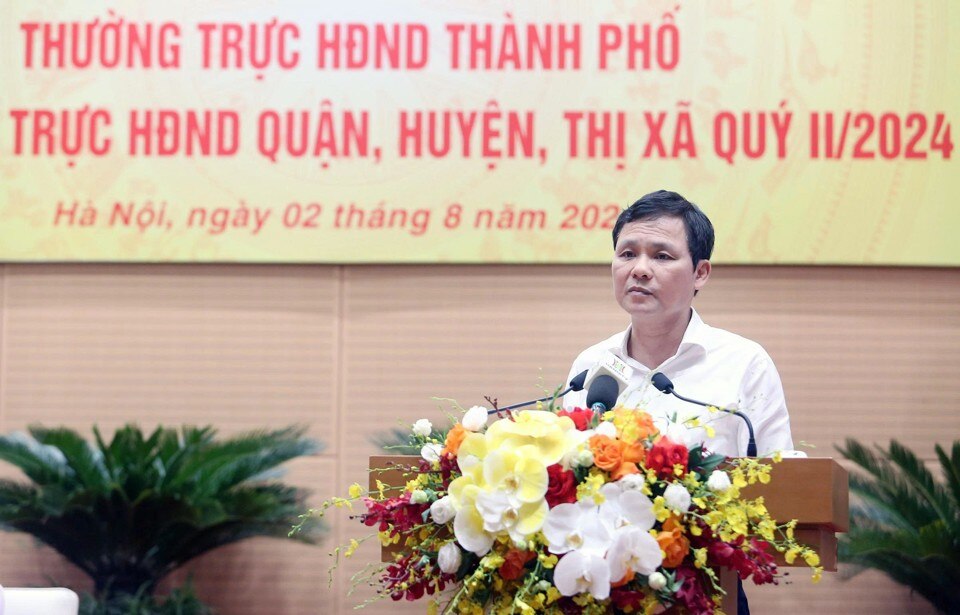
In particular, the amended Capital City Law strongly empowers Hanoi, enabling the city government to be more proactive in organizing its structure and staffing, so that it can effectively fulfill its unique role and responsibilities as the capital of the Socialist Republic of Vietnam.
This includes provisions for specific matters such as: the City People's Council has the autonomy to decide on the establishment and dissolution of specialized agencies and other administrative organizations under the City People's Committee, and to determine the number of staff, civil servants, and public employees when certain conditions stipulated in this Law are met.
Allow the Standing Committee of the City People's Council, during periods when the City People's Council is not in session, to decide on certain tasks and report to the City People's Council at the nearest session, in order to ensure flexibility and timeliness in the leadership, direction, and management of the city.
The law includes a separate article on the decentralization and delegation of authority by the People's Committee, the Chairman of the People's Committee, and specialized agencies and other administrative organizations under the People's Committee. It adds several provisions to clarify the subjects, objects, and scope of decentralization and delegation compared to the provisions of the Law on Organization of Local Government; and assigns the City People's Committee the authority to regulate the adjustment of procedures, processes, and powers of relevant agencies when performing the delegated tasks and powers (Article 14).
Based on fundamental principles, the Law mandates the Hanoi City People's Council to specifically regulate the signing of contracts with individuals who meet the professional and technical requirements to fill certain positions within specialized and shared professional fields, ensuring they are consistent with the needs and practical conditions of the locality. It also stipulates policies and regulations to attract and utilize talented individuals and develop high-quality human resources.
Looking forward to the law coming into effect soon.
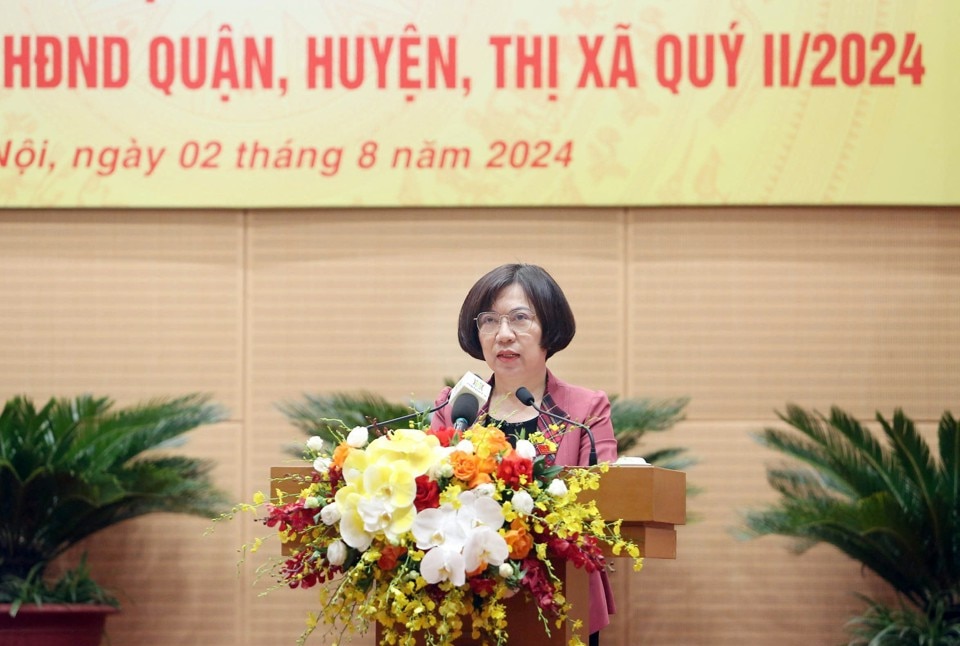
Speaking at the conference, Vice Chairwoman of the Bac Tu Liem District People's Council Nguyen Thi Thuy said that since the amended Capital City Law was passed, officials and people of Bac Tu Liem district have been eagerly awaiting the law's implementation and the creation of specific features to meet the unique urban management requirements.
The Vice Chairman of the Bac Tu Liem District People's Council expressed that, in order for the law to be effective soon, agencies and units hope that the agencies of the Hanoi City People's Council will soon issue regulations to concretize the provisions of the law (Clause 6, Article 14; Articles 15, 17, 18, 19). Especially when there are no longer ward People's Councils, the supervisory function of the ward People's Council will be carried out by the district People's Council.
Meanwhile, the Secretary of the District Party Committee and Chairwoman of the Tay Ho District People's Council, Le Thi Thu Hang, stated that the district is aware of its responsibility in implementing the 2024 Capital City Law. The law has a positive aspect: a mechanism to promote decentralization and delegation of authority; it also includes provisions regulating the use of land above ground along rivers and dikes (Red River, Duong River).


Regarding the Law on increasing the number of full-time representatives at the City, district, and county People's Councils, the Chairman of the Tay Ho District People's Council suggested that, in order for the Law to be effectively implemented, the City People's Council should advise the City Party Committee on guidelines for personnel allocation, increasing staffing levels and job positions, as well as personnel orientation for participation in Party committees in the next term.
According to the plan of the Standing Committee of the Hanoi People's Council on the implementation of the Law on the Capital City, the Standing Committee of the Hanoi People's Council plans to hold two specialized sessions of the People's Council to consider and decide on detailed regulations and mechanisms and policies for the implementation of the Law on the Capital City. One session is expected to be held in November 2024 and the other in May 2025. Regarding normative legal resolutions, it is expected that 28 items will be considered at the specialized session in November 2024 and 4 items at the specialized session in May 2025.
Regarding the 21 resolutions issued to exercise the authority assigned in the Capital City Law, the agencies tasked with drafting these documents should proactively develop implementation plans, focusing on reviewing and proposing key, essential, and immediately implementable contents to ensure early issuance and simultaneous effect with the Capital City Law.
Source: https://kinhtedothi.vn/som-ban-hanh-cac-noi-dung-trong-tam-de-dua-luat-thu-do-vao-cuoc-song.html