
The 2024 Land Law allows individuals who are not directly engaged in agricultural production to acquire rice paddy land through transfer. This presents an opportunity for financially capable investors, but this "piece of the pie" is not easy to seize.
Previously, only those directly involved in agricultural production could acquire the right to use rice land. However, under the new regulations, individuals who are not directly involved in agricultural production, if they have the conditions and ability to grow rice, can also acquire the right to use the land for investment in production.
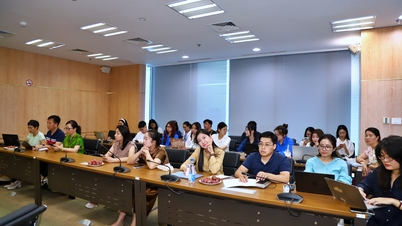
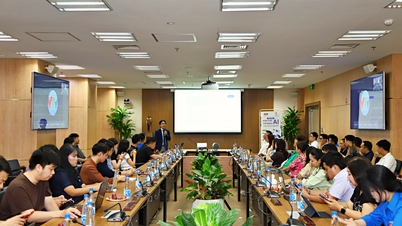
At a recent real estate seminar, Mr. Le Van Binh, Deputy Director of the Land Department ( Ministry of Natural Resources and Environment ), stated that when the 2024 Land Law comes into effect, this segment will experience vibrant development.
In fact, during the period of 2020-2022, the agricultural land market was quite heated. Many businesses and individuals bought up agricultural land with the aim of converting it into subdivided plots for sale, creating a boom at that time.
Although the market is expected to become more vibrant, in reality, the agricultural and forest land segments are only attracting the attention of large, organized investors such as businesses. This is because the new regulations only create favorable conditions for farmers and are suitable for businesses investing in the agricultural sector. However, for small-scale investors, the practice of buying agricultural land, waiting for conversion of purpose, and then subdividing and selling plots will be very difficult to implement.
Ms. Ha Kien, a real estate broker and investor in various land segments in Hanoi, Hoa Binh, and Thai Nguyen, shared that the agricultural land segment remains "quiet" because the taxes and conversion fees for agricultural and forest land are quite high, so small-scale investors are not investing in this segment. Instead, large investors with a need to invest in tens of hectares of rice fields and forest land, with the intention of later replanning them into service land, tourism , commercial, or housing projects, seem enthusiastic about participating in the game.
The leader of a real estate company in Hanoi shared that his company is planning to "hunt" for large-scale forest and agricultural land in Hoa Binh and Thai Nguyen provinces, and even "venture further afield" into the Central Highlands to find land to buy.
Regarding the conversion of agricultural land, Mr. Le Van Binh noted that it must be done according to the plan and adhere to the target of over 3 million hectares of rice-growing land to ensure national food security. Therefore, real estate investors need to be cautious and understand the regulations of the law to avoid ineffective investments, buying at high prices but having difficulty liquidating.
According to the Vietnam Real Estate Brokers Association, in the first six months of 2024, the land plot segment showed improvement with auctioned land and subdivided land plots. However, for project land and agricultural/forestry land, there are still no signs of recovery; liquidity remains sluggish, and transactions are slow. Even many investors holding agricultural land are finding it difficult to sell at this time.
According to the director of a real estate brokerage firm, the profit margin for investment in this segment is approximately 25-30% per year, and if it can be converted to residential land, it could reach 35-40% per year. The potential for price appreciation over a decade is that agricultural land could increase in value 3-5 times, or even more. However, based on the projected land price list, the cost of processing the application to convert agricultural land to residential land would increase ninefold compared to the current cost.
For example, if an investor wants to apply for a change of land use purpose and subdivide a 1,000 m2 agricultural plot in Dong Anh (Hanoi), the current land use fee is 6.6 billion VND. However, if calculated according to the new draft price list, this amount increases to 61.8 billion VND. Thus, the land use fee alone for a 100 m2 plot is over 6 billion VND. At this price, people buying existing residential land would be cheaper than the tax they would have to pay when converting agricultural land.


Furthermore, the 2024 Land Law stipulates that agricultural land left fallow or unused continuously for 12-24 months will be subject to administrative penalties and may be confiscated. Therefore, investors currently holding agricultural land will have to urgently complete the procedures to convert it to residential land or change its cultivation use if they do not want to lose everything.
"If you buy land to capitalize on investment trends and planning, but the regional plan is suspended, delayed, or adjusted, investors may face the worst-case scenario of being unable to sell. Furthermore, buying agricultural land, especially plots that cannot be converted, carries the risk of bankruptcy if financial leverage is used," one investor discussed the risks of holding agricultural land today.
Source: https://baodautu.vn/batdongsan/phan-khuc-dat-nong-nghiep-van-im-hoi-lang-tieng-d222126.html