
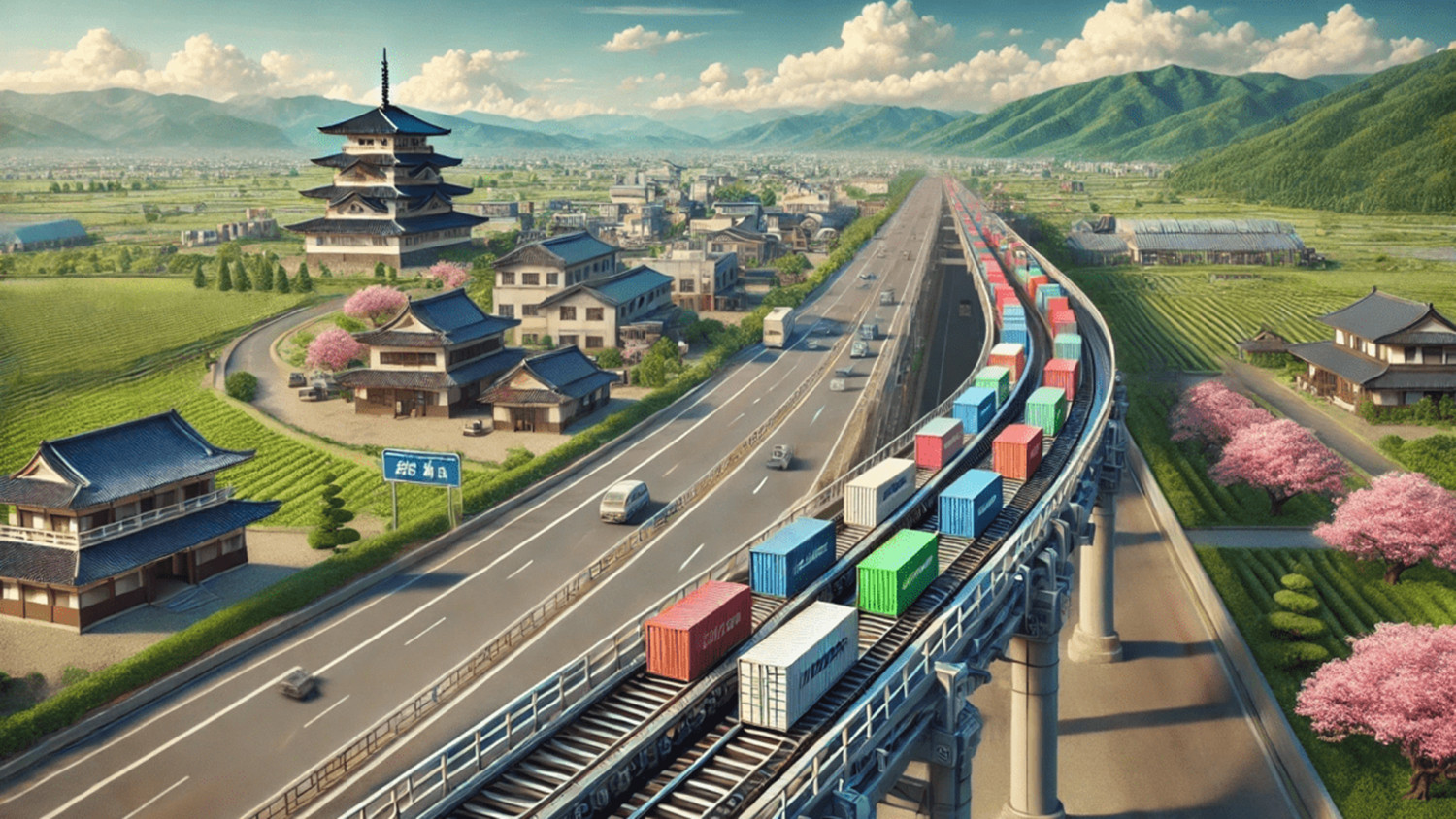
Japan's Ministry of Land, Infrastructure, Transport and Tourism (MLIT) has just announced a 500km conveyor belt route between Tokyo and Osaka. The "Autoflow-Road" route will function like a conveyor belt for goods at airports or mines.
This giant conveyor belt system is being built along highways, roads, and tunnels. Goods will be transported automatically by driverless electric vehicles, aiming to address labor shortages and reduce emissions in Japan.
According to estimates by the Yomiuri newspaper, this route could be operational within the next decade, with an estimated cost of 80 billion yen (512 million euros) for each 10km section.
Shuya Muramatsu, a senior official, said the automated logistics conveyor belt is designed to make the most of road space such as shoulders, median strips, and underground tunnels.
According to MLIT, the Autoflow-Road initiative was launched at a time when Japan's population is rapidly aging. The country is facing a shortage of delivery drivers, with new regulations limiting weekly overtime to just 18 hours.
Slow transportation significantly impacts the quality of goods, especially fresh produce like strawberries and cabbage. Over 90% of goods in Japan are transported by road.
A recent study by the Nomura Research Institute indicates that by 2030, Japan will face a shortage of 35% of truck drivers compared to the volume of goods that need to be transported. Rural areas will be most severely affected.
The International Transport Forum (ITF) estimates that commercial freight transport accounts for more than 7% of total global CO2 emissions and approximately 30% of total transport-related emissions.
According to data from the International Energy Agency (IEA), the US, China, and the EU are the leading emitters in the road freight transport sector, while Japan accounts for only about 3%.



Long transit times and distances make it difficult for electric vehicles (EVs) to be used in the logistics industry. To reduce CO2 emissions, transport companies have been using high-speed trains in combination with small trucks.
(According to SCMP and Japan Times )
Source: https://vietnamnet.vn/nhat-ban-tinh-lam-sieu-bang-chuyen-dai-500km-2309547.html