
Japan only wants workers, not immigrants.
Ngu Thazin wanted to leave her war-torn country for a better future. She headed to Japan.
In Myanmar, she studied Japanese and graduated with a degree in chemistry from one of the country's most prestigious universities. However, she happily took a job changing diapers and bathing the elderly at a nursing home in a medium-sized city in Japan.
“Honestly, I want to live in Japan because it’s safe,” said Thazin, who hopes to eventually pass the exam to work as a licensed domestic helper. “And I want to send money to my family.”
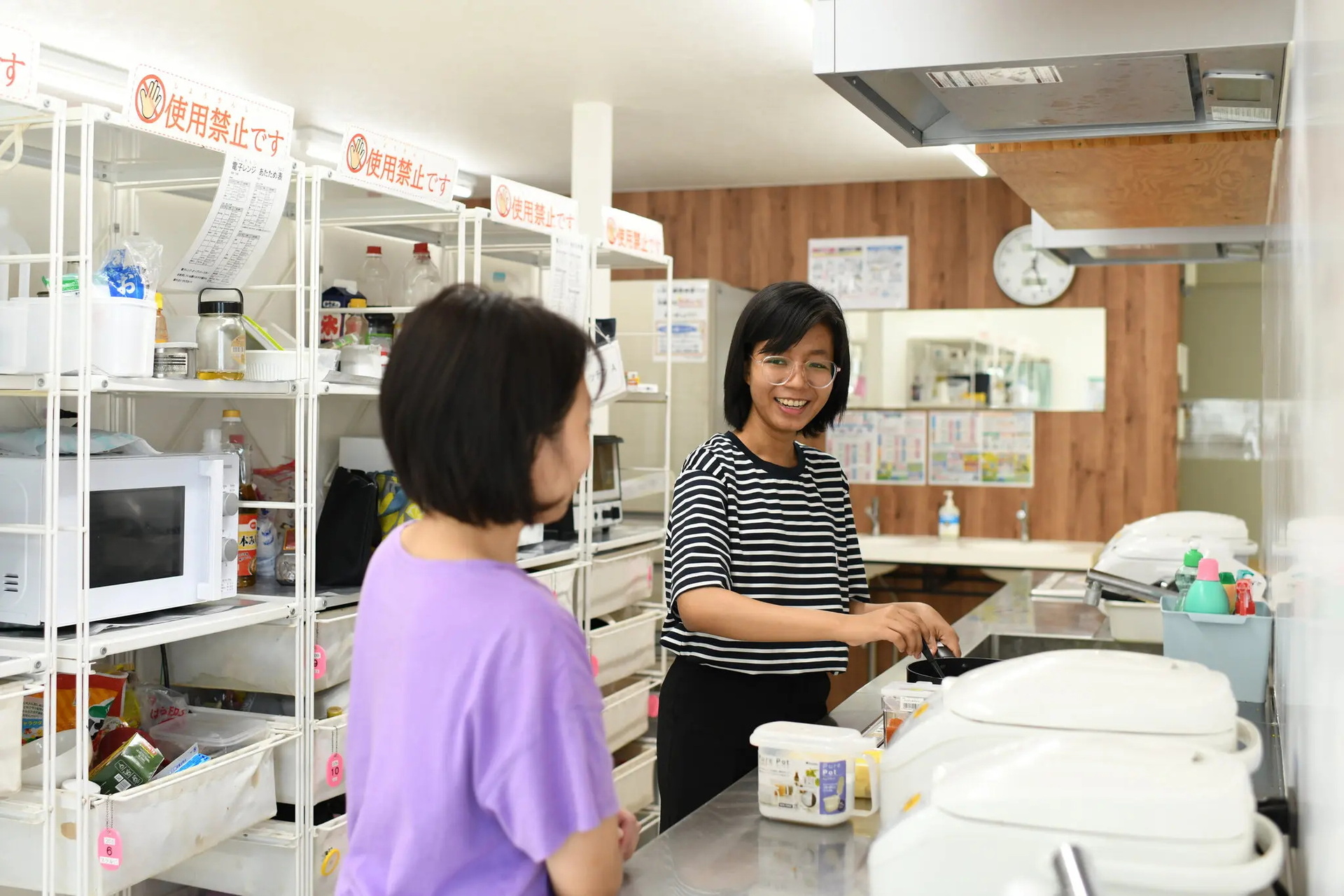
Ngu Thazin at the shared house where she lives with other foreign workers in Maebashi. Photo: New York Times.
Japan is in desperate need of people like Thazin to fill the vacant jobs left by its aging and declining population. The number of foreign workers has quadrupled since 2007, to more than two million, in a country of 125 million people.
But even as foreign workers become much more visible in Japan, working as convenience store cashiers, hotel staff, and restaurant servers, they are still treated ambiguously. Politicians remain reluctant to create pathways for foreign workers, especially those in low-skilled jobs, to stay indefinitely.
This could ultimately cost Japan dearly in competition with neighbors like South Korea, or even further afield like Australia and Europe, which are also struggling to find labor.
Political resistance to immigration in Japan, as well as a public that is sometimes wary of integrating newcomers, has led to an ambiguous legal and support system that makes it difficult for foreigners to settle down.
According to Japanese government data, foreign-born workers are paid an average of about 30% less than Japanese citizens. Fearing the loss of their right to remain in Japan, these workers often have precarious relationships with their employers, and career advancement can be elusive.
Japan's policies are designed to encourage "people to work in Japan for short periods," said Yang Liu, a member of the Research Institute for Economic , Trade and Industry (RIETI) in Tokyo. "If the system continues like this, the likelihood of foreign workers stopping coming to Japan will become very high."
There have been changes, but not enough.
In 2018, the Japanese government passed a law allowing a significant increase in the number of low-skilled foreign workers permitted into the country. Earlier this year, Tokyo pledged to double that number over the next five years to 820,000. The Japanese government also revised a technical internship program that employers had been using as a source of cheap labor.
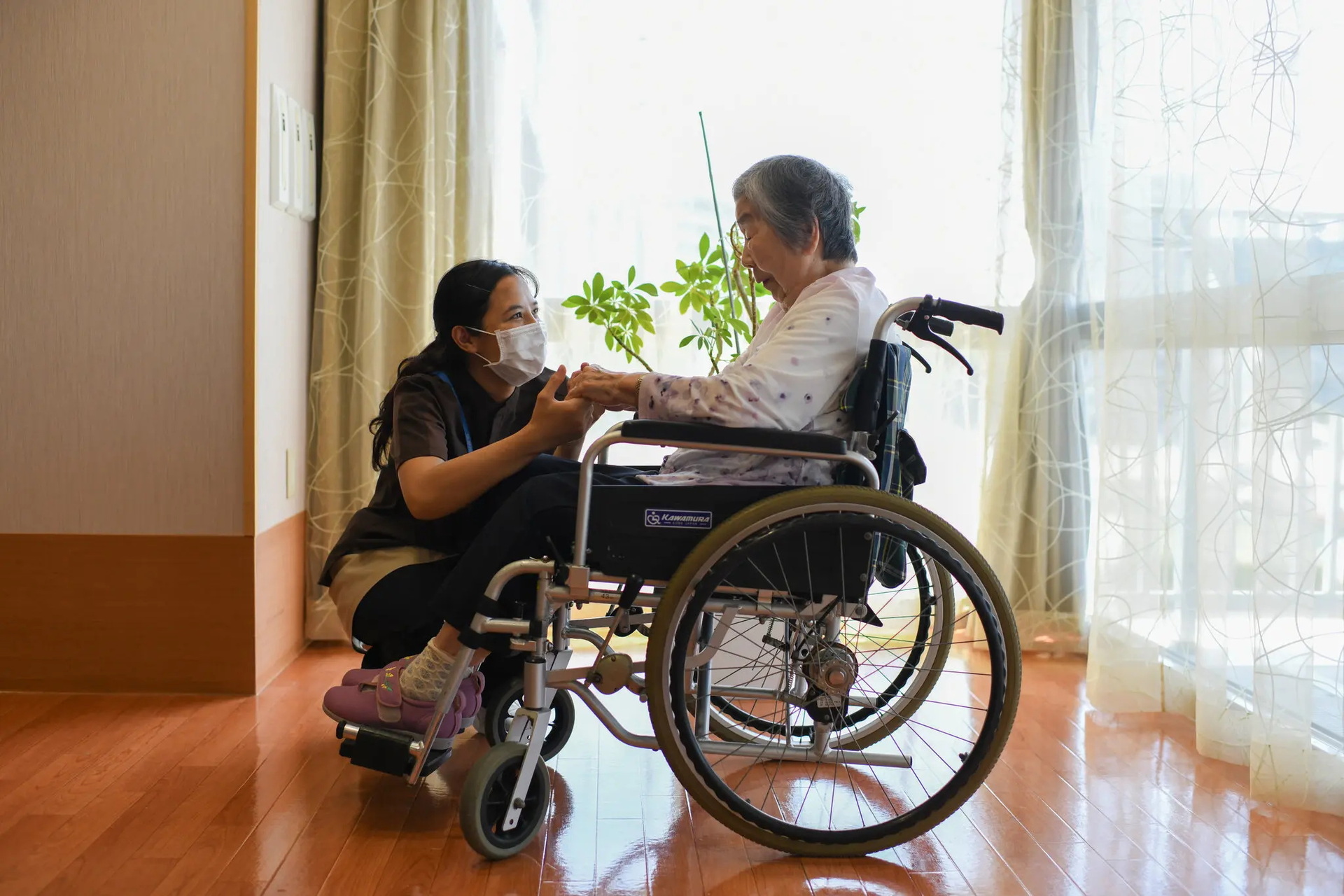
Winda Zahra, originally from Indonesia, works at a nursing home in Maebashi, the capital of Gunma Prefecture in central Japan. Photo: New York Times
However, politicians are still a long way from opening the country's borders. Japan has yet to experience the kind of significant migration that has rocked Europe or the United States. The total number of foreign-born residents in Japan – including spouses and non-working children – is 3.4 million, less than 3% of the population. For example, the rate in Germany and the United States is nearly five times that figure.
Long before foreigners can obtain permanent residency, they must pass cumbersome visa requirements, including language and skills tests. Unlike in Germany, where the government provides new foreign residents with up to 400 hours of subsidized language instruction at just over 2 euros per lesson, Japan does not have organized language training programs for foreign workers.
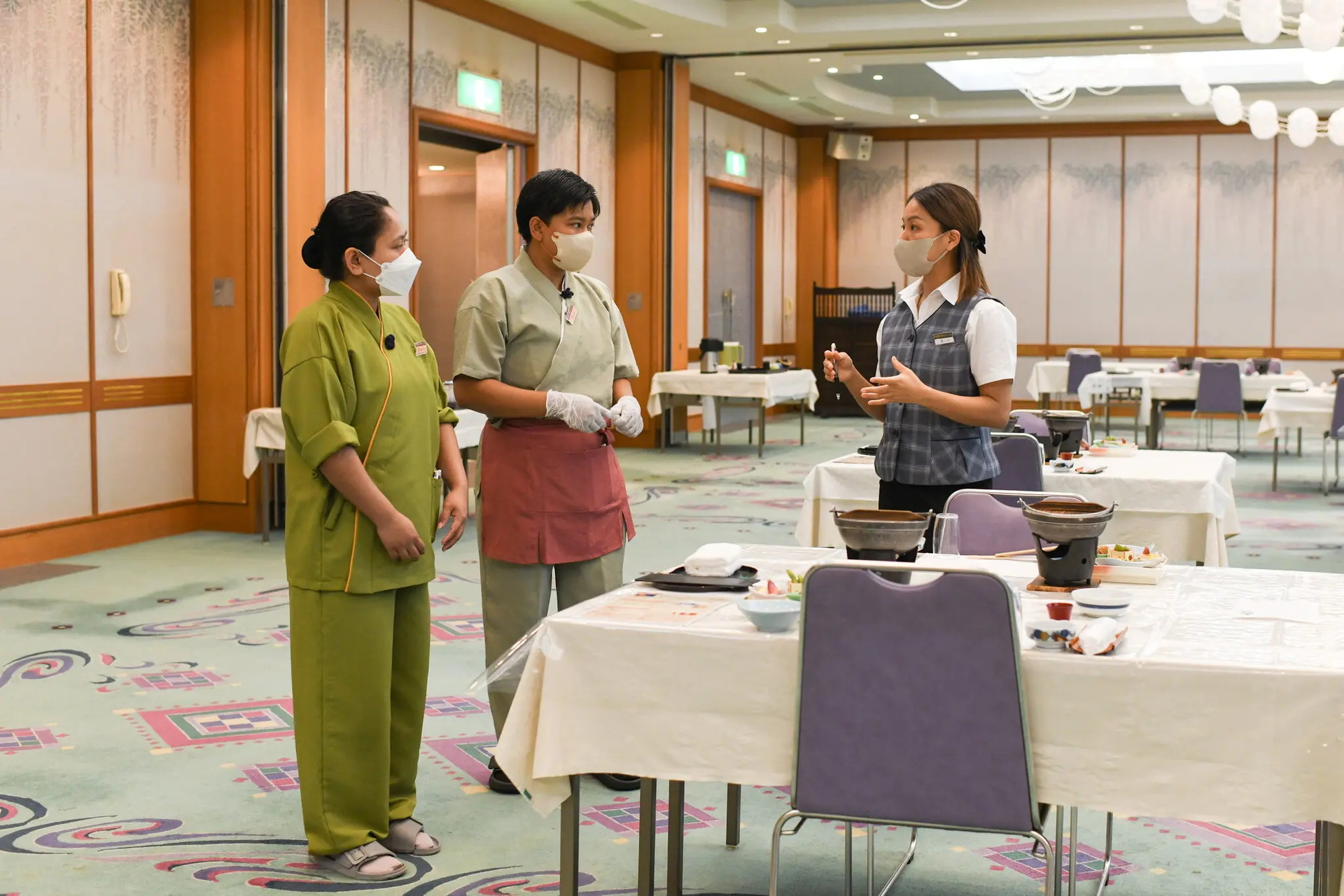
Ngun Nei Par (right), a Myanmar national and manager of the Ginshotei Awashima guesthouse, is seen conversing with staff from Myanmar and Nepal. Photo: New York Times
While politicians argue that the country should do a better job of teaching Japanese, "they are not yet ready to pour taxpayer money into it," said Toshinori Kawaguchi, director of the foreign labor affairs division at Japan's Ministry of Health, Labour and Welfare.
This leaves cities and employers deciding whether and how often to provide language training. Thazin, the operator of a nursing home in Maebashi, the capital of Gunma Prefecture in central Japan, provides some caregivers with a group Japanese language lesson, as well as another 45-minute lesson, each month. However, workers who prepare meals at the nursing home only receive one 45-minute lesson per month.
Akira Higuchi, president of Hotaka Kai, said he encourages employees to learn Japanese on their own. Those who pass the government's Japanese Language Proficiency Test at the second-highest level, he said, "will be treated like Japanese people, with the same salary and bonuses."
Especially outside of major cities, foreigners who don't speak Japanese may have difficulty communicating with local authorities or schools. In health emergencies, very few hospital staff speak a language other than Japanese.
Hotaka Kai has implemented other measures to support its employees, including providing accommodation for newcomers in subsidized corporate apartments and offering skills training.
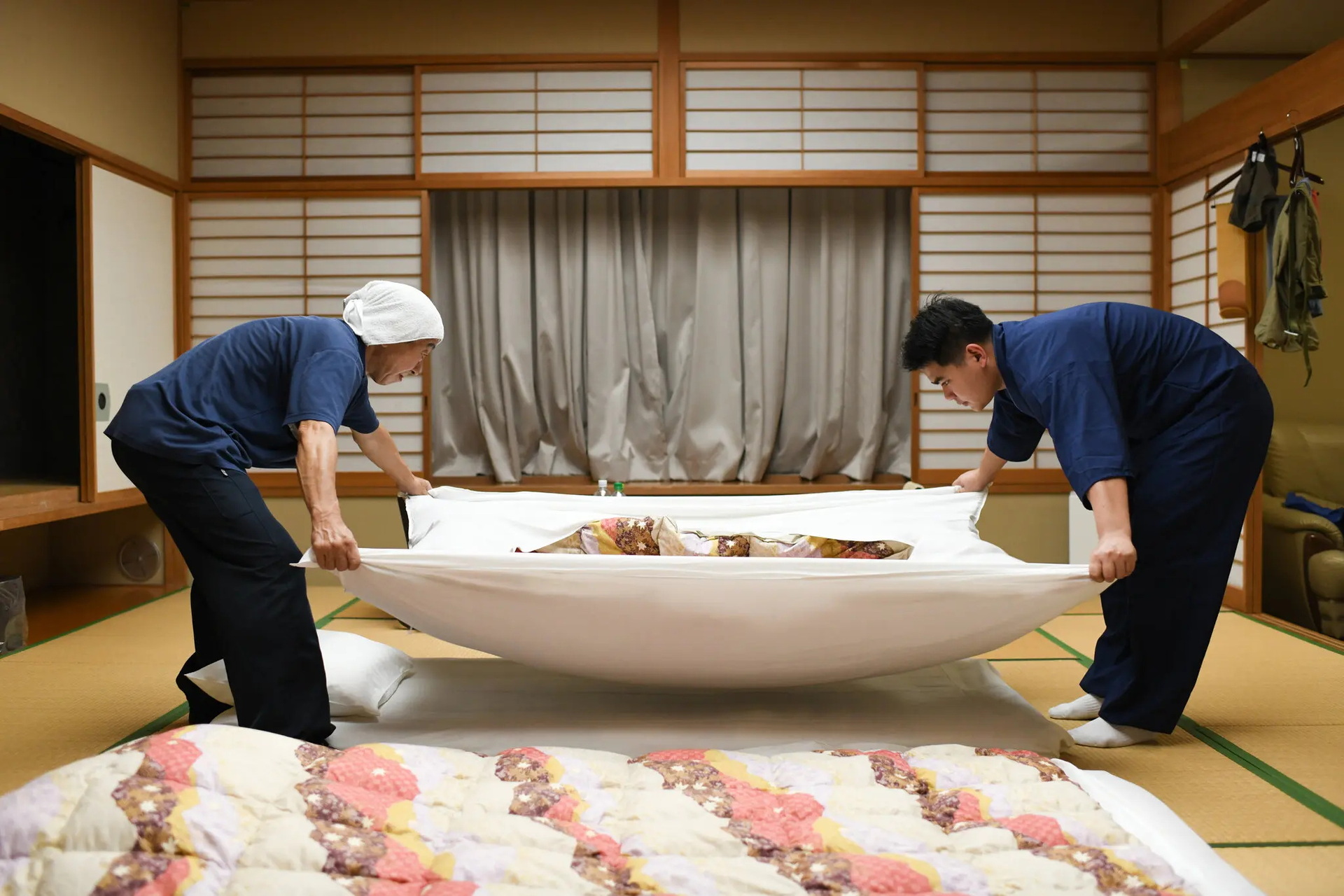
Gurung Nissan (right), a worker from Nepal, is laying out a futon mattress at the Ginshotei Awashima guesthouse. Photo: New York Times
A shared kitchen for 33 women aged 18 to 31 offers a glimpse into interwoven heritage. Evidently visible from plastic containers labeled with residents' names are packets of Ladaku merica bubuk (an Indonesian white pepper powder) and packets of Vietnamese-style braised meat seasoning.



Throughout Gunma Prefecture, the reliance on foreign labor is unmistakable. In Oigami Onsen, a mountainside village where many restaurants, shops, and hotels have closed, half of the 20 full-time employees at Ginshotei Awashima—a traditional hot spring inn—come from Myanmar, Nepal, or Indonesia.
Wataru Tsutani, the owner of the guesthouse, said: "Because the guesthouse is located in a rural area, 'no Japanese people want to work here anymore.'"
Ngun Nei Par, the manager of the guesthouse, graduated from a university in Myanmar with a degree in geography. She hopes the Japanese government will facilitate her citizenship application so that she can bring her family to Japan someday.
But Mr. Tsutani, the owner of the guesthouse, said the public hasn't caught up to the reality that they might object if too many foreigners apply for citizenship.
“I hear many people say that Japan is a ‘unique country’,” Mr. Tsutani said. “But there’s really no need to make it so difficult for foreigners who want to stay in Japan. We want workers.”
Quang Anh
Source: https://www.congluan.vn/nhat-ban-can-lao-dong-nuoc-ngoai-va-nghich-ly-khong-the-giu-chan-post306483.html