
The government intervenes in the real estate market if prices fluctuate sharply.
According to the newly implemented decree, when the real estate transaction price index fluctuates by more than 20% (increase or decrease) in three months, relevant ministries and agencies will have to propose measures to regulate the market.
Legalizing the regulatory role of the State
The Ministry of Construction will have to assess the real estate market situation as a basis for proposing market regulation; this is a regulation stipulated in Article 34 of Decree 96/2024/ND-CP and has been in effect since August 1st.
Notably, according to Clause 2, proposals for regulatory measures will be made when the real estate transaction price index fluctuates by more than 20% in three months (increase or decrease) or when the market experiences changes that affect socio-economic stability.
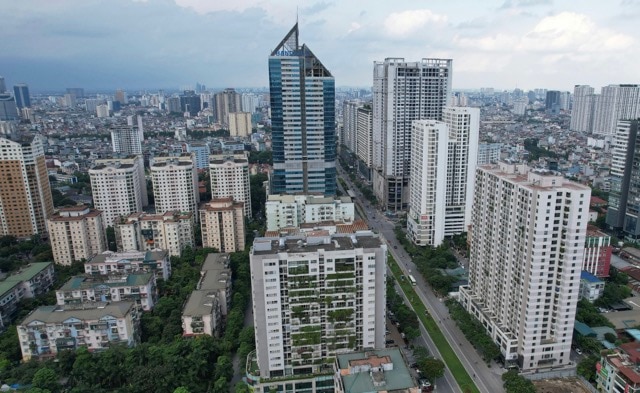 |
| The state will regulate the market by adjusting land use plans, construction plans, etc. Photo: Pexels |
Previously, Article 78 of the 2023 Law on Real Estate Business clearly stated the measures that the State would implement to regulate the real estate market, including:
Adjusting land use plans, construction plans, urban development programs, and housing plans to implement real estate projects.
Adjusting the supply and structure of the real estate market through adjustments to the objectives, scale, progress, and product structure of real estate projects.
Extending tax payment deadlines for businesses operating in the real estate sector that are facing particular difficulties during each period.
Providing preferential interest rate loans to customers and real estate businesses for types of real estate that need support and are prioritized for development.
Manage financial and credit policies for the real estate business sector in accordance with market conditions in each period.
Implement other policies to regulate the real estate market in each period.
Regarding the specific responsibilities of government agencies, Decree 96/2024/ND-CP stipulates that the Ministry of Construction will preside over and coordinate with other ministries, ministerial-level agencies, and provincial People's Committees to compile information and propose measures to regulate the real estate market.
In addition, the Ministry of Construction will also be the agency proposing measures regarding urban planning, construction, housing, and real estate business; regarding programs and plans for urban, housing, and real estate development; and regarding the structure of real estate products.
In addition, the Ministry of Planning and Investment will be responsible for proposing policies and laws on investment and bidding; the Ministry of Natural Resources and Environment will propose policies and laws on land.
The Ministry of Finance proposes regulations on taxation, finance, securities, and corporate bonds; the State Bank of Vietnam proposes legal and policy measures on credit.
Provincial People's Committees will review the implementation of real estate projects by localities and businesses and propose measures to regulate the real estate market in their areas.
Previously, Mr. Hoang Thanh Tung, Chairman of the National Assembly's Law Committee, predicted that the new regulations would help land valuations be closer to market prices. However, this also means that the price of real estate projects may increase.
Therefore, Mr. Tung suggested that the Government should proactively regulate real estate prices by strongly developing the social housing segment that suits people's affordability. At the same time, the approval of housing projects should be expedited by the management agencies to increase supply to the market.
"The government needs solutions and must be ready to intervene when the market shows signs of overheating or speculative bubbles," Mr. Tung emphasized.
The story of "rescuing" the market in China.



In China, where the real estate market is still struggling, the government is actively implementing market intervention measures to reduce real estate inventory.
In May 2024, the Chinese government launched major policies to stimulate the market, including measures to ease mortgage regulations, reduce down payment rates, and, most notably, calling on local governments to buy back millions of unsold homes.
Furthermore, the People's Bank of China (PBOC) announced a credit package of up to 300 billion yuan (US$42 billion) to support local governments and state-owned enterprises in purchasing unsold homes and converting them into affordable housing.
Along with the efforts of the Chinese government, local authorities and organizations have also quickly stepped in. More than 60 cities have announced support policies to address the housing surplus, including Shanghai, Shenzhen, Guangzhou, Nanjing, and others.
For example, in Zhengzhou city, several state-owned enterprises have planned to purchase houses built within the last 20 years to convert them into affordable rental housing. The city aims to complete 10,000 deals through this and other approaches this year.
Source: https://baodautu.vn/batdongsan/nha-nuoc-can-thiep-thi-truong-bat-dong-san-neu-gia-bien-dong-manh-d221678.html