
Vietnamese spices are now exported to over 125 countries, capturing many important markets. Since 95% of its production is exported, there is a need to focus investment on deep processing and trade promotion to increase the added value of this industry.
95% of the output is exported goods.
Ms. Hoang Thi Lien, President of the Vietnam Pepper and Spice Association (VPSA), stated that Vietnam currently ranks third globally in spice exports and dominates many important markets. In particular, Vietnam is the world leader in pepper production and export. Cinnamon exports have also been the world's leading exporter since 2022, and Vietnam ranks third globally in star anise exports.
According to Ms. Hoang Thi Lien, the global pepper market is valued at US$5.43 billion per year, with an average growth forecast of over 20% during the period 2024-2032. Vietnam has been the world's leading producer and exporter of pepper for over 20 years, accounting for 40% of the global harvest and 60% of the global export market share.
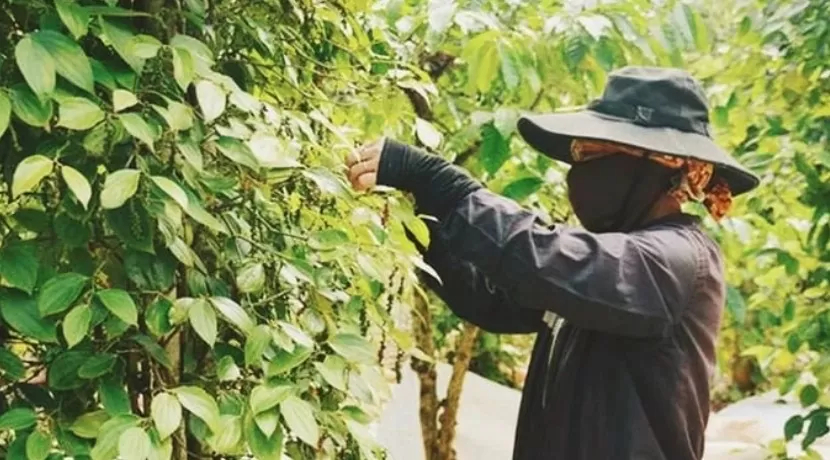 |
| Black pepper is a key commodity in Vietnam's spice industry. In 2024, pepper exports are expected to reach a value of US$1 billion. (Illustrative image) |
According to VPSA data, in July 2024, Vietnam exported 21,771 tons of various types of pepper, including 19,371 tons of black pepper and 2,400 tons of white pepper. The total export value of pepper in July 2024 reached US$129.9 million, with black pepper accounting for US$112.2 million and white pepper for US$17.7 million. Compared to June, export volume decreased by 22.7% and value decreased by 7.9%. Compared to the same period in July 2023, export volume increased by 43.7% and value increased by 128.9%.
In the first seven months of the year, pepper exports reached 164,357 tons, including 145,330 tons of black pepper and 19,027 tons of white pepper. Total export value reached US$764.2 million, with black pepper accounting for US$652.0 million and white pepper for US$112.2 million.
Among spices, cinnamon is the second most valuable export item after black pepper, and Vietnam also leads the world market in terms of production volume. In the past six months, Vietnam exported nearly 45,000 tons of cinnamon, with a total value of 127 million USD. Compared to the same period in 2023, export volume increased by 3.9%, but the value decreased by 1.8%. The main export markets are India, the US, and Bangladesh…
Regarding star anise, Ms. Lien stated that Vietnam ranks second in the world in star anise production (after China), with an area of 55,000 hectares and a production of 22,000 tons of star anise flowers in 2023. Star anise is a plant with high economic value, yielding products that are widely used in many fields such as medicine, flavoring, cuisine, and handicrafts.
In July 2024, Vietnam exported 1,662 tons of star anise, earning $7.8 million, a 7.4% increase compared to June. India was the main export market for star anise, accounting for 1,062 tons and 63.9% of the total. For the first seven months of 2024, Vietnam exported 8,685 tons of star anise, with a total export value of $41.9 million. Compared to the same period last year, export volume increased by 5.1%, but export value decreased by 17.1%.
Besides pepper, cinnamon, and star anise, Vietnam has many other spice plants that also have development potential. The country has approximately 68,100 hectares of chili pepper cultivation, with an annual production of about 100,000 tons of dried chili peppers.
According to preliminary statistics from the Vietnam Pepper Association (VPA), in July 2024, the country exported 697 tons of chili peppers, earning $1.6 million. Compared to the previous month, the export volume decreased by 14.5%.
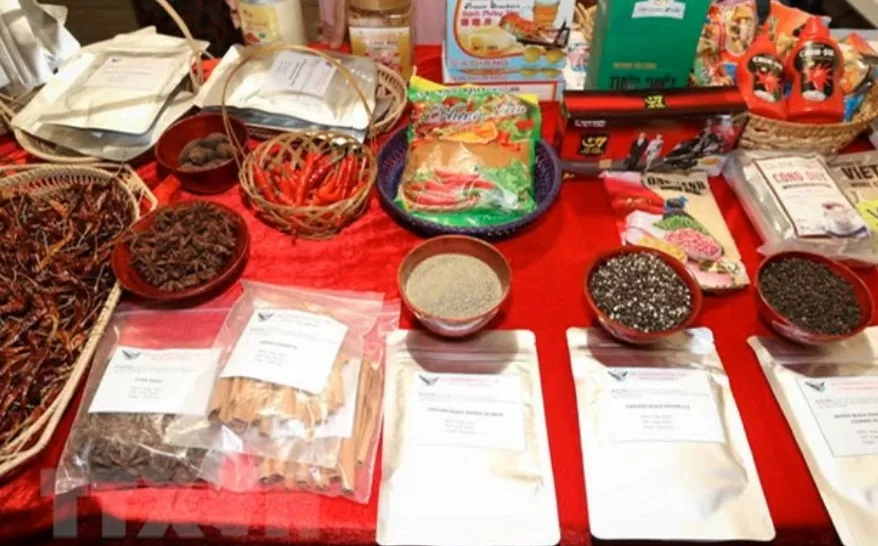 |
| Vietnam is one of the world's leading suppliers of spice products, with export revenue of approximately US$1.5 billion annually. (Photo: VNA) |
Overall, in the first seven months of the year, the total amount of chili peppers exported nationwide reached 8,023 tons, an increase of 3.5% compared to the same period in 2023. Of this, the Asian market continued to play a leading role with 7,727 tons, an increase of 2.1% compared to the same period in 2023; the American market reached 143 tons, an increase of 123.4%; the European market reached 80 tons; and the African market reached 73 tons.
Regarding ginger and turmeric, VPA data also shows that exports of ginger, turmeric, and other spices in the first six months of the year reached 17,280 tons with a value of 33 million USD, a decrease of 33.6% in volume but an increase of 5.1% in value compared to the same period in 2023. The main export markets for Vietnamese ginger and turmeric include India with 6,635 tons, accounting for 38.4%; Bangladesh with 3,561 tons, accounting for 20.6%; and Indonesia with 1,396 tons, accounting for 8.1%.
Currently, Vietnam ranks third in the world in spice supply and processing after India and China, with the entire Vietnamese spice industry having 14 factories with advanced processing technology.
The export value of the spice industry needs to be increased.
Along with the development of the spice industry, the pepper industry also has the opportunity to increase its export value as global demand for this commodity rises. Businesses expect pepper to once again become a billion-dollar commodity. This is an opportunity for Vietnamese businesses but also poses the challenge of improving quality and focusing on preliminary processing and manufacturing to meet market demands. The main export markets for Vietnamese spices include the United States, the European Union, India, and China.
As a country with an advantage in developing spice crops, Mr. Tran Van Hieu, Director of Dace Environmental Development and Consulting Company Limited, stated: Currently, Vietnamese spices are exported to many markets, creating opportunities for expanding outlets, but this also comes with difficulties. Specifically, each market has its own regulations and standards for agricultural products, so Vietnamese producers must adapt in order to export to many markets.
Furthermore, the export process to markets such as Europe shows that, in addition to importing fresh and unprocessed agricultural spices, partners also demand and have a great need for more processed, blended, and organic spice products to meet diverse culinary needs, serving the needs of Muslim communities, etc.
Mr. Thai Anh Tuan, Deputy General Director of Simexco Dak Lak Import-Export Company, said: "We directly link with and guide farmers to implement clean production practices throughout the planting and manufacturing stages. Then, we have processing, sterilization, and other facilities that meet the standards set by inspection agencies and qualify for export to demanding markets."



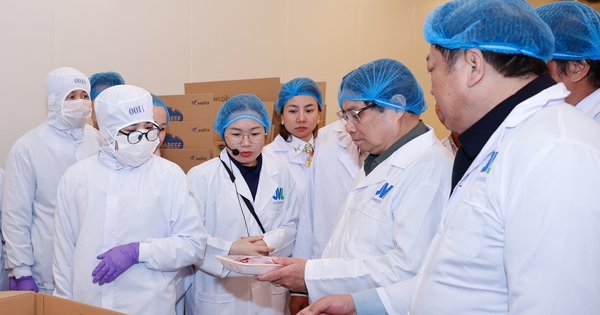
The factory can produce 30-40 tons of finished pepper per day, and can export 7,000-10,000 tons of pepper annually to the US, EU, the Middle East, and many other countries. The processing and preparation process is rigorous; from the raw material reception stage, the factory must inspect the quality to ensure cleanliness and that no pesticide residue is allowed.
Linking with farmers to produce sustainably, along with investing in modern technology and machinery to increase product value and meet the growing demands of importers, is helping to enhance the export value of pepper in particular and the Vietnamese spice industry in general.
Mr. Nguyen Quy Duong, Deputy Director of the Plant Protection Department, Ministry of Agriculture and Rural Development, stated: "Sustainable production is essential for export to countries including the EU. The Ministry of Agriculture and Rural Development, as well as the Pepper Association, and especially businesses, must get involved to comply with the new EU regulations."
Vietnam accounts for over 40% of the world's pepper production and over 60% of its export market share. However, this spice is still mainly exported in its raw form. Vietnamese businesses need to invest in processing it to meet the demands of various markets in order to further increase the export value of pepper in particular, and the spice industry in general.
VPSA leaders also suggested that the Ministry of Agriculture and Rural Development should have appropriate solutions to ensure the sustainability of Vietnamese pepper. Regarding the cinnamon industry, Vietnam lacks a national strategic direction for sustainable development; there is a lack of mechanisms to conduct research to promptly respond to market demands. Meanwhile, the problem of chemical residues from herbicides and pesticides in cinnamon bark still persists...
Source: https://congthuong.vn/nang-cao-gia-tri-gia-tang-cho-san-pham-gia-vi-viet-nam-338483.html