

According to information from the National Children's Hospital, from the beginning of July 2024 until now, the hospital's Tropical Diseases Center has received nearly 400 children with whooping cough.
The majority of cases are in children under 1 year old who have not been vaccinated or have not received all the necessary doses of the pertussis vaccine. Currently, nearly 40 children with pertussis are being treated at the Center for Tropical Diseases, including one critically ill patient requiring mechanical ventilation.
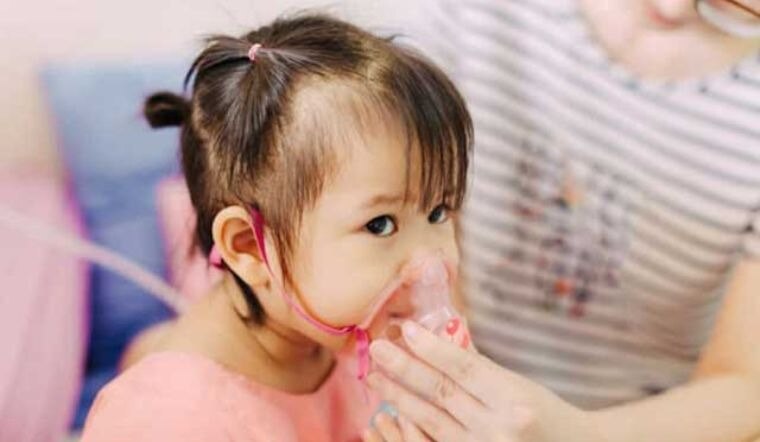 |
| Illustrative image |
The most recent case involves a 24-day-old baby girl (from Lang Son province ) who was brought in with severe coughing fits, including cyanosis of the face and excessive phlegm production during the coughing episodes.
The family stated that 20 days prior to hospitalization, the child's mother experienced coughing symptoms but did not seek medical attention and continued caring for the child. Approximately one week before hospitalization, the child developed a persistent cough but no fever.
Subsequently, the child developed severe, debilitating coughing fits, with cyanosis of the face and vomiting of thick, sticky white phlegm, so the family took the child to the National Children's Hospital for examination and treatment.
Here, doctors took respiratory tract samples for testing. The results showed the child was diagnosed with whooping cough. Now, after 5 days of treatment, the child's condition has improved significantly; the cough has decreased, and the child is eating and sleeping well. The child is expected to be discharged from the hospital in a few days.
Recently, the number of pertussis patients has been increasing. According to statistics from the Hanoi Department of Health last week, there were 7 new cases of pertussis in the city.
From the beginning of 2024 to the present, Hanoi has recorded 200 cases of whooping cough across 29 districts, towns, and cities; while no cases were recorded during the same period last year.
According to Dr. Tran Thi Thu Huong, Head of the Day Treatment and Examination Department and Deputy Director of the Center for Tropical Diseases at the National Children's Hospital, whooping cough is an acute respiratory infection commonly seen in young children. The disease may begin with no fever or a mild fever, accompanied by upper respiratory tract inflammation, fatigue, loss of appetite, and coughing.
The cough worsens and becomes paroxysmal within 1-2 weeks, lasting 1-2 months or longer. The disease can cause dangerous complications, even death, if not detected and treated promptly.
Therefore, when children show signs of or are suspected of having whooping cough, parents should immediately take them to specialized medical facilities for timely examination and treatment. The sooner children are treated, the faster they recover and the lower the risk of complications.
Currently, new cases of whooping cough are being recorded sporadically in some localities, not yet in concentrated areas. However, if children are not fully vaccinated and do not have sufficient immunity, the infection can accumulate, easily creating immunity gaps, which can then become outbreaks.
Pertussis (whooping cough) is a common infectious disease during the winter and spring months. It is a respiratory infection caused by the bacterium Bordetella pertussis, with an incubation period of approximately 7-20 days.
Individuals who are unimmunized or have weakened immune systems are more susceptible to the disease, potentially developing severe pneumonia and respiratory failure. To prevent whooping cough, children need to be vaccinated against whooping cough according to the recommended schedule and with the full dose.
Whooping cough typically begins with symptoms such as frequent coughing, runny nose, and possibly a slight fever. This is followed by a series of continuous coughing fits, with the child coughing violently, in spasms, and experiencing prolonged coughing that can lead to vomiting, loss of appetite, fatigue, watery eyes and runny nose, and exhaustion. The persistent coughing can cause the child's face to turn red or even blue.
After coughing, patients develop wheezing, which is why it's called whooping cough. The cough makes children uncomfortable, causes sleepless nights, poor appetite, and leads to malnutrition and other health problems...
Whooping cough can cause serious complications, as the persistent, prolonged coughing exhausts children, leading to various complications such as respiratory failure, pneumonia, and encephalitis.
According to Dr. Bui Thi Viet Hoa of the Safpo/Potec vaccination system, vaccination is the most important measure to protect children's health in preventing whooping cough.



To proactively prevent the disease, parents should ensure their children receive all pertussis vaccinations on schedule: First dose: At 2 months of age. Second dose: One month after the first dose. Third dose: One month after the second dose. Fourth dose: When the child is 18 months old.
Children born to mothers who do not have antibodies against whooping cough are at a higher risk of contracting the disease compared to children who receive antibodies from their mothers.
In parallel, it is necessary to implement other measures such as frequently washing hands with soap, covering the mouth when coughing or sneezing; maintaining daily personal hygiene, including nasal and throat hygiene for children; ensuring that homes, nurseries, and classrooms are well-ventilated, clean, and have sufficient light; limiting children's exposure to crowded places and avoiding contact with people with respiratory illnesses, especially those with whooping cough.
Parents need to differentiate between whooping cough and a common cough to take their children to the hospital promptly. If whooping cough is suspected or if any of the following symptoms appear: frequent coughing fits, redness or cyanosis of the face during coughing, prolonged coughing fits; poor appetite, frequent vomiting; sleeplessness; rapid/difficulty breathing, the child should be taken to the hospital for examination, diagnosis, and early treatment.
Source: https://baodautu.vn/mot-thang-hon-400-benh-nhan-ho-ga-nhap-vien-d221071.html