
Recently, the US took the rare step of publicly announcing plans to deploy guided-missile submarines to the Middle East, amid concerns that the region could descend into a full-scale conflict.
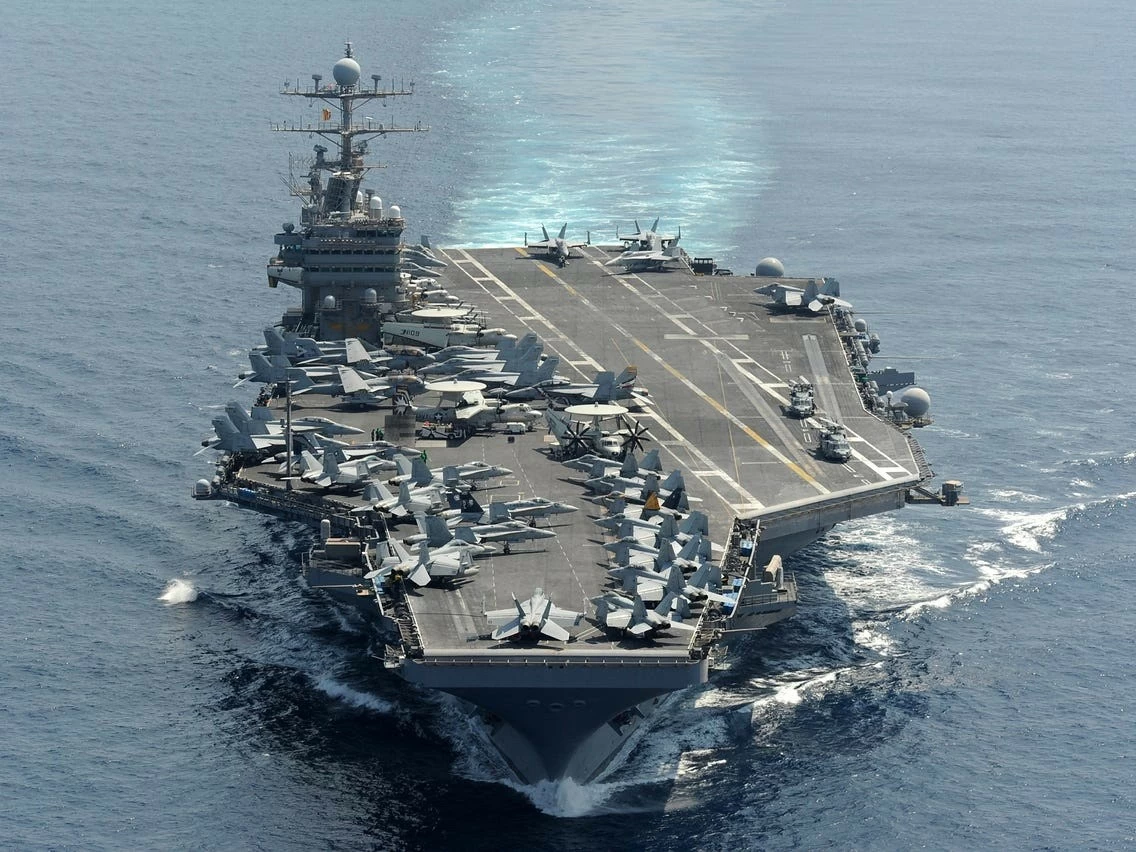 |
| The US has urgently deployed the Abraham Lincoln Carrier Strike Group to the Middle East amid the risk of a conflict between Iran and Israel. (Source: Reuters) |
On August 12, Israeli Defense Minister Yoav Gallant confirmed that he had spoken by phone with his US counterpart Lloyd Austin on the evening of August 11, discussing operational and strategic coordination as well as the readiness of the Israeli military against threats from Iran.
According to Axios, citing sources, Gallant informed Austin that Iran was preparing for a large-scale attack on Israel.
Meanwhile, Reuters , citing a Pentagon statement issued after the phone call, reported that Austin had ordered the Abraham Lincoln carrier strike group to urgently proceed to the Middle East.
The Pentagon statement read: "Secretary Austin reaffirmed Washington's commitment to taking all possible measures to protect Israel and noted the strengthening of U.S. military capabilities and postures throughout the Middle East amid escalating regional tensions."
According to a social media post, publicly announcing the submarine deployment plan is a rare move by the Pentagon, given that the nuclear-powered submarine USS Georgia was already present in the Mediterranean in July.
Earlier, the US military announced the deployment of additional fighter jets and warships to the Middle East, amid Washington's efforts to bolster Israel's defenses.
Also related to the situation in the Middle East, on August 11, in an interview with CBS television, US President Joe Biden said that tensions could easily escalate into a regional war and that he and his team "are working every day" to ensure that this does not happen.
Regarding the possibility of reaching a ceasefire in Gaza before leaving office in January 2025, President Biden responded: "Yes. It's still possible. The plan I put forward, agreed upon by the Group of Seven (G7) industrialized nations and the UN Security Council, remains feasible."


On the same day, German Chancellor Olaf Scholz expressed concern about the risk of regional war in the Middle East during a phone call with Israeli Prime Minister Benjamin Netanyahu.
Emphasizing the need to break the "destructive cycle of retaliatory violence, de-escalate tensions, and take constructive action to de-escalate the conflict in the region," Scholz called on all parties to work towards a ceasefire in Gaza and release hostages held by Hamas in the territory.
Source: https://baoquocte.vn/chao-lua-trung-dong-lo-tin-iran-sap-tan-cong-quy-mo-lon-israel-my-ra-menh-lenh-khan-tong-thong-biden-thua-nhan-nguy-co-lon-282295.html