
The Ukrainian economy is overcoming the unprecedented challenges of the intense military conflict.
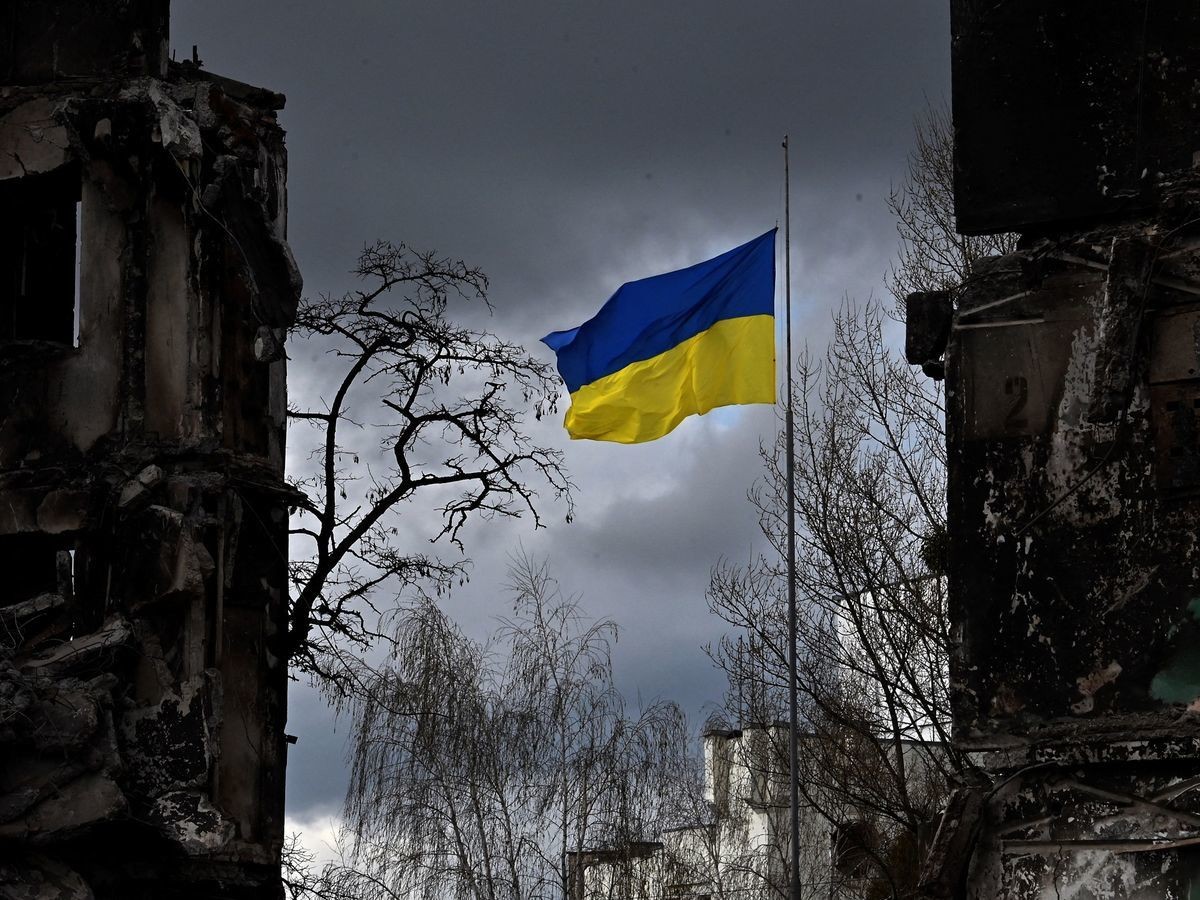 |
| Ukraine's economy is recovering despite difficulties; does Kyiv no longer have to worry about money? (Source: Asiatimes) |
The risk of receiving less money than promised by international donors has diminished this year. It seems Ukrainian leaders no longer need to worry about money, but rather focus on finding effective reforms to truly move the economy forward?
According to Ukrinform , businesses in Ukraine are now rapidly adapting even to power outages. Will these factors be enough for this Eastern European economy to maintain macroeconomic stability and achieve a sustainable recovery?
What are the economic scenarios for Ukraine in the second half of 2024 and 2025–2026?
In the first half of 2024, the Ukrainian economy demonstrated remarkable resilience. The economy not only withstood unprecedented challenges and the chronic power shortages, amidst the third year of the military conflict with Russia, but also continued to recover.
The foundation for this resilience is built upon macroeconomic financial stability, ensured by decisions of the National Bank of Ukraine (NBU) and the government , along with significant support from international donors.
Specifically, inflation in the Ukrainian economy slowed to 3.2% in April and remained at a moderate level even after a rebound. The budget deficit was financed promptly without the need to issue any more Hryvnia, and international reserves are at sufficient levels.
However, the military conflict is still ongoing, and its risks and challenges to the Ukrainian economy, and even more problems beyond that, remain ever-present.
“Inflation will rise, but will trend downward as early as next year and return to the NBU’s 5% target. The economic recovery will continue, but will slow to 3.7% in 2024. Over the next two years, GDP growth is expected to accelerate to 4%–5% per year,” these are the core points of the NBU’s latest inflation report.
However, given the ever-present and unprecedented risks, Kyiv has based its forecasts on a range of different assumptions. Therefore, the macroeconomic landscape will largely depend on whether these assumptions materialize.
The first scenario is quite optimistic, expecting the economy to remain resilient amidst uncertainty. However, observers believe that, although the NBU expects economic conditions to gradually return to normal, the final forecast still depends on the risks associated with the unfolding military conflict.
Certainly, a prolonged, high-intensity military conflict would limit economic potential, put pressure on prices, and lead to higher budgetary demands. This would further increase risks, as Kyiv cannot know what further steps Russia will take in its special military operation.
Another assumption is that international aid will continue to pour in. The Ukrainian economy remains dependent on aid; however, funding for the coming years is not yet guaranteed. Currently, Kyiv is continuously working with international partners to secure this funding. It is crucial for Ukraine to receive at least $31 billion by 2025 and $21 billion by 2026.
We have higher hopes for positive decisions from the West.
Explaining the scenario that the future of international aid to Kyiv may be very fragile, in an article on Ukrinform , the Governor of the National Bank of Ukraine, Andriy Pyshnyy, wrote that it is not because Ukrainians are not working hard enough. On the contrary, “our partners have repeatedly stressed that Kyiv has exceeded their expectations in strengthening its capacity, implementing reforms, and fulfilling its commitments,” he asserted.
But in reality, Ukraine's funding needs are also shaped by the full-blown conflict with Russia. The Russia-Ukraine conflict has caused a surge in budget spending.
A large portion of the 2024 deficit (approximately $38 billion) will be difficult to cover without foreign financial assistance, despite Kyiv's success in reviving the domestic debt market, expanding the tax base, and establishing a safety margin.
The Ukrainian economy is grateful to the European Union (EU), the United States, the International Monetary Fund (IMF), and other partners for the support programs they have approved. However, looking ahead, Kyiv hopes for more positive decisions from donors regarding the use of frozen Russian assets. Income from such assets would significantly reduce the risk of financial shortfalls and is particularly important in the context of ongoing elections in partner countries.
Andriy Pyshnyy, Governor of the National Bank of Ukraine, expects the country's economy to gradually recover, provided there is sufficient international aid and a "relatively resilient" energy system.
He stated that in the first quarter of 2024, economic recovery accelerated to 6.5%. However, Russia's targeted attacks on Ukraine's energy infrastructure have caused significant damage to the energy system and led to more prolonged power outages.



Electricity shortages were significant in the second quarter and worsened at the beginning of the third quarter due to hot weather and ongoing enemy attacks. However, these energy difficulties did not disrupt the Ukrainian economy.
"According to estimates, Ukraine's real GDP will continue to grow in the second quarter of 2024, with expectations of economic growth of 3.7% in 2024 and increasing to 4%–5% in 2025–2026," said Andriy Pyshnyy.
However, the NBU Governor also revealed that power shortages will exceed 7% in 2024, approaching 8% in 2025, 5% in 2026, and will remain one of the main factors hindering the economy.
On the other hand, recovery will be driven by significant budgetary expenditures thanks to international aid, by further developing export routes as Ukraine's export demand recovers, and by further strengthening its energy resources.
Source: https://baoquocte.vn/kinh-te-ukraine-phuc-hoi-bat-chap-xung-dot-quan-su-kiev-khong-con-phai-lo-den-tien-281896.html