
Slovakia and Hungary have rejected a proposal from the European Union's executive body to replace the blocked Russian oil supply from Ukraine with an alternative route through Croatia, arguing that Croatia is not a "reliable" transit point.
Supplies from Lukoil through Ukraine have been halted since July after Kyiv placed Russia's largest private oil exporter on its sanctions list and imposed a ban on the use of the Druzhba pipeline, the oil pipeline connecting Russia to Eastern Europe.
Hungary and Slovakia subsequently requested the European Commission (EC) to intervene and mediate, arguing that Ukraine's actions threatened their supply security.
In the latest development related to the case, Budapest and Bratislava on August 2 rejected the EC's proposal to use spare capacity on the JANAF Adriatic pipeline in Croatia to supply non-Russian oil to Hungary and Slovakia.
This proposal from Brussels aims to diversify oil import sources and reduce the dependence of some member states on Russian oil amid ongoing geopolitical tensions.
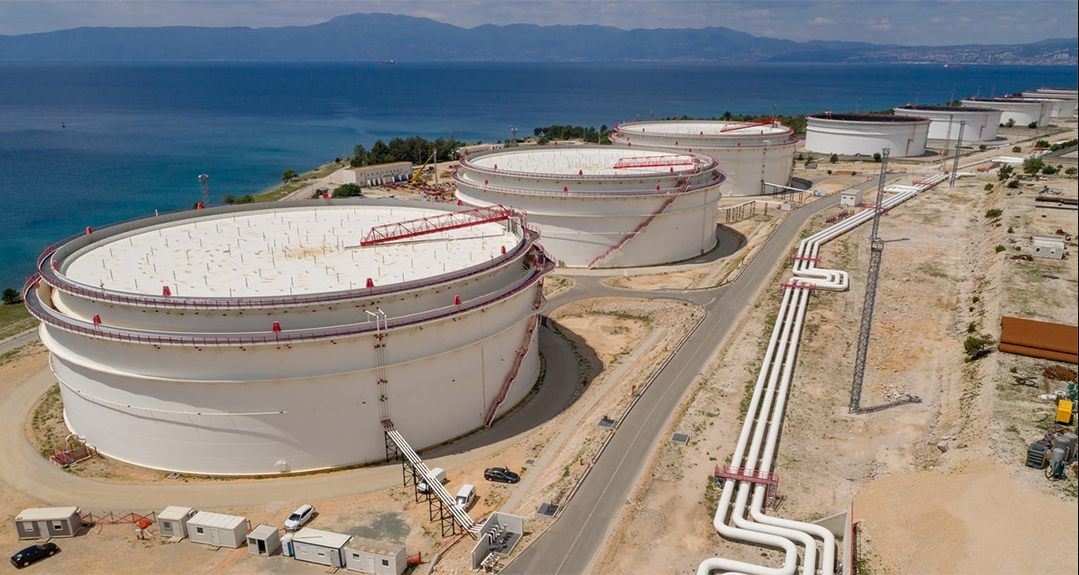
The JANAF Adriatic pipeline oil storage and transportation facility in Croatia. Photo: The Gaze
"Simply put, Croatia is not a reliable country for transporting oil," said Hungarian Foreign Minister Péter Szijjártó. "The cost of transporting oil in Croatia has increased fivefold since the Russia-Ukraine conflict broke out."
Szijjártó's comments drew a strong reaction from Croatia, sparking a diplomatic controversy.
Croatian Foreign Minister Gordan Grlić Radman expressed disappointment at the unexpected criticism from a neighboring country with which Croatia had sought to maintain friendly relations despite past unfriendly actions.
In response to Hungary's concerns, Slovakia – which receives some of its oil via the JANAF Adriatic pipeline to the Slovnaft refinery – said on August 2 that it had received an offer from the Croatian government to secure its oil supply.
But Slovak Foreign Minister Juraj Blanár said things remain uncertain given questions about the cost and volume of potential supply, noting that "nobody knows the specifics yet."
Both Hungary and Slovakia have expressed their desire for the EC to "intervene" and force Ukraine to restore the full flow of Russian oil. At the same time, Blanár stated that Slovakia is also exploring alternative solutions if Brussels does not act.
Following Russia's launch of a special military operation in Ukraine in early 2022, the EU banned oil imports into its member states with the aim of "detoxing" from Russian fossil fuels, but exempted Hungary, Slovakia, and the Czech Republic to give them time to find alternative routes and sources of supply.
Despite protracted negotiations over transit fees, Croatia's JANAF and Hungary's MOL signed a one-year contract in May 2023 for the transport and storage of 2.9 million tonnes of crude oil via the Adriatic pipeline to MOL's Hungarian and Slovakian refineries.
Hungary also complained on August 2nd that Croatia had not invested in capacity building and had never demonstrated the figures it had provided regarding the maximum transit capacity of the Adriatic pipeline.



JANAF rejected the allegations in a statement, saying it has consistently invested in its transport-storage system. The company said it had tested its transport capacity on the route toward Hungary alongside MOL and demonstrated that the route could transport 1.2 million tons of crude oil per month.
"JANAF is technically and organizationally ready to supply sufficient oil to refineries in Central Europe to operate at full capacity. That is why we hope that we will find a satisfactory solution to continue our long-term partnership through open negotiations and cooperation," the company said.
Minh Duc (According to Euractiv, EU Today)
Source: https://www.nguoiduatin.vn/dien-bien-moi-vu-ukraine-chan-lukoil-trung-chuyen-dau-nga-sang-2-nuoc-eu-204240804152355586.htm