
Health news update August 13th: Ministry of Health directs diphtheria prevention and control efforts.
Given the complex developments of the diphtheria outbreak in Thanh Hoa province, the Ministry of Health has issued a document requesting the province to strengthen disease prevention and control measures to prevent the disease from spreading.
Prevent the spread of diphtheria.
The Ministry of Health requests the Director of the Thanh Hoa Provincial Department of Health to continue directing health units in the area to strengthen the review of close contacts with diphtheria cases; monitor and detect suspected cases early in outbreak areas and in the community; collect samples, test to identify cases, and promptly implement medical isolation measures, outbreak management, and prophylactic antibiotic treatment for all close contacts according to the Ministry of Health's guidelines.
 |
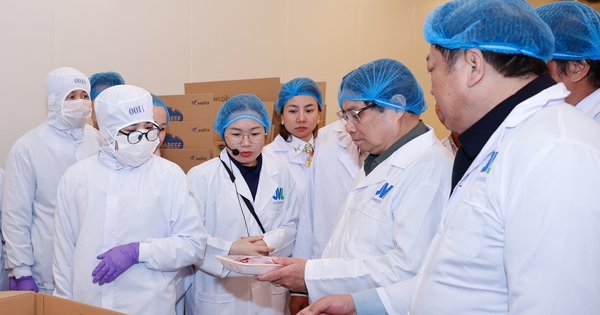
| Vaccination is the most important measure to prevent diphtheria. Photo: Chi Cuong |
Ensure effective patient admission, emergency care, triage, and treatment referral; establish separate areas for examination, isolation, treatment, and emergency care to minimize fatalities; strictly implement infection control and prevent cross-infection at medical facilities, and limit unnecessary patient transfers to higher-level hospitals.
At the same time, review and compile statistics on individuals who have not been vaccinated or have not been fully vaccinated against diphtheria in all communes and wards, and organize supplementary, catch-up, and immunization programs, especially in areas where diphtheria is prevalent and has low vaccination rates.
Strengthen public awareness campaigns about diphtheria and its prevention measures so that people can proactively implement disease prevention and control measures and cooperate closely with health units during treatment.
Organize close monitoring of the health of children, students, and trainees at training institutions; regularly clean and ventilate classrooms, and promptly notify health facilities when suspected cases of illness are detected so that they can be isolated and treated promptly, preventing outbreaks.
The Ministry also requested the Thanh Hoa Department of Health to review and ensure the logistical support for vaccines, prophylactic antibiotics, antitoxin serum, chemicals, etc., to implement epidemic prevention and control activities; and to report to the Provincial People's Committee to allocate funds and mobilize resources to support the logistical support for epidemic prevention and control.
If necessary, mobilize manpower and deploy mobile epidemic control teams and mobile emergency medical teams to support localities in implementing epidemic prevention and control work.
Organize training courses for preventive health care and treatment staff on topics such as disease surveillance and prevention, diagnosis, treatment, emergency care, patient care, infection control, and organize inspection, monitoring, and guidance teams in areas at risk of disease outbreaks.
Four patients hospitalized with "flesh-eating bacteria"
Bai Chay Hospital (Quang Ninh) is currently treating four cases of Whitmore's disease (also known as flesh-eating bacteria), which causes diverse damage to multiple organs and weakens the immune system, leading to conditions such as sepsis, liver abscess, leg abscess, and meningitis.
Admitted in critical condition was Mrs. VT H (67 years old, residing in Ha Long City, Quang Ninh province) with a history of multiple myeloma and hypertension. She was transferred from a higher-level hospital to Bai Chay Hospital for treatment with a diagnosis of sepsis, meningitis caused by Burkholderia pseudomallei (Whitmore) bacteria, and a migratory focus of pneumonia.
Another case involves patient D.TD (62 years old, residing in Uong Bi City, Quang Ninh province) with a history of diabetes, who was admitted to the hospital with fever, chills, body aches, swelling and pain in the soft tissue of the left lower leg with pus, and clear signs of infection. Pus culture was positive for Burkhoderia pseudomallei, the bacterium that causes Whitmore's disease.
Doctors diagnosed sepsis and a lower leg abscess caused by Whitmore's disease in a patient with diabetes mellitus and treated the patient with antibiotics and drainage of the abscess in the lower leg.
According to doctors, the cause of Whitmore's disease is the bacterium Burkholderia pseudomallei. This bacterium usually lives in mud and soil, especially in damp areas and contaminated water, and enters the human body mainly through the skin when open wounds come into direct contact with contaminated soil or water.
According to Dr. Pham Cong Duc, Head of the Department of Tropical Diseases at Bai Chay Hospital, the disease causes damage to many organs and progresses silently and slowly. By the time patients are admitted, they already have very deep abscesses. The mortality rate is relatively high if not treated promptly. People with underlying conditions such as diabetes, kidney failure, liver disease, chronic lung disease, and those with weakened immune systems are at high risk of developing the disease.
The incubation period ranges from 1 to 21 days, but can be prolonged and difficult to diagnose. Burkholderia pseudomallei infections can be latent and reactivate like tuberculosis. There is currently no vaccine, and the disease is not transmitted from person to person.
Therefore, according to doctors' recommendations, the main preventive measures are ensuring personal hygiene, environmental hygiene, using personal protective equipment when working with contaminated soil or water, or in unsanitary environments, thoroughly cleaning contaminated skin cuts, scratches, or burns, and eating cooked food and drinking boiled water...
Especially when patients have skin ulcers, symptoms such as fever, aches and pains in the limbs, cough, abdominal pain, and frequent diarrhea, they should immediately go to a medical facility for examination and timely diagnosis.
Nutritional counseling for patients with acute pancreatitis.
Acute pancreatitis is an acute inflammation of the pancreas, usually with a sudden onset, rapid progression, and a high risk of death if not treated promptly. One way to support the improvement of the patient's condition is to design a suitable nutritional regimen for those with acute pancreatitis.
In Vietnam, the causes of acute pancreatitis are often gallstones, alcohol, and dyslipidemia, with alcohol being a very common cause, especially in men. Other possible causes include pancreatic cancer, parasitic infections such as worms and flukes, and autoimmune diseases (autoimmune pancreatitis, IgG4-induced pancreatitis).
Acute pancreatitis presents with various symptoms depending on the cause and severity; however, the most common symptoms include: upper abdominal pain radiating to the back, rapid pulse, nausea/vomiting, and a feeling of fullness or bloating.
When a patient presents with symptoms suggestive of acute pancreatitis, doctors may order blood tests, abdominal ultrasound, and abdominal CT scans. Blood tests may show significantly elevated pancreatic enzymes such as amylase and lipase; CT scans may reveal an enlarged, edematous pancreas or pancreatic necrosis, and peripancreatic fluid.
Depending on the patient's condition, clinical course, and the nature and severity of pancreatitis, the doctor may prescribe a treatment plan suitable for each individual, such as intravenous fluids, pain relief, and in severe cases, plasmapheresis or emergency stone removal.
According to doctors at Military Central Hospital 108, pancreatitis is a digestive organ responsible for digesting food; when the pancreas is inflamed, its digestive function is also affected.
Furthermore, the pancreas is located close to the duodenal loop, a loop of intestine in the path of food from the stomach to the small intestine. When acute pancreatitis occurs, the duodenal region often becomes edematous, leading to narrowing of the food passage.
Therefore, in the early stages of the disease, patients need to eat soft, easily digestible foods such as soup, porridge, and milk, and these foods must also contain sufficient nutrients.
Some foods for patients with acute pancreatitis, such as plain rice porridge, are often prescribed by doctors for patients who are just starting to eat again, in order to assess whether their digestive system has truly recovered.



Plant-based milks: such as soy milk and milks from low-fat grains, these are easily digestible foods, making them very suitable for the acute phase.
Milk products containing hydrolyzed peptides help increase absorption and provide sufficient nutrients.
Some more nutritious foods such as minced meat porridge, fish porridge, and animal milk will be prescribed when the patient's digestive function recovers. Patients are often given supplements containing pancreatic enzymes to improve digestion and absorption of nutrients.
Patients should note that the timing of introducing solid foods is also an important factor to consider. Some studies show that starting to eat 24-48 hours after admission, when patients already show signs of bowel motility, can help increase recovery rates and reduce hospital stay.
Nutritional regimen for patients after discharge from hospital: After pancreatic damage, the pancreas needs time to recover. During this time, patients should eat easily digestible foods rich in vitamins and also pay attention to moderate exercise to aid recovery.
Some foods are easy to digest, such as simply prepared vegetables like boiled vegetables.
Fruits and vegetables; white meats such as chicken and fresh fish; plant-based milks such as soy and almond milk. Some foods to avoid include red meats; high-protein seafood; and foods cooked with a lot of oil and fat.
Patients with acute pancreatitis should absolutely avoid alcohol, as it is one of the factors that can lead to recurrent acute pancreatitis.
Source: https://baodautu.vn/tin-moi-y-te-ngay-138-bo-y-te-chi-dao-phong-chong-dich-bach-hau-d222271.html