
For the first time in 30 years, Russia and China will reuse barter trade agreements amid growing problems for Moscow with international payments due to tighter US sanctions.
Since last December, the US has shifted tactics and increasingly focused on targeting retail banks with secondary sanctions. This move has forced major banks in China and Türkiye to sever ties with their Russian partners, leading to increasingly difficult trade agreements.
From the end of the first quarter of this year, Russia has faced a decline in imports from almost every direction, and supplies from Türkiye to Russia have decreased by one-third during this period. The situation worsened when the EU launched its 14th round of sanctions, requiring European manufacturers to be transparent about the final destination of re-exported goods.
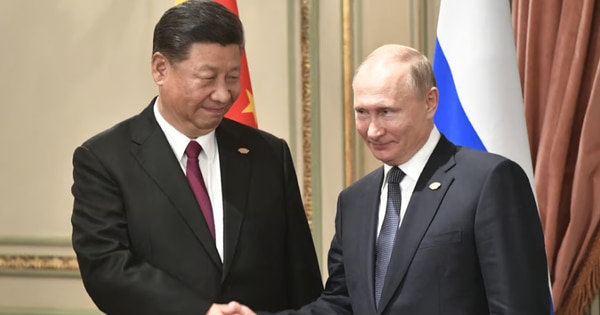
Chinese President Xi Jinping (left) and Russian President Vladimir Putin. Photo: Getty Images
The "revival" of cashless bartering is a way to overcome the limitations imposed by Russia's disconnect from the US-controlled SWIFT international payment system, as well as to mitigate currency risks. The first such transaction could take place as early as this fall, The Bell reports.
There is no direct payment mechanism between Russia and China similar to SWIFT, nor is there anything that could connect the two countries' separate systems.
Although the BRICS group, led by Moscow and Beijing, is building a payment system called BRICS Bridge to replace SWIFT, Reuters reports that this system is not expected to be operational until at least 2028.
Therefore, between now and then, barter agreements – common between the two countries before the collapse of the Soviet Union in the 1990s – are being discussed as a solution to the ongoing payment difficulties caused by Western sanctions.
Russian President Vladimir Putin met with Chinese President Xi Jinping in May for a three-day summit, in which countering US sanctions on reciprocal payments was a top priority on the agenda.
A senior executive at a major Russian bank confirmed to The Bell that a barter program is being prepared, but declined to provide details. Another source working in the payments sector said discussions are underway regarding an agreement to export food products from Russia to China as part of the barter deal.
China has become Russia's largest trading partner, with bilateral trade reportedly rising to $136 billion in the first half of this year, and on track to surpass last year's record of $240 billion.
In addition to boosting Russian oil imports, China has opened its market to Russia for many previously restricted products. Besides food products, sources indicate that the bartering may include exporting metals from Russia in exchange for machinery from China.
Although alternative solutions have emerged, such as using smaller regional Chinese banks that are not exposed to the US market and therefore less susceptible to sanctions, these methods have not fully resolved the payment challenges faced by the two countries.
The Russian government has recommended that businesses switch to barter programs, reminiscent of those in the 1990s, in their relations with foreign partners to avoid problems.
Simultaneously, Russia is working to develop cryptocurrency and digital currency payment systems as an alternative solution.
Minh Duc (According to bne IntelliNews)
Source: https://www.nguoiduatin.vn/nga-trung-quoc-hoi-sinh-phuong-thuc-tu-30-nam-truoc-de-doi-pho-lenh-trung-phat-204240811212516622.htm