
As one of the "dream" destinations for many international tourists, Santorini is famous for its idyllic natural landscapes and impressive architectural structures.
According to local authorities, this popular Greek island welcomes around 3.4 million tourists annually, far exceeding Santorini's permanent resident population of 20,000.
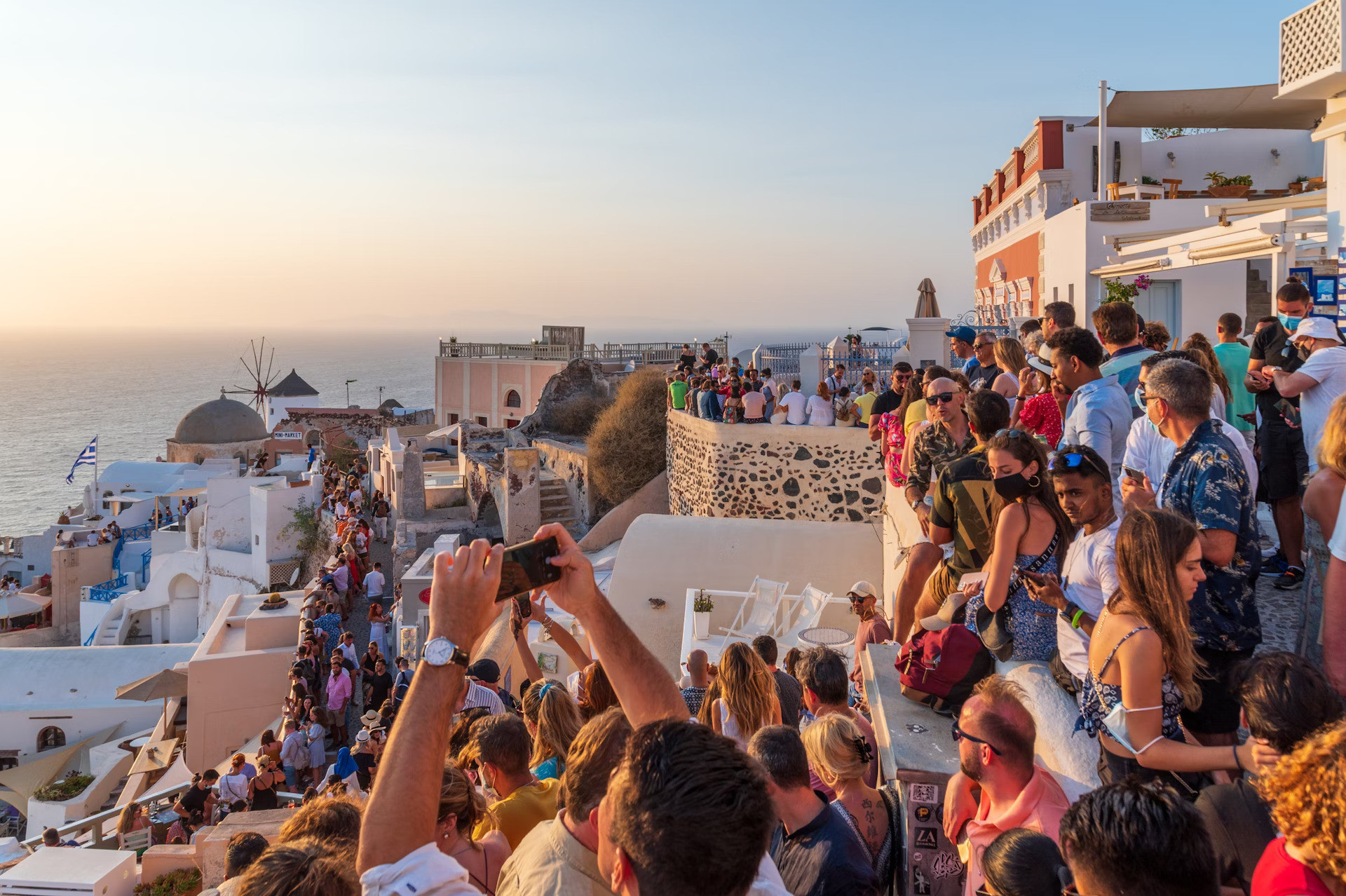
During peak season, up to 17,000 passengers from cruise ships flock to the island to visit attractions such as Fira or the town of Oia on the northwestern tip, famous for its spectacular sunsets.
This place has even been nicknamed the "Instagrammable island" because of its perfect beauty.
However, the constant crowds of tourists taking photos at sunset on the cobblestone streets and cliffside balconies have significantly impacted the daily lives of local residents.
Many people believe that the development of tourism is causing the island to deteriorate day by day.
Georgios Damigos, the owner of a hotel on the island, said that the living conditions of the people have been greatly affected: "We live on a small island with an area of only about 70 square kilometers."
So how should the island's infrastructure develop to cope with a tenfold increase in the number of tourists?
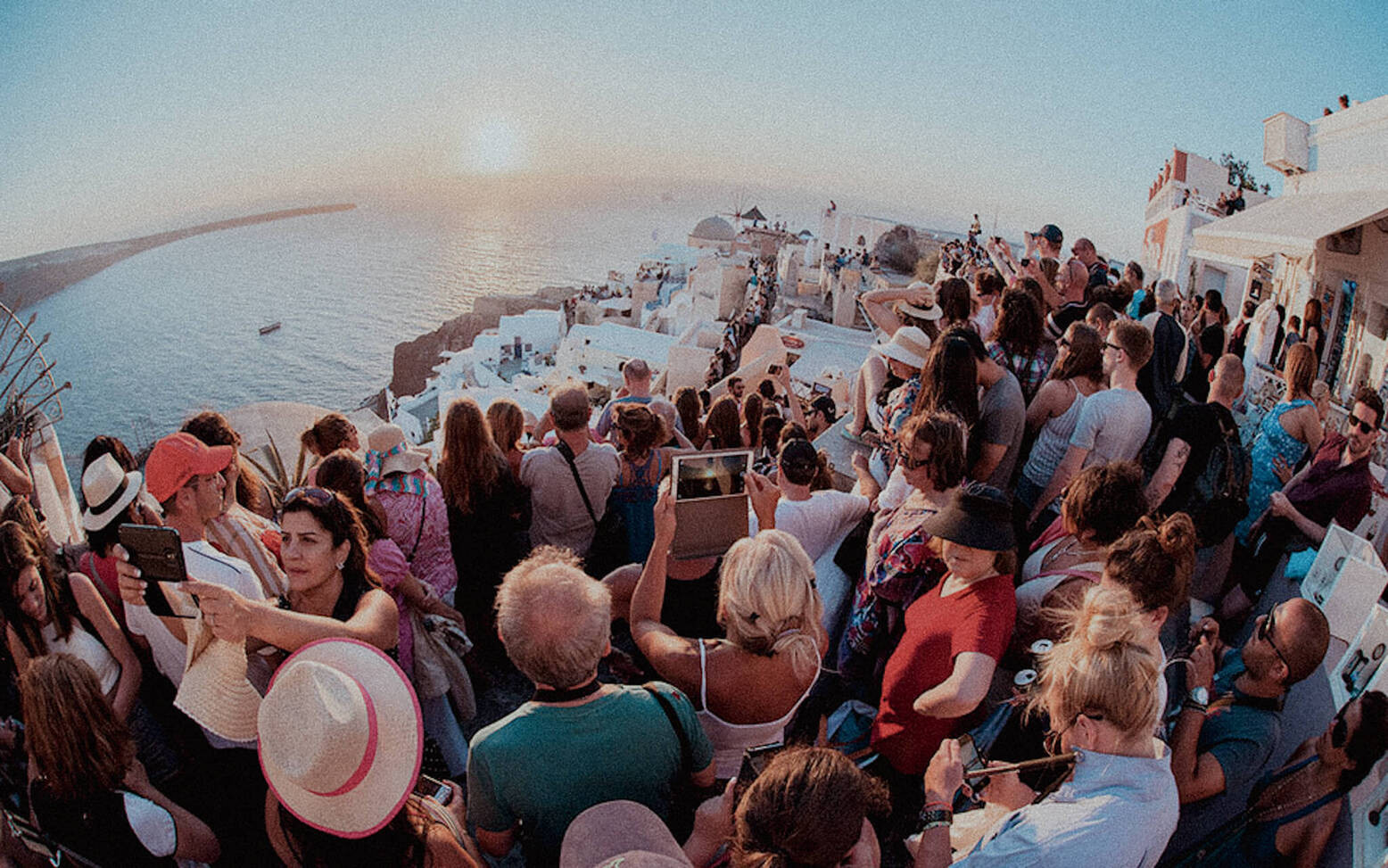
Santorini's mayor, Nikos Zorzos, has proposed limiting the number of tourists arriving on the island by cruise ship to 8,000 per day.
This move has been strongly supported by Greek Prime Minister Kyriakos Mitsotakis, who affirmed that the measure will be implemented next year.
Protests against tourists have been a major issue across Europe this summer.
On August 1st, Venice limited the size of tourist groups to 25 people and banned loudspeakers, after declaring that the initial entrance fee measure was considered a success, bringing the city approximately $2.64 million in revenue.
Overtourism has become a common term in recent years as popular destinations have to find ways to balance the number of tourists with the quality of life of residents, as well as maintaining a sustainable environment.
Source: https://vietnamnet.vn/mua-he-ac-mong-tren-hon-dao-song-ao-noi-tieng-the-gioi-2308768.html