
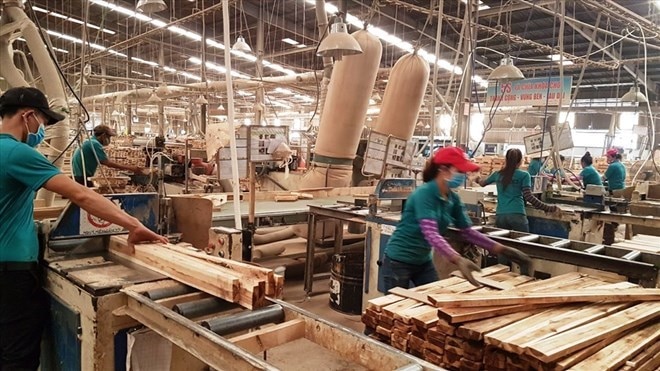
The timber industry has a trade surplus of over $7.8 billion.
On August 9, 2024, speaking at the "Conference on the Processing and Export of Wood and Forestry Products in the Third Quarter of 2024," Mr. Trieu Van Luc, Deputy Director of the Forestry Department ( Ministry of Agriculture and Rural Development ), stated that in the first seven months of 2024, the export value of wood and forestry products was estimated at US$9.361 billion, an increase of 20.5% compared to the same period last year. Conversely, the import value of wood and wood products in the first seven months was estimated at US$1.5 billion, an increase of 22.3% compared to 2023.
"With these results, the trade surplus of the entire industry after 7 months is estimated at 7.86 billion USD," Mr. Luc said.
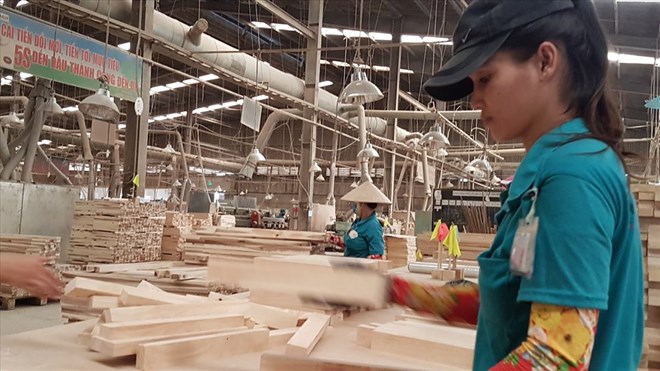
In the first seven months of 2024, exports of wood and wood products to the US increased by 24%, reaching $5.019 billion; to China: increased by 37.92%, reaching $1.22 billion; and to Europe (EU): increased by 22.44%, reaching $555 million.
However, exports of wood and wood products to the Japanese and South Korean markets decreased (Japan decreased by 2.73%, South Korea decreased by 1%).
Wood exports face challenges; solutions are needed to overcome them.
Sharing their views at the seminar, traders also stated that the export of wood and wood products is facing many difficulties due to the ongoing challenges in the global economy : the war between Russia and Ukraine, the Panama Canal drought, the Red Sea crisis, etc. In addition, the forecast for global economic growth is 2.6%, lower than the 3.1% growth rate of 2023.
The factors mentioned above will undoubtedly have a significant impact on the timber industry's trade.
In particular, according to Mr. Do Xuan Lap, Chairman of the Vietnam Wood and Forest Products Association (VIFOREST), Vietnamese businesses exporting goods to the US will continue to face discriminatory treatment in anti-dumping and countervailing duty investigations. The actual production costs of Vietnamese businesses will continue to be unrecognized, and instead, a third country's "surrogate value" will be used to calculate the dumping margin.
"Lawsuits may continue to increase in the coming period, as the US and global economies are experiencing crises, and the manufacturing sector in the US is facing difficulties," Mr. Do Xuan Lap commented.



Regarding future solutions for the wood industry, Mr. Do Xuan Lap suggested improving the competitiveness of businesses. This should focus on five main areas: technical and technological solutions in production; reduced emissions in production (green products); management solutions, with a priority on digital transformation (applying software in management); boosting trade promotion (placing market development as a top priority at the present time); and establishing a set of internal monitoring standards within businesses.
VIFORES proposes that the Ministries of Agriculture and Rural Development, Industry and Trade, and other relevant government agencies support and guide businesses in responding to US trade defense investigations. Simultaneously, a coordination mechanism is needed to update information on policy changes in key export markets for Vietnam's wood industry and provide forecasts, warnings, and other information related to trade defense.
Accordingly, relevant authorities are developing policies to support trade promotion activities for the wood industry, aiming to provide businesses with more opportunities to introduce and promote the image of Vietnamese wood to export markets. VIFORES also proposed that the Ministry of Planning and Investment implement policies to discourage foreign investment in projects producing wood products from countries that have been subject to anti-dumping duties imposed by third countries.
Source: https://laodong.vn/kinh-doanh/xuat-khau-go-dat-thang-du-thuong-mai-tren-78-ti-usd-1378309.ldo