

Investors in the resource sector are preparing for sharp cuts to Chinese steel production, which could affect Australian iron ore mining companies.
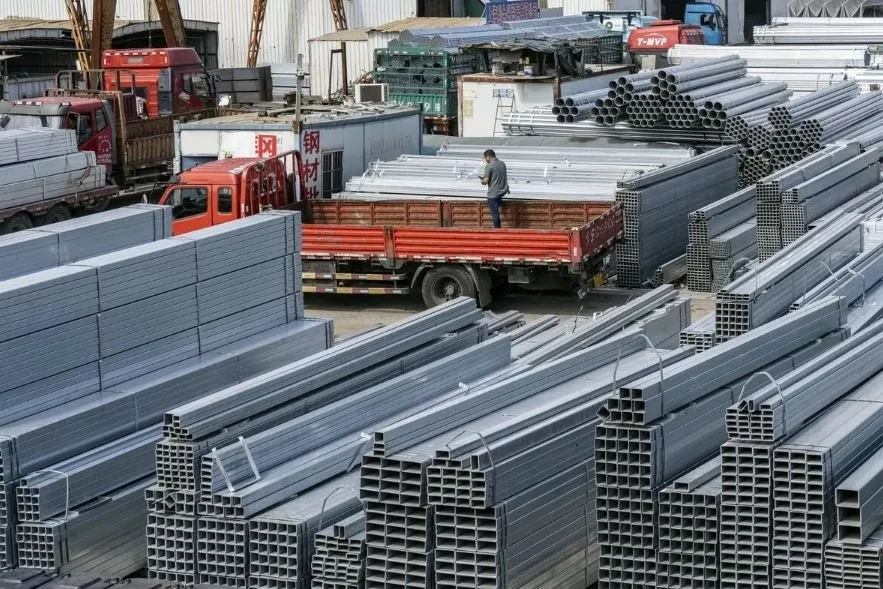 |
| Although volume cuts are uncertain, the market forecasts China could lose up to 50 million tons of steel this year. |
The negative impact will mainly affect small producers
However, fund managers predict that the negative impacts will primarily affect smaller producers where mining costs are significantly higher and iron ore quality is generally lower than for large conglomerates such as BHP and Rio Tinto.
“Companies like BHP and Rio are still making excellent profit margins at current prices.Well, Sam Berridge is a portfolio manager at Perennial.
Last week, Chinese authorities announced that they would require nationwide steel production cuts in order to reduce the surplus situation affecting the steel industry and restore profitability. The prolonged downturn of China's real estate market since the Covid-19 pandemic has led to a large excess of steel, much of which has been exported, impacting Australian producers such as BlueScope Steel and GFG Alliance's struggling Whyalla plant.
“China's steel exports have risen sharply in the last few years - this is how they deal with surplus steel that domestic markets cannot consume.But now the overseas markets are almost saturated, so to protect domestic industry they'll have to cut production.
Although volume cuts are uncertain, the market forecasts China could lose up to 50 million tons this year - about 5 percent of its annual steel consumption of around 1 billion tons. production of steel China's iron ore demand will fall to its lowest level since 2017, dragging down demand for the metal at a time when supplies from Africa are rising sharply.
Rio Tinto expects to mine the first batch of ore at its Simandou project in Guinea later this year and will raise capacity to 120 million tonnes - accounting for about 7% of the seaborne iron ore market.
Futures traded in Singapore fell below $100/ton last week for the first time since mid-January, closing March 7 at $99. 85 per ton.
Robert Rennie, head of commodity strategy at Australia's Westpac Bank, said he expects high inventories in Chinese ports and declining steel output to keep prices below $110 a tonne for some time.We estimate that the price of iron ore will drop significantly throughout this year and into 2026.Well, you said it.
However, Ben Cleary, portfolio manager at the Tribeca Global Natural Resources Fund, believes that most of Australia's iron ore producers will not be severely affected.
“In particular, the reduction in steel production is not a major problem for iron ore producers of Other countries, which supplies raw materials to high-quality steel producers at a lower costWell, he remarked and said:Greater impact on Australian manufacturers will be the supply of high-grade iron ore from Simandou later this year, increasing competition and partially replacing supplies from Australia”.
Exceeded expectations
Iron ore prices have been relatively resilient since the beginning of this year, following 12 months of volatility as the real estate crisis Now, the world's largest steel producer is China. the world China is entering a period of cyclical strong demand in March and April, which could boost iron ore consumption and sustain prices for the short term.
Iron ore prices were even supported by bad weather in Western Australia, causing supply disruptions at the country's largest export hub Port Hedland in the Pilbara during January and February.
The supply disruption contributed to a 2% decline in Australia's iron ore exports this year compared with the same period of 2024, dragging on a 4% drop in inventories at Chinese ports just last week.
Goldman Sachs analysts noted that Australian exports rose sharply in March, while output from major producer Brazil also increased.
Goldman Sachs says that the market is in a state of equilibrium, but they still predict China's crude steel production will fall by 1% this year, mainly focused on the fourth quarter.
Along with increased supply, this will lead to a surge in iron ore inventories, pushing prices below $90 per ton by the end of the year.
“Iron ore has had a spectacular rise in price over the last two decades, and it's unusual for a commodity to sustain such high prices for so long with such strong profit margins.Well, Sam Berridge, the portfolio manager at Perennial said that he expects prices to fall to $80 a ton.
Some experts predict that the sell-off could be even more severe, with Westpac Bank warning that prices may plummet by as much as 30 percent this year to just about $70 a ton.
| Last week, Chinese authorities announced that they would require nationwide steel production cuts in order to reduce the surplus situation affecting the steel industry and restore profitability. The prolonged downturn of China's real estate market since the Covid-19 pandemic has led to a large excess of steel, much of which has been exported, impacting Australian producers such as BlueScope Steel and GFG Alliance's struggling Whyalla plant. |
See also: https://congthuong.vn/trung-quoc-giam-san-luong-thep-ap-luc-len-quang-sat-australia-377726.html

































Comment (0)