
But why do visitors to Pleiku have such a strange feeling? It seems that the city is "cold" on the outside, but warm and inviting on the inside. It's not pushy, it doesn't flaunt its unique attractions, but Pleiku is like a gentle, quiet girl, subtly leading visitors from one surprise to another. That's the essence of a friendly city.
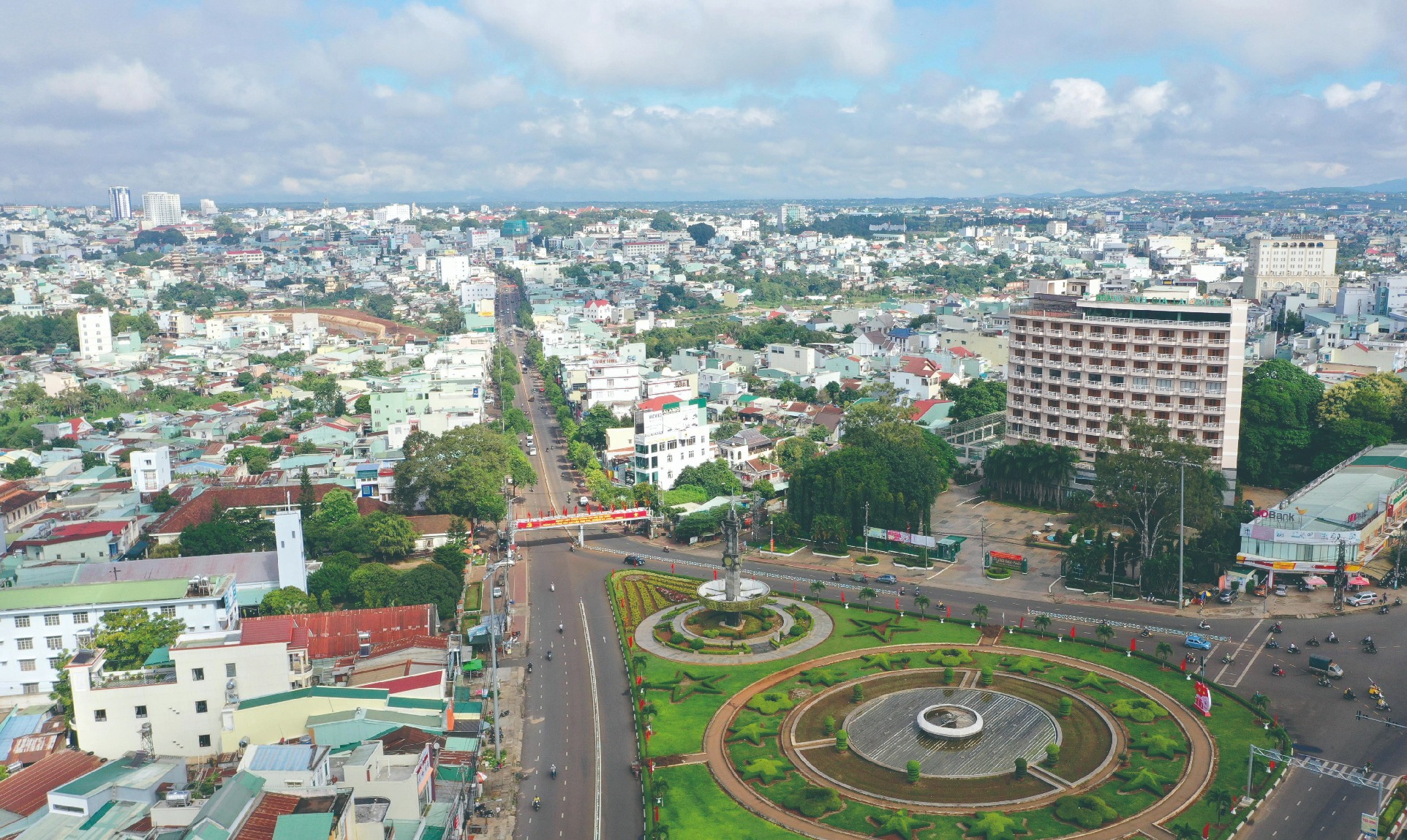
A view of Pleiku city from above.
HOANG KIEN
When people think of friendliness, they immediately picture effusive greetings and ostentatious displays of wealth and prestige at the city's entrance. But Pleiku is quite different. From the moment you enter the city, you feel a sense of tranquility that surpasses even that of tourists. The city seems to drift lazily like clouds or mist, and the deeper you go into its heart, the more you feel the mountains within the city. Pleiku is a place where mountains reside within the city, though they are not ostentatious; they are as hidden and unassuming as the city itself.
I remember 1977, my first time going to Pleiku. I went with writer Thai Ba Loi; we were assigned by our agency to conduct fieldwork at an economic development unit in the area.
Upon arriving in Pleiku, we stopped at the small but rather beautiful wooden house of writer Trung Trung Đỉnh. Đỉnh had fought in Gia Lai ; it was a very familiar territory to him. He speaks the local dialect, having served in an independent Ba Na guerrilla unit. He later wrote about this interesting story in his very famous novel, *Lost in the Forest*.
We went to Mr. Dinh's house, but he was still in Da Nang and hadn't come up yet. The house was given to "the teacher couple from Hue," Mr. Le Nhuoc Thuy and Ms. Hue, to stay in, both to solve their problem of not having a place to live and to have them look after the house. While staying at Mr. and Mrs. Thuy's house, Loi and I just wandered around the city.
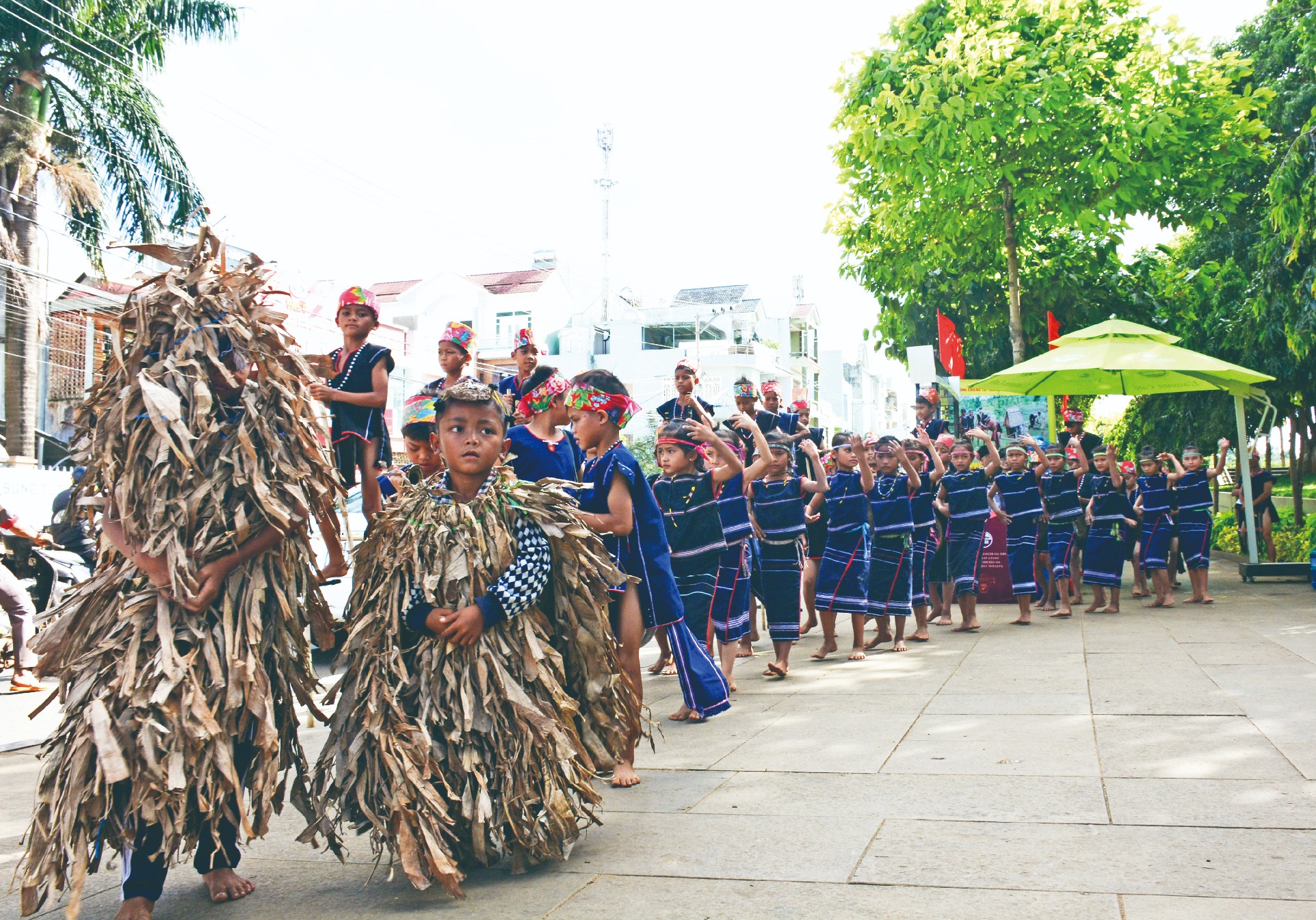
Many cultural and artistic activities are organized in Pleiku.
HOANG KIEN
Back then, the center of Pleiku had a rather large coffee shop, a morning gathering place for the "coffee-loving residents" of this mountain city. The shop was called Diep Kinh, and the owner was probably of Chinese descent. We drank coffee and made new friends. The people of Pleiku are very kind and easy to talk to, much like the people of our city. When they learned we were artists, the coffee shop owners were very happy. They invited us to sit and have a drink with them in the afternoon; the pub was also near Diep Kinh.
Lợi and I immediately accepted. That afternoon, sitting in a breezy pub, we truly felt that this city was "winter all year round." It was a bit chilly, requiring extra layers, but not the biting cold of Hanoi; Pleiku had a pleasant chill. Perhaps it was because there was a lack of northerly winds here.
While chatting with teachers and artists in Pleiku, I often heard them mention a poet who was a friend of ours, the poet Vu Huu Dinh. Dinh had spent time in Pleiku during the war. He didn't stay long, but he wrote a poem that has survived to this day: "There's Still Something to Remember ."
Pleiku should thank Vu Huu Dinh, because not every city in this country receives such a beautiful, lovely, and enduring poem like Vu Huu Dinh's little poem.
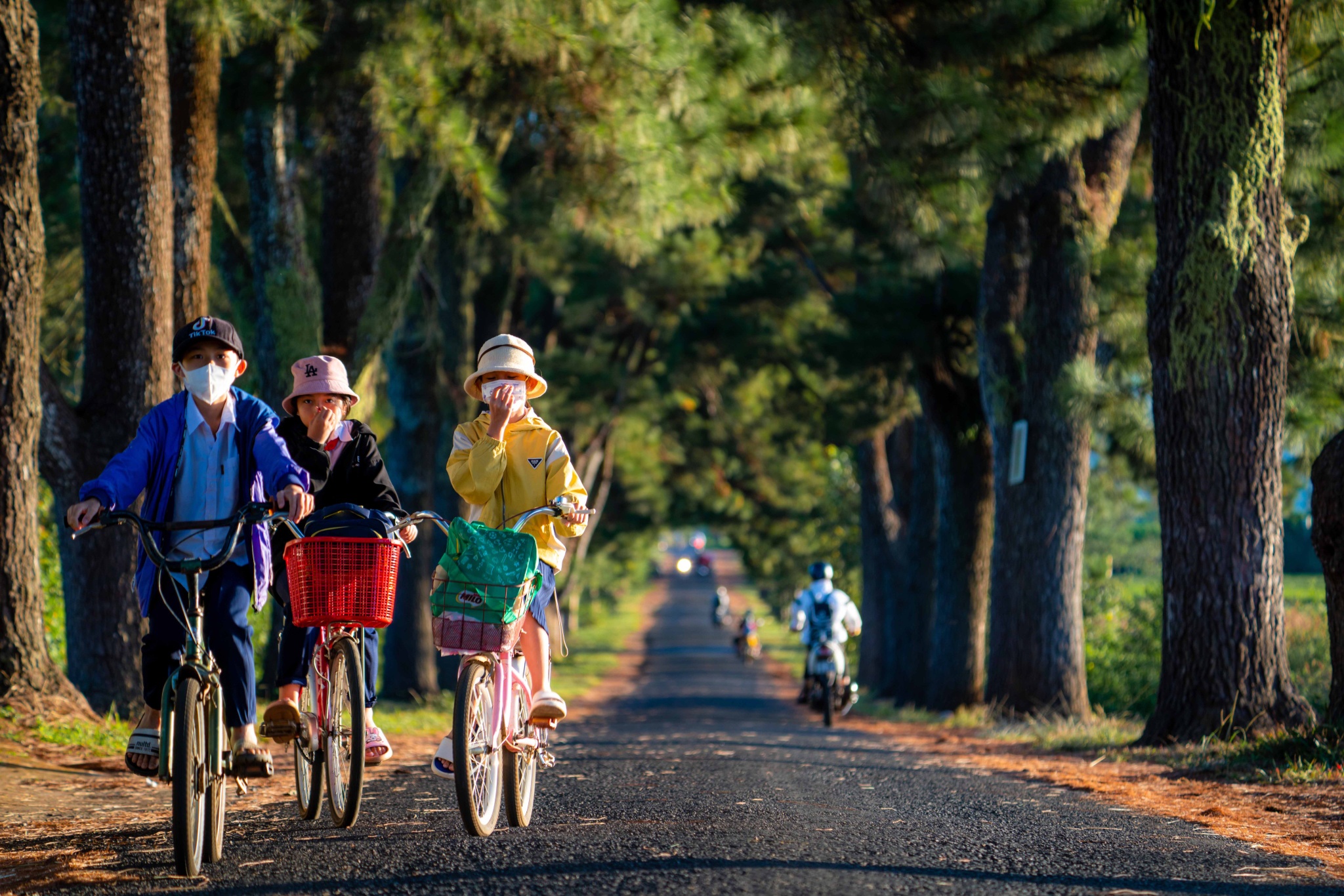
A road lined with ancient pine trees near Bien Ho Lake, Pleiku, Gia Lai.
BUI VAN HAI
It's true that Pleiku should begin with " a high mountain town, a town full of mist/a town with green trees and a low sky, truly melancholic ." It possesses a vague, quiet, and humble charm, yet it holds enough hidden beauty to captivate visitors from afar.
" A stranger goes up and down / Luckily , there's you, life is still lovely ." He goes up and down only because something compels him to ignore it, to not be distracted, even though he can't explain it yet. And "you" here is Pleiku, just like the following lines in the poem: " You , Pleiku, with rosy cheeks and red lips / Here, the afternoon is like winter all year round / So your eyes are wet and your hair is wet / Your skin is soft like the evening clouds ."
"She" is the city, and the city is also "she"; the poem is both misty and clear, like Pleiku in the afternoon and Pleiku bathed in bright sunlight.
For me, along with Vu Huu Dinh's poem, Pleiku is the city of poetry. It's not necessarily the case that only cities that produce many famous poets can be called the city of poetry. The beauty of poetry is always a hidden beauty, and Pleiku possesses exactly that kind of beauty.
Vũ Hữu Định's poem has imprinted Pleiku in the hearts and memories of many. Especially when the renowned musician Phạm Duy set it to music. Phạm Duy preserved almost the entire poem, including the title. Vũ Hữu Định, when we were close friends, said he was very pleased with the song. Music elevated the poem to a different realm, quiet like the poem itself, but even more soaring than the poem.
Because Pleiku is a city of "few," perhaps the "fewest" of all the cities in Central Vietnam. The noise from traffic is one thing, but the lack of conversation is another. Not overly welcoming, but Pleiku greets visitors with a certain joy, which Vu Huu Dinh immediately recognized: " So your eyes are wet and your hair is wet / your skin is soft like the evening clouds."
That's very emotional, isn't it?
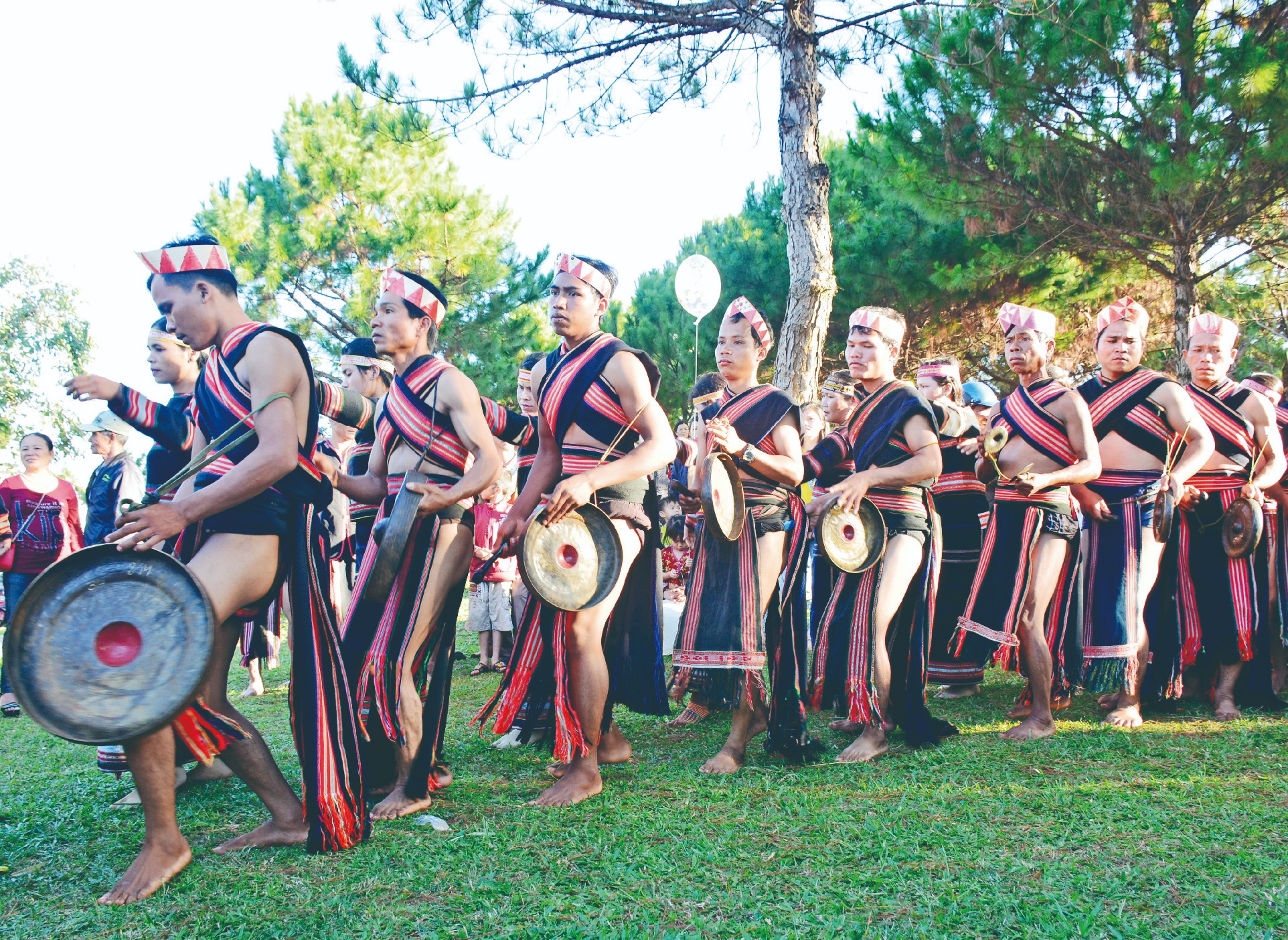
Gong performance in Pleiku



HOANG KIEN
Just thinking about Pleiku evokes a sense of nostalgia. It's the feeling a city gives people. It's like the fragrant scent of wildflowers, leading us to vague yet profound images. It's like the ancient pine trees—simple yet warmly welcoming hosts—when they greet guests. The small streets of Pleiku are lined with these ancient pine trees.
That is the pride of this highland city. The city, "where the afternoons are like winter all year round," whispers to us about its source of emotion, asking if we really need much in life. I think that just this much emotion, this much affection from Pleiku, is enough for us to live life with full appreciation and respect.
Thai Thanh (compiled)
Thanhnien.vn
Source: https://thanhnien.vn/thanh-pho-o-viet-nam-pleiku-may-ma-co-em-doi-con-de-thuong-185240806173617492.htm