
QMS Top Tower is a blinding light that's blocking out an entire street corner.
For several days now, people traveling along the To Huu - Vu Trong Khanh road have been paying special attention to a mixed-use building project featuring high-end services, commercial spaces, and residential units.
The reason it attracted attention wasn't because of the project's scale or the developer's extensive advertising, but because people traveling on this road frequently faced the "blazing sun."
According to observations by Nguoi Dua Tin at 8:00 AM on August 7, 2024, although the sun wasn't too strong and the surrounding temperature was only 29 degrees Celsius, the QMS Top Tower building on To Huu Street radiated a brilliant glow, shining directly into the view of passersby.
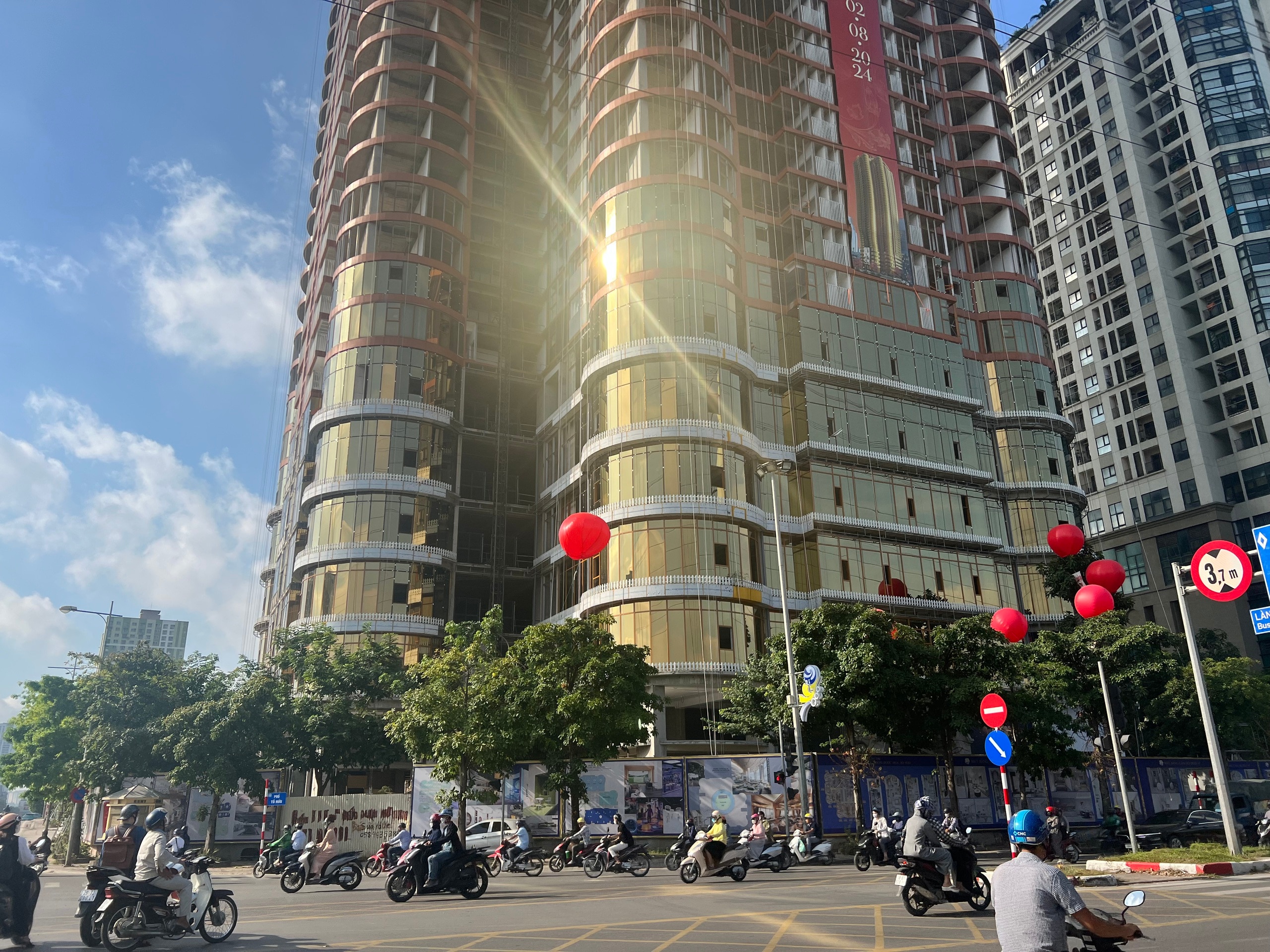
According to a reporter from Nguoi Dua Tin, at 8:00 AM on August 7, 2024, the building illuminated a corner of To Huu Street brilliantly.
Speaking to Nguoi Dua Tin , Ms. Le Thi Thanh Hien (25 years old) said that because of her job, she has to travel on To Huu Street every day. She often has to quickly pass by this building because, from certain angles, the sun reflects directly into her eyes, causing glare and making it difficult to see the road.
Ms. Hien shared that in the morning when the sun isn't too strong, the building's reflectivity is moderate, but when the sun is strong, especially at noon, the building will reflect light much more "brilliantly".
Upon learning that the developer intended to "cover" the entire 45-story building in gold, Ms. Hien expressed surprise and questioned whether this would affect residents living and commuting in the area.
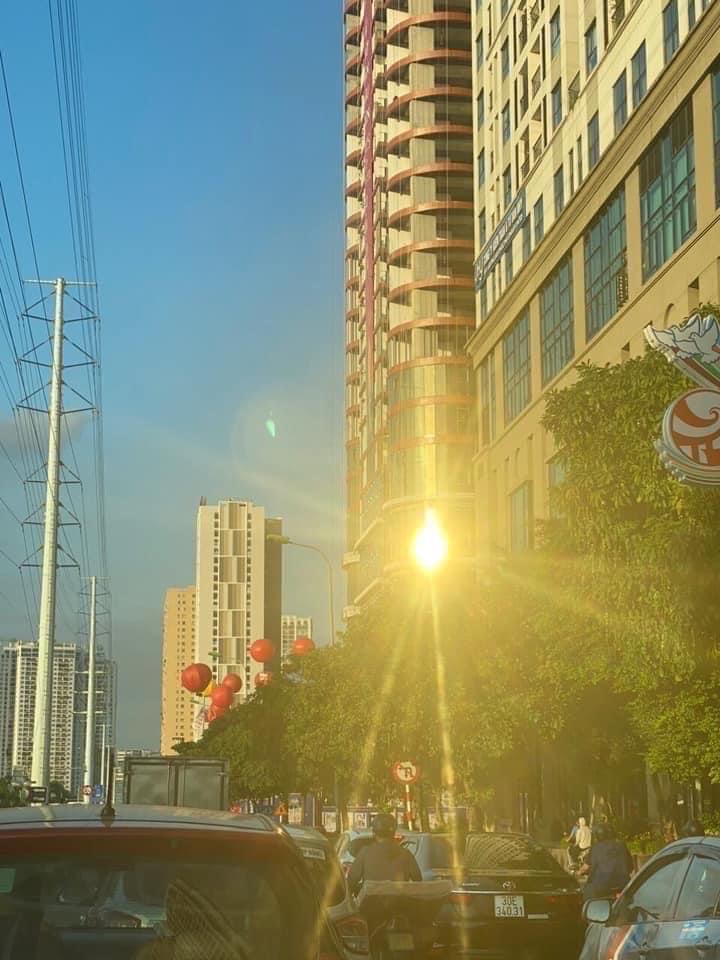
Images circulating on social media show the QMS Top Tower glowing brightly in the intense sunlight.
"It's fine in the winter when there's less sunshine, but in the summer, the intense sun might pose a safety risk to road users. This road is already prone to traffic jams, and if you add the glare that impairs visibility, I'm afraid it will lead to many traffic accidents," Ms. Hien said.
Many images of the brightly illuminated building also circulated on social media, with many viewers jokingly saying, "So this is the greenhouse effect," as the sun reflected brilliantly through the building's glass panels.
Gold-plating glass isn't wrong, but the risks need to be considered.
Sharing his views on the matter with the News Reporter , architect Nguyen Hoang Van Truong stated that glass materials used in construction have characteristics such as aesthetics, high safety, and ease of installation, making them suitable for designing open spaces.
Among these, reflective glass is highly favored for its ability to reflect light, block ultraviolet rays, and provide good thermal insulation while still ensuring transparency when people inside the space look outside.
Therefore, this type of material is very popular in spaces with limited area, especially in urban areas.
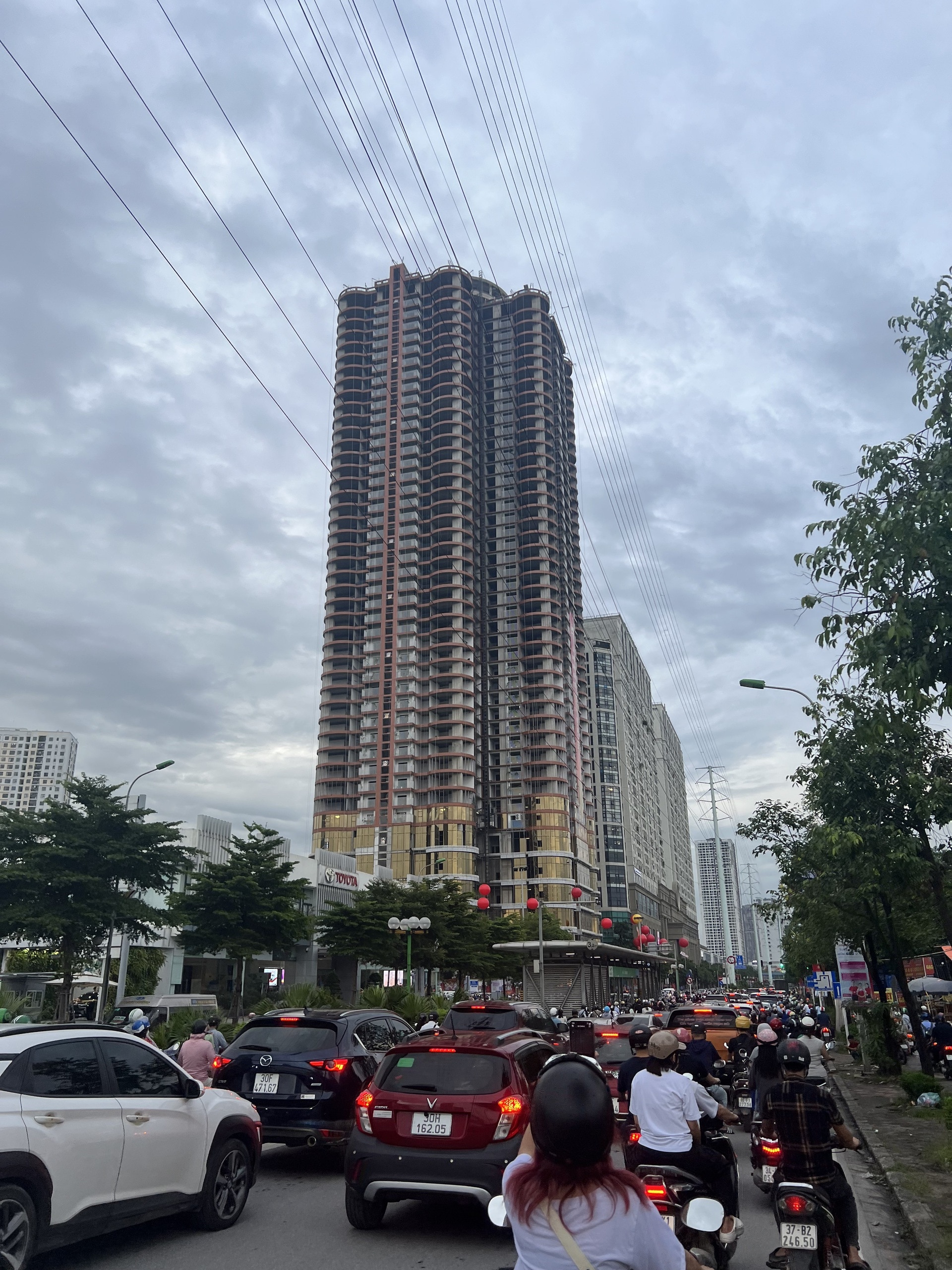
To Huu Street is a road with a high density of traffic.
"Many developers prefer using yellow-tinted reflective glass because it gives the building a luxurious and expensive feel, as the color is similar to that of gold – a precious metal with a high market value."
However, a weakness of this material is its strong reflectivity, reflecting light directly at an angle equal to the angle of incidence, which can obstruct the vision of those around it.
"For a high-rise project located in the middle of a busy intersection, this can cause many negative consequences and risks for road users due to restricted visibility, which could easily lead to traffic accidents or unnecessary collisions," Mr. Truong stated.
However, Mr. Truong also informed that in Vietnam, there is currently no specific standard for glass, especially facade glass for large-scale and high-rise buildings.
While some standards for glass are recommended, they only relate to durability, safety, impact resistance, etc., and do not take into account reflectivity, heat absorption, and light transmission. Therefore, the investor's use of this material is not against the law; however, its long-term effects and impacts should also be considered.
The examples of the two projects in Da Nang still remain.
Previously in Da Nang, two prominent projects – a commercial and office building on Nguyen Van Linh Street owned by a bank, and the Risemount Apartment building on Nhu Nguyet Street, Hai Chau District, owned by Pavnc Risemount Company – were also reprimanded by the city's Department of Construction.
The leaders of Da Nang city have signed a decision imposing an administrative fine of 40 million VND per investor on the investors of two buildings with yellow reflective glass causing glare, and ordered the investors to temporarily suspend construction and complete the procedures to request the Department of Construction to adjust or reissue the construction permit within 60 days.
If approval is not granted, measures will be taken to forcibly demolish the infringing part of the structure.
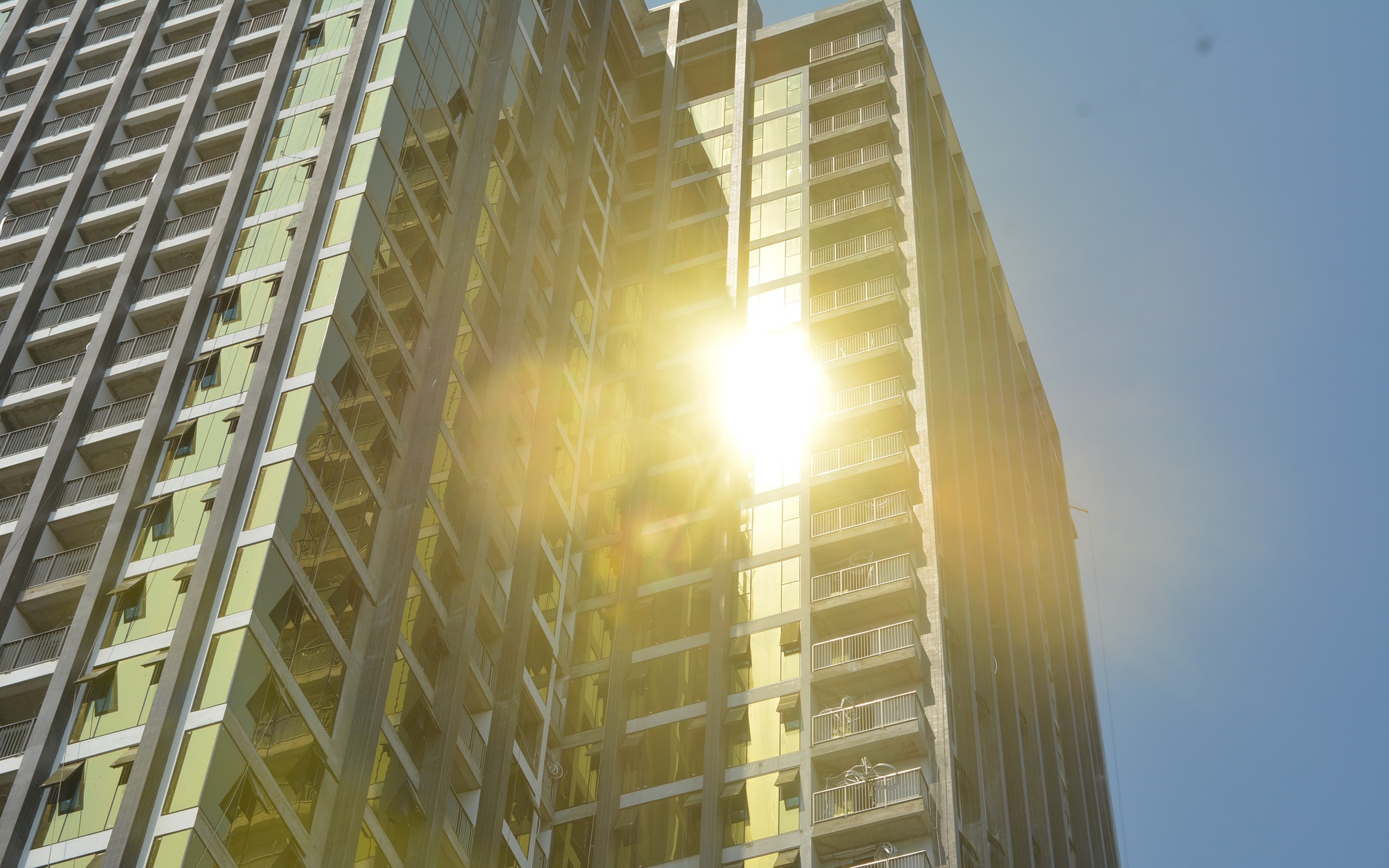
In the past, two construction projects in Da Nang were also fined by the Department of Construction for reflective glass that affected road users.
According to the head of the Da Nang Department of Construction, these two buildings arbitrarily changed the exterior cladding color design. The approved architectural plan was to use blue glass, while in reality, the investors used yellow glass with unsuitable reflectivity. This architectural change has caused a reaction from the public because it causes glare for those using the roads.
The QMS Top Tower apartment complex is known as the Mixed-Use Building Project: Commercial and Residential on To Huu Street, Dai Mo Ward, Nam Tu Liem District, Hanoi (formerly known as QMS Tower 2), developed by Quang Minh School Services Joint Stock Company.
QMS Top Tower is located on a 3,500m2 plot of land on To Huu Street, with a total investment of approximately 1,500 billion VND.
The 45-story project comprises 490 apartments, with floors 1-5 dedicated to commercial and service areas; floor 6 for community facilities; floors 7-37 for residential apartments; floors 38-44 for hotel apartments; and floor 45 for services.
The project was topped out in April 2020, but after being stalled for four years, it only went on sale in early August 2024. The developer promised to hand over the houses in the first quarter of 2025.
According to Nguoi Dua Tin, this project is currently being advertised at prices ranging from 60 million VND to 90 million VND per square meter, meaning each apartment costs between nearly 5 billion VND and over 10 billion VND.
Source: https://www.nguoiduatin.vn/qms-top-tower-dat-kinh-vang-choi-mat-tiem-an-rui-ro-204240807090506379.htm