
$15.5 billion in loans have yet to find suitable projects.
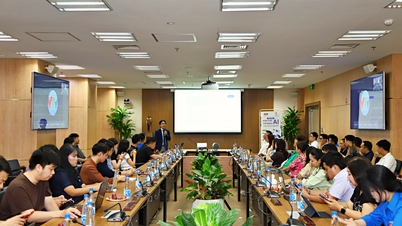
At the seminar "Prospects for the Development of Green Finance" organized by the Investment and Finance magazine on the afternoon of August 6th, Dr. Vo Tri Thanh - Director of the Institute for Brand and Competition Research, stated that green development is not only a strong political commitment of the entire nation, but also a mandate from the market itself, as consumers demand greener and safer options; from the requirements of developed countries; and from the financial sector, where loans are not granted if they are not green.
Currently, 80% of financing requires ESG (environmental, social, and governance) compliance. For businesses, these issues are not just about survival, but also about seizing new opportunities through green development.
While emphasizing that green finance is a revolution in institutions and technology with many new aspects such as green criteria, green standards, and green origin, he acknowledged that businesses face many challenges such as transition costs, market pressure, and institutional issues.
Regarding financial resources, Mr. Thanh noted that green transformation requires significant costs and substantial capital. This process must be implemented from the top down, involving changes in legal institutions, policies, and business approaches.
According to him, the green economy and green finance represent a comprehensive transformation. In this process, finance is clearly crucial, and therefore the participation of financial institutions and funds is essential.
Drawing from real-life examples, Dr. Vo Tri Thanh pointed out that "we are doing things while running." According to him, not only the issues of green economy and green finance, but also the digital economy, digital finance, and financial development... are all incomplete. If we continue to wait for the law, it will take another four years, so we need breakthrough policies to develop the green economy and finance.
Lawyer Nguyen Thanh Ha - Chairman of SBLaw Law Firm - said that Vietnam has paid attention to building a legal framework for green economy and green finance from a very early stage, but it has not met expectations.
The lack of a legal framework and regulations significantly impacts investors' decisions in this market. Furthermore, Vietnam has not yet developed diverse green criteria for specific industries. Therefore, the path to developing green finance and a green economy in our country still faces many challenges.
Dr. Le Xuan Nghia, a member of the National Financial and Monetary Policy Advisory Council, pointed out the reality that while green financing sources exist, businesses have not yet been able to access them.
He cited the $15.5 billion that the Fair Energy Transition Partnership mechanism has allocated to Vietnam for the transition from fossil fuels to renewable energy, but so far no projects have found loans or received funding due to procedural obstacles.
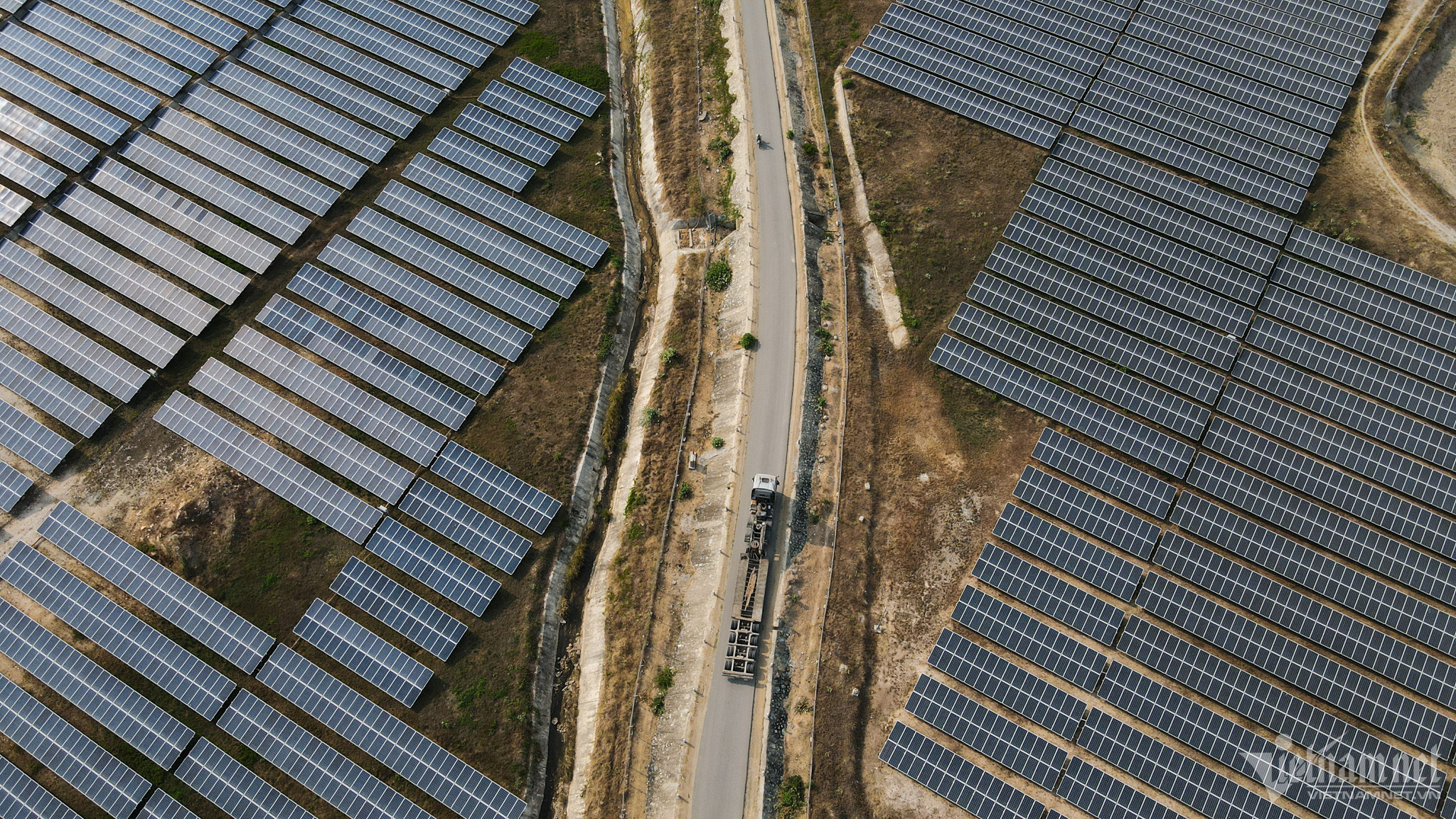
Expanding on the topic of green policy, Mr. Nghia assessed that we are talking a lot but doing very little. In reality, green loans and green bonds for wind and solar power projects are still just ordinary loans or investments with full conditions regarding collateral, interest rates, and terms, without any special privileges or incentives.
Moreover, the scale of these funds is disproportionate to the need for green finance. The World Bank estimates that we need $360-400 billion to transition our energy needs and reduce greenhouse gas emissions between now and 2030.
To attract green capital, businesses need a strategy.
From a business perspective, Mr. Nguyen Anh Tuan - Chief Financial Officer of PAN Group - said that the company has approached many international financial institutions and found that sustainable financial products are suitable.
According to him, there are two products under this scheme in Vietnam: a green finance product for businesses with large green projects that are easily financed by international organizations; and another product that requires businesses to commit to reducing emissions according to ESG criteria. PAN Group is pursuing both products.
Businesses can also access green financing in this way without relying entirely on state capital. However, Mr. Tuan also noted that in order to access financial institutions, businesses themselves must have a certain foundation in sustainable development and sustainable governance.


Chairman of IIA Vietnam, Hoang Duc Hung, raised the question: "In the flow of green finance, how can money flow to the right places?" According to him, businesses must demonstrate that they are "green." "Green" here doesn't just refer to environmental issues, but more broadly to ESG and sustainable development. Money flows into businesses not simply because they are green, but also because they achieve balance, demonstrate commitment to social responsibility, and possess sound governance practices.
Therefore, for investment funds to invest in a business, due diligence is essential. Businesses must provide reports so that stakeholders can see their commitment.
Vietnam has the limitation of lacking a sustainable and green development reporting framework. “Lenders have their criteria. However, regulatory agencies also need to develop a sustainable development reporting framework. The methodology and measurement tools also need to be standardized,” Mr. Hung suggested, adding that in the long term, and most importantly, it requires the awareness of top leadership within businesses.
"To attract green capital, businesses must have a specific strategy and direction. It's not like saying 'green' today means it can become 'green' tomorrow. Once a reputation is tarnished, it's difficult to rectify and very difficult to find partners to work with," Mr. Hung shared.

Source: https://vietnamnet.vn/du-an-dien-gio-dien-mat-troi-khong-co-uu-dai-nao-khi-vay-von-2309283.html