
In the context of a rapidly shifting global economy driven by technological breakthroughs, innovation is no longer an option but a matter of survival for businesses. However, many Vietnamese businesses still face significant difficulties in investing in R&D due to a lack of capital, insufficient support mechanisms, and a lack of connection with the innovation ecosystem.
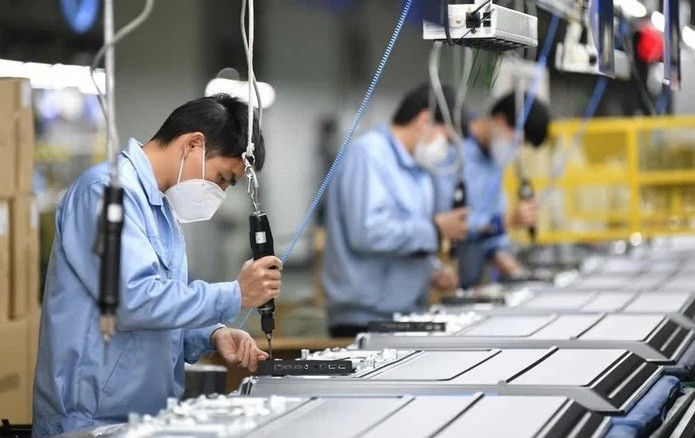 |
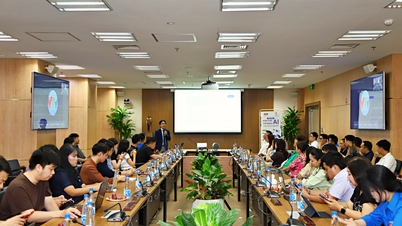
| Resolution 57 serves as a foundation for businesses to boldly innovate. (Illustrative image) |
One of the key aspects of Resolution 57 is to increase the investment rate in science and technology research to 2% of GDP, with over 60% coming from the private sector. This not only demonstrates the government's determination to promote science and technology but also highlights the central role of businesses in the innovation ecosystem. In fact, in many developed countries, the majority of breakthrough technological inventions originate from the business sector. Increased private sector investment will help Vietnam gradually shift from a development model based on cheap labor to a knowledge-based and high-tech economy.
Ngo Tuan Anh, CEO and founder of SCS-SafeGate, a smart cybersecurity company, believes that Resolution 57 not only removes bottlenecks but, more importantly, has created confidence and motivation for hundreds of thousands of innovative businesses in Vietnam to confidently develop and thrive. Startup businesses, especially innovative ones, need a market to launch their products and services. However, entering the market is not easy for startups and innovative businesses due to many conditions and barriers to overcome, especially regulations on implementation capacity and finance.
"These bottlenecks were resolved with the issuance of Resolution 57. The resolution outlines a pilot mechanism (sandbox), which frees up innovative startup businesses. The pilot mechanism, allowing businesses to test new technologies under state supervision, needs to establish specific criteria and conditions to ensure that any innovative business can participate in this development process." Mr. Ngo Tuan Anh, CEO and founder of SCS-SafeGate Smart Cybersecurity Company. |

Furthermore, Resolution 57 also emphasizes strengthening cooperation between businesses and research institutes and universities to accelerate technology transfer. This is a crucial factor in helping businesses quickly access the latest scientific achievements, thereby shortening the time for research and product development. This collaborative model has been successfully applied in many developed countries, such as South Korea and Germany, where businesses and research centers operate as a unified ecosystem, promoting innovation towards practical applications.
In the high-tech sector, particularly artificial intelligence (AI), big data, and blockchain, Resolution 57 creates a legal framework that encourages businesses to confidently experiment with and deploy new technologies.
"Clarity in policy is a crucial factor that helps technology companies feel more confident when investing in research, instead of worrying about legal risks. Thanks to this more favorable environment, many technology companies in Vietnam have begun to make significant strides in the fields of AI, robotics, and cybersecurity." Mr. Nguyen Tu Quang, CEO of Bkav |

Furthermore, Resolution 57 sets out the task of developing high-quality human resources, with systematic training policies to meet the requirements of the digital economy. To realize this goal, universities and businesses need to strengthen cooperation in training, ensuring that human resources not only possess specialized knowledge but also practical skills, ready to participate in the innovation ecosystem immediately after graduation.
Besides clear opportunities, businesses also face numerous challenges when implementing innovation. According to Mr. Le Hong Minh, CEO of VNG, one of the biggest obstacles is outdated management thinking. To truly break through, businesses need to change from their approach to the market and business strategy to their operational methods, with digital transformation playing a core role. In reality, many businesses, despite their potential, are still slow to adopt new technologies, leading to a gradual loss of competitiveness. Therefore, Resolution 57 is not only an opportunity but also a test for businesses to demonstrate their innovation capabilities.



Speaking at the Vietnam National Forum on Digital Technology Business Development 2025 on January 15th, Mr. Truong Gia Binh, Chairman of FPT Group, assessed: “Resolution 57 is the foundation for Vietnamese businesses to boldly enter the era of innovation, with a mindset of mastering technology, not only to catch up with the world but also to compete and break through.” This shows that, with support from policies and financial resources, Vietnamese businesses are fully capable of expanding their reach, not only regionally but also globally. |

Source: https://thoidai.com.vn/nghi-quyet-57-diem-tua-de-doanh-nghiep-manh-dan-doi-moi-sang-tao-211252.html