Mr. Le Van Tuan, Deputy Head of the Credit Policy Department of the Vietnam Agricultural and Rural Development Bank ( Agribank ), stated that the development of high-tech agriculture is an inevitable trend for Vietnam's agricultural sector.
Solving the funding problem for high-tech agriculture.
 Thời báo Ngân hàng•19/11/2024
| Tay Ninh: Will boost exports of high-tech agricultural products to the Halal market; Applying Industry 5.0 technology in agriculture. |
In its business strategy, Agribank identifies high-tech agriculture as a priority area and consistently offers preferential treatment to loan customers through the synchronized implementation of various solutions to create capital for credit growth and support customers. Accordingly, Agribank improves processes, shortens the time for project appraisal and loan application review, and reduces costs to expand capital for credit investment, helping customers access loans quickly. At the same time, it actively implements policies on promoting green banking, applying ESG standards and integrating them into its business strategy to contribute to greening banking operations, protecting the environment and supporting the community, contributing to fulfilling international commitments in Vietnam.
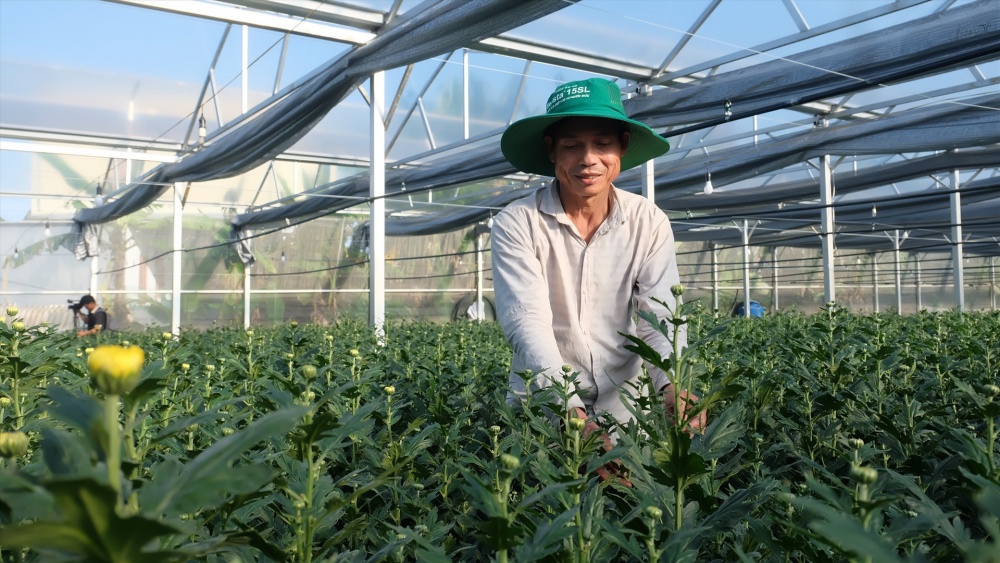 |
| The application of CNC technology faces many obstacles, especially the issue of investment capital. |
Immediately after the State Bank of Vietnam issued Decision No. 813/QD-NHNN directing commercial banks to implement a loan program to encourage the development of high-tech and clean agriculture, Agribank responded strongly and immediately implemented a 50,000 billion VND credit package, becoming the bank with the highest loan commitment among participating commercial banks. However, Mr. Tuan stated that there are still many difficulties and obstacles in the process of lending capital for high-tech agriculture. Specifically, policies related to the development of high-tech agriculture still have many shortcomings, such as difficulties in issuing certificates of ownership of assets on agricultural land and facilitating customer support for mortgage loan procedures; the criteria for identifying high-tech and clean agriculture programs and projects are still vague, and there are no regulations specifying which agency confirms the project criteria, so commercial banks lack a basis to determine eligibility for loans under the program.
According to statistics from the Department of Science , Technology and Environment, investment in research and application of science and technology (S&T) is limited and ineffective. Currently, the overall state budget investment in S&T accounts for only 0.6% of GDP, while S&T only accounts for about 0.21% of the total investment in agriculture. Meanwhile, the proportion of non-budgetary investment in agriculture remains low, and there are no effective solutions to mobilize resources from businesses for S&T in agriculture…
Mr. Dang Kim Son, Permanent Vice Chairman of the Association of High-Tech Agricultural Enterprises, stated that capital is a crucial factor in the development of high-tech agriculture. The investment costs for infrastructure construction, environmental treatment, seed investment, and labor training according to the high-tech model are often quite expensive. For example, building a medium-sized livestock farm using the high-tech model requires approximately 140-150 billion VND (4-5 times more than a traditional livestock farm); or an automated drip irrigation system from Israel also requires an investment of billions of VND…
Sharing this view, Mr. Hoang Quang Phong, Vice President of the Vietnam Chamber of Commerce and Industry (VCCI), believes that to develop high-tech agriculture, significant investment is needed first to build infrastructure, address environmental issues, invest in plant and animal breeds, machinery, technology, train workers, and promote and market products. However, in reality, this is currently lacking and difficult to attract investors because agricultural production remains fragmented. Especially, the legal framework, regulations, and guidelines related to high-tech agriculture and green finance, aimed at paving the way for domestic and foreign businesses and financial institutions to participate in the high-tech agriculture and green finance market, are incomplete and not sufficiently attractive.

The top scorer in Hanoi's 10th grade entrance exam achieved 29.75/30 points.With an entrance exam score of 29.75, Tran Minh Ha, a student from Newton Secondary and High School, became the top scorer in the 2026 public high school entrance exam.

Iran has again blockaded the Strait of Hormuz.On June 19, Iran reimposed a blockade on the Strait of Hormuz, citing Israel's refusal to withdraw its forces from southern Lebanon and the continued presence of US troops in the region.
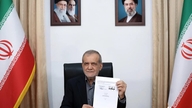
BREAKING NEWS: Iran again announces closure of the Strait of Hormuz.(NLDO) - Tehran has announced it will continue its blockade of the Strait of Hormuz and will not participate in the planned nuclear talks with the US in Switzerland.
According to experts, although the high-tech agricultural model has initially yielded practical economic benefits and is gradually becoming the main direction of agricultural development, the application of high technology on a regional and national scale is facing many obstacles, especially regarding investment capital. The main reason for this situation is the current lack of sufficiently attractive incentive policies to encourage businesses to invest in the high-tech sector.
Currently, policies supporting businesses applying CNC technology are limited to tax and fee exemptions and the provision of partial infrastructure according to local planning. Importantly, there are no specific policies to encourage venture capital investment in research. Therefore, experts suggest that it is necessary to increase budget investment in research and technology transfer in Vietnam's agricultural sector to a level equivalent to other countries in the region, approximately 0.84% of agricultural GDP; pilot public-private partnership mechanisms to mobilize resources from the private sector in science and technology activities; and innovate the operations of public scientific research organizations towards increased autonomy. Therefore, to attract resources into CNC agriculture, this bottleneck must first be removed.
Source: https://thoibaonganhang.vn/giai-bai-toan-von-cho-nong-nghiep-cong-nghe-cao-154471.html









Most Read
When Po Lan lights up



Google Trends