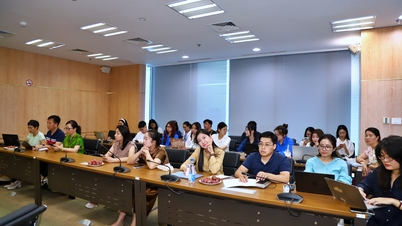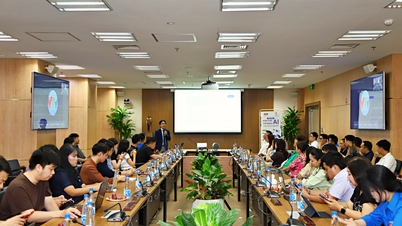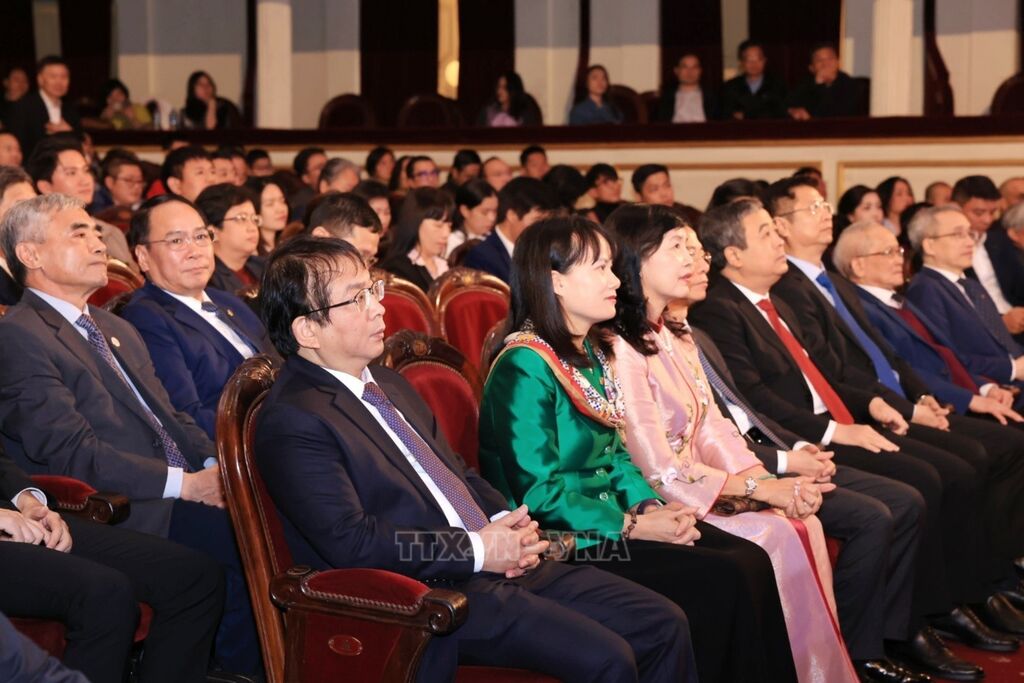

The forum "Promoting Innovation in Vietnam's Economic Growth Model," organized by the Business Finance Magazine on August 7th, featured noteworthy opinions on changing Vietnam's growth model from Associate Professor Dr. Bui Quang Tuan, former Director of the Vietnam Institute of Economics.
The 13th National Congress of the Party demanded: “Continue to vigorously reform the economic growth model, strongly shifting the economy towards a growth model based on productivity, scientific and technological progress, innovation, high-quality human resources, efficiency, and competitiveness of the economy.” This is the long-term strategic orientation of our Party on reforming Vietnam's economic growth model.
The National Assembly also issued Resolution No. 31/2021/QH15 dated November 12, 2021, on the plan for restructuring the economy in the period 2021-2025. This resolution aims to form a rational and efficient structure in each sector and the entire economy, while also bringing about significant changes in the growth model, productivity, quality, efficiency, and competitiveness of the economy.
Although the Vietnamese economy recorded a growth rate of 6.42% in the first half of 2024, with full-year GDP growth projected to reach nearly 7%, the current growth model has yet to bring about fundamental changes. Productivity, quality, efficiency, and competitiveness of the economy remain low, and the economy still faces many risks due to its dependence on imported raw materials.
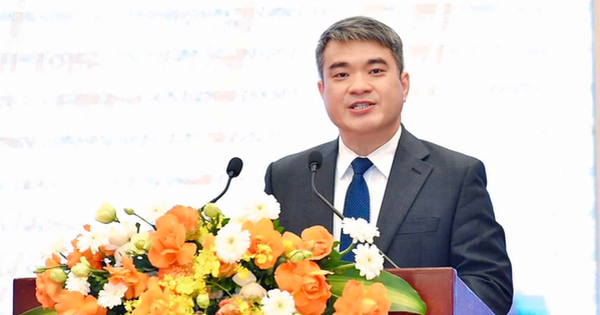
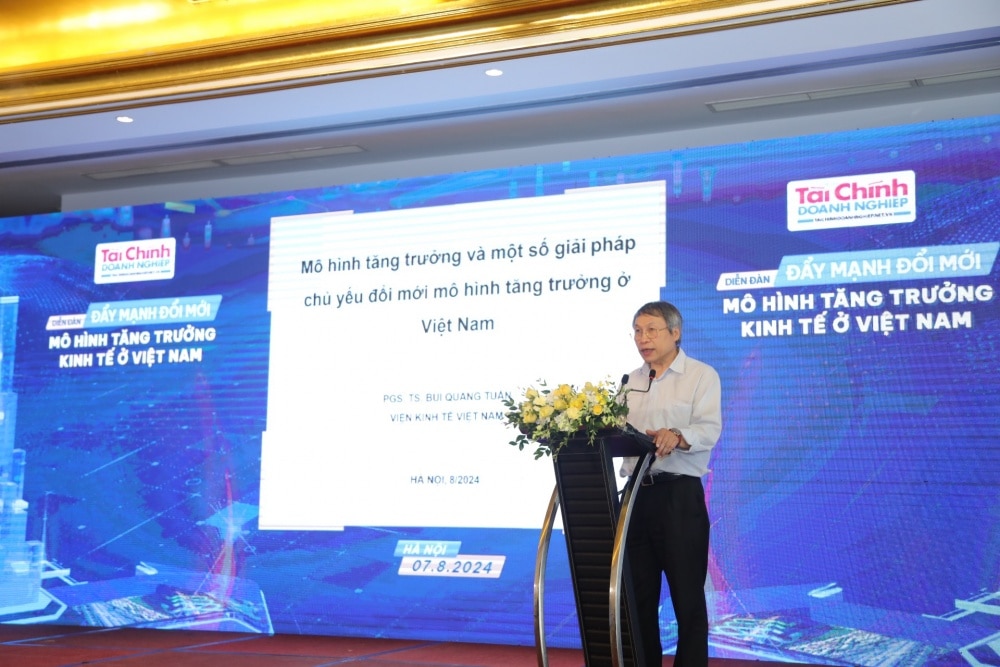 |
| Assoc. Prof. Dr. Bui Quang Tuan - Former Director of the Vietnam Institute of Economics at the Forum |
Therefore, the reform of our country's growth model aims to improve the quality of growth, labor productivity, and competitiveness, and to achieve rapid and sustainable comprehensive economic, social, and environmental development. Growth should not be pursued at all costs, as this can lead to negative impacts. The reform of the growth model should focus more on factors that boost labor productivity, efficiently utilize resources and scientific and technological achievements, and leverage the potential and advantages of various sectors, localities, and the entire country.
According to Associate Professor Bui Quang Tuan, former Director of the Vietnam Institute of Economics, the economic growth model reflects how quickly or slowly a country develops, based on the main driving forces and factors, whether the structure is modern or not, and the quality of growth. Vietnam is moving towards a growth model based on quality, relying on science and technology, innovation, productivity, efficiency, and ensuring sustainable and in-depth development.
Vietnam is still considered one of the countries with good, average growth rates, despite experiencing many geopolitical upheavals in the world, such as the recent COVID-19 pandemic. Several indicators of macroeconomic stability also show good results, such as exchange rate fluctuations, trade balance, and budget deficit, all of which are under the control of the State.
However, the Vietnamese economy still seems to be stuck in extensive growth, with growth drivers primarily relying on capital and cheap labor, while the contribution of TFP (Total Factor Productivity) remains limited. Another "downside" of Vietnam's growth model, as pointed out by experts, is the limited investment in science and technology, the inadequate and unbreakable institutional framework for science, technology, and innovation, and the low level of private enterprise investment in R&D. Green growth models, based on the circular economy, have not contributed significantly to the nation's sustainable growth.
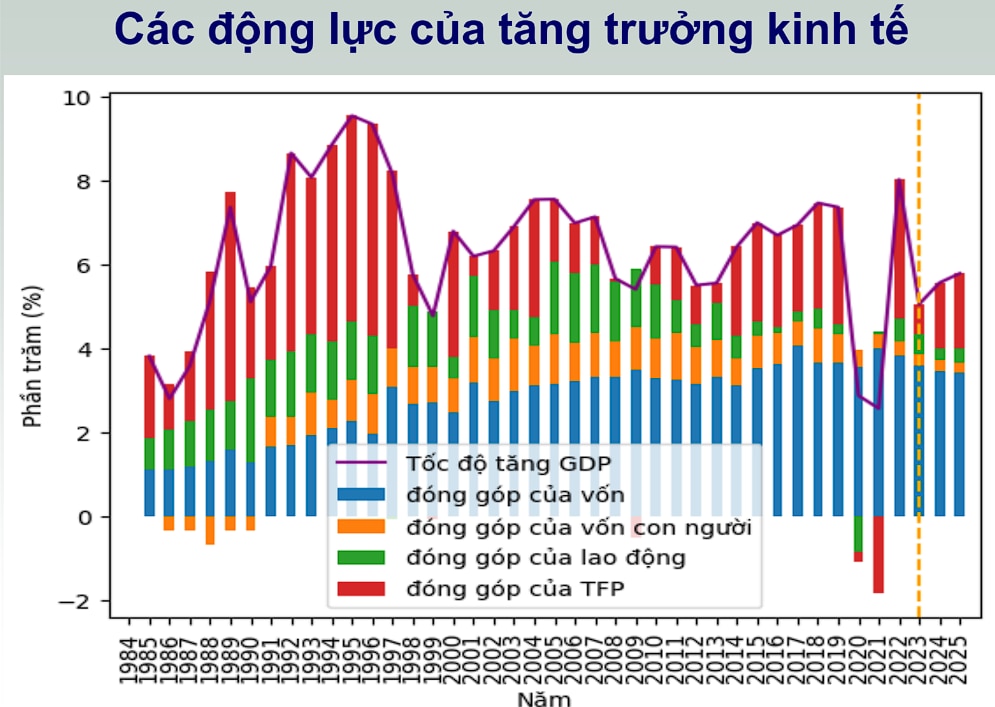 |
| According to Bui Quang Tuan, former Director of the Vietnam Institute of Economics, capital investment remains the primary driver of Vietnam's economic growth. |
The former Director of the Vietnam Institute of Economics observed that in a rapidly changing world, geopolitical conflicts are becoming more frequent, potentially impacting Vietnam's economic growth. New economic development trends are emerging, offering numerous opportunities to innovate our country's economic growth model. For example, new technological trends (Industry 4.0), green and digital technologies are flourishing; globalization and integration continue to be promoted; international commitments create favorable conditions (Net Zero Commitment); resources from international cooperation are abundant (JETP, etc.); a large population (digital resources), a young population structure, and good access to technology (71% of the population uses the internet)...



Regarding solutions, Mr. Tuan suggested relying heavily on new growth drivers from science and technology, and sustainable economic models such as the green economy and the circular economy. The economy can achieve breakthroughs through innovation; the more innovative and decisively implemented, the higher the quality of growth will be, and the faster and more sustainably the economy will develop.
The associate professor also emphasized that upcoming policies should not only aim to improve the efficiency of capital and the quality of labor, but also require investment in technological change to accelerate long-term economic growth.
Mr. Tuan also outlined solutions for accessing green ecosystems, digital ecosystems, and innovation. He emphasized creating linkages between stakeholders within the ecosystem to ensure its conditions are met. However, he stressed the need to improve institutions and policies, including pilot programs, specific initiatives, and breakthroughs. Innovation continues to play a leading role in mobilizing resources, especially in the non-state economic sector.
Source: https://thoibaonganhang.vn/doi-moi-mo-hinh-tang-truong-can-dot-pha-tu-khoa-hoc-cong-nghe-154398.html