
After a long period of cultivating cassava with uncertain economic returns, for nearly a year now, the family of Ms. Dinh Thi Thuy (Son Bua commune, Son Tay district, Quang Ngai province) has converted nearly 1,000 square meters of land previously used for cassava cultivation to growing Cavendish bananas.
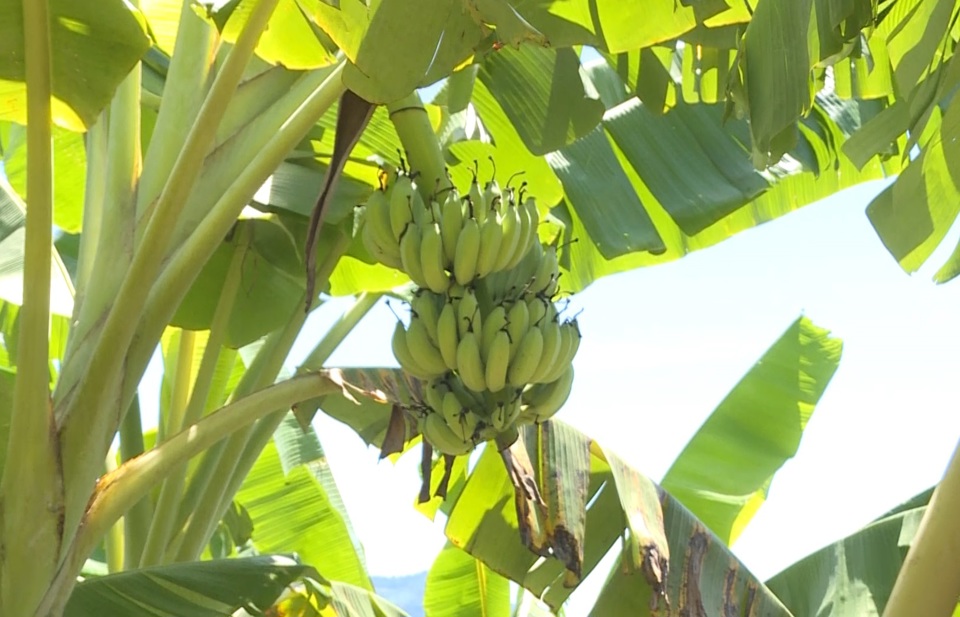
This is also the first season that Ms. Thuy has planted this type of tree in large quantities, so the average yield per week is only about 15 bunches of bananas. After deducting expenses, she earns about 3 million VND per month.
"The first year yields low profits, but from the following year onwards, profits will be much higher because there are no seed costs, and the number of banana trees producing fruit is also greater," Ms. Thuy said.
Previously, the Cavendish banana tree was considered a secondary crop, grown by farmers to meet their family's food needs. When there was an abundance, they would sell it retail at markets or to traders at prices ranging from 8,000 to 10,000 VND per bunch.
For a long time, many farmers in Son Tay district did not pay much attention to or cultivate bananas because of unstable market demand. There were even times when the price of bananas was so low that no one would buy them.
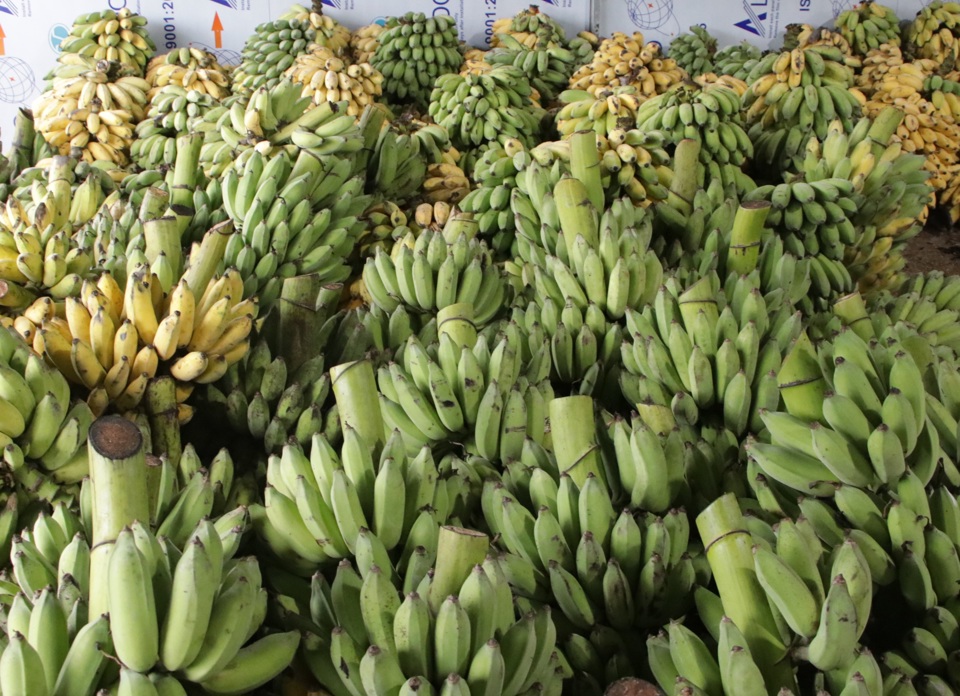
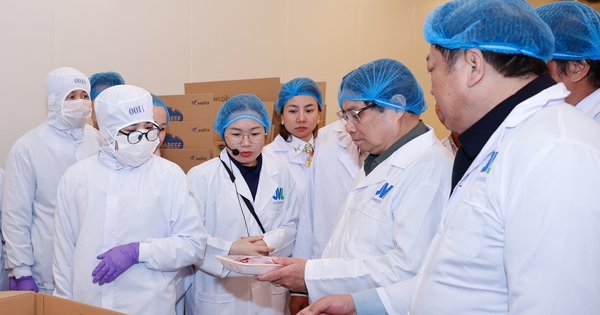
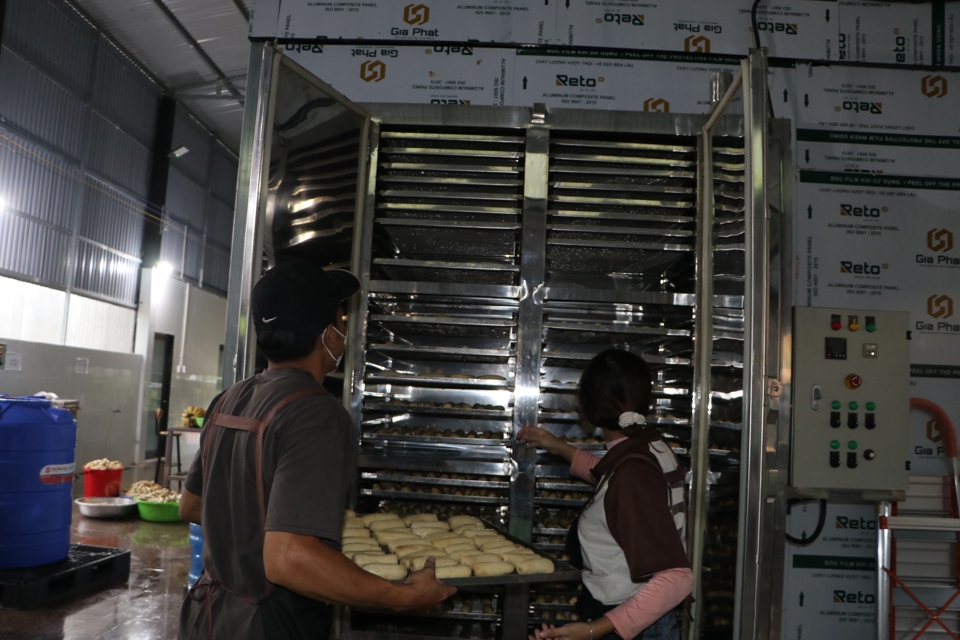
However, since the beginning of 2024, almost all of the bananas grown here have been purchased by the Son Bua Agricultural, Forestry and Trade Service Cooperative (Son Dung commune, Son Tay district) to process into products such as banana wine, dried bananas, banana vinegar, banana syrup, etc.
Moreover, bananas are purchased directly from the farms, so many farmers are converting their hillside orchards, which were previously used for less productive crops, to banana cultivation.
The Siamese banana (also known as the "sacred banana" or "porcelain banana") is an easy-to-grow plant that requires little capital, care, and fertilizer. It typically yields fruit 9-12 months after planting, with each bunch containing 5-8 hands of bananas. The continuous harvesting cycle allows for frequent and consistent yields.
The Cavendish banana is also easy to propagate, so farmers can do it themselves. There's only a one-time initial investment in seedlings, and after that, they can harvest for many years if they know how to care for them.
Recognizing that Son Tay is a suitable area for banana cultivation, but that local people's bananas lacked buyers, the Son Bua Agricultural, Forestry and Trade Service Cooperative boldly invested nearly 5 billion VND in building a banana processing plant.
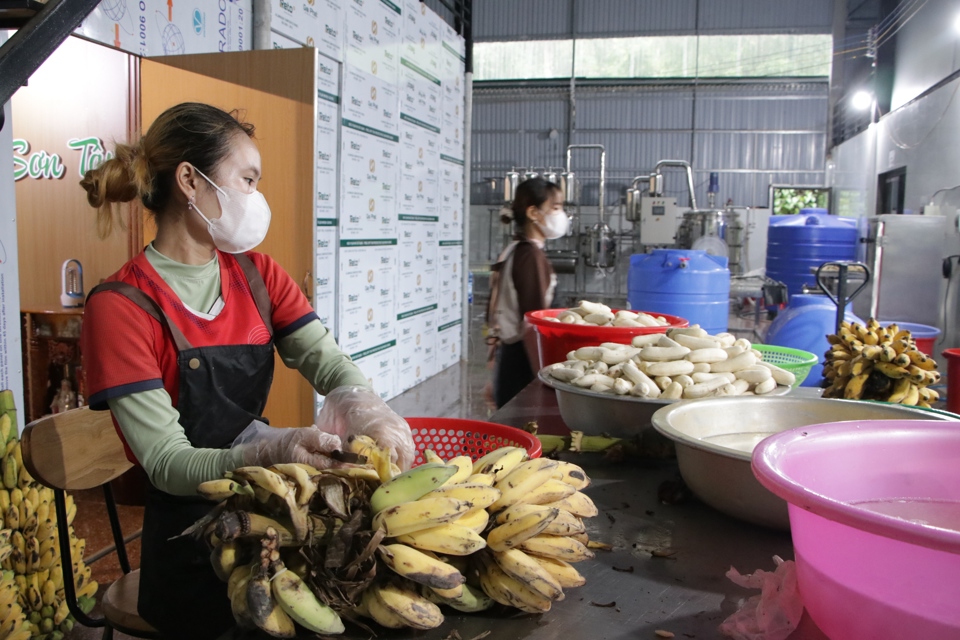
Initially, the factory was in the trial operation phase, so raw material procurement was interrupted. However, now that it has stabilized, the factory has begun to increase procurement, with an average daily output of about 5 tons.
To increase the productivity and quality of bananas, this cooperative also develops production plans and provides guidance and disseminates organic farming practices to each banana-growing household. At the same time, it links households into groups and cooperatives for better management.
Besides providing a market for farmers' produce, the dried banana processing plant is also creating jobs for about 10 local workers.


According to Pham Hong Khuyen, Head of the Agriculture and Rural Development Department of Son Tay District, the entire district currently has about 100 hectares of banana plantations, distributed across all communes. Having an on-site processing plant will open up new avenues for banana cultivation in the area in the future.
“The district has been supporting the Son Bua Agricultural, Forestry and Trade Service Cooperative in completing the necessary documents and procedures for obtaining OCOP 3-star certification for banana products. At the same time, we are planning several large-scale banana growing areas in Son Bua and Son Lien communes to ensure a supply of raw materials for the factory and generate income for the people,” Mr. Khuyen informed.
Source: https://kinhtedothi.vn/cay-chuoi-giup-nguoi-dan-mien-nui-phat-trien-kinh-te.html