
Journalist Pham Quoc Toan – Former Vice President of the Vietnam Journalists Association : A true house of memories to always cherish, preserve, and emulate.
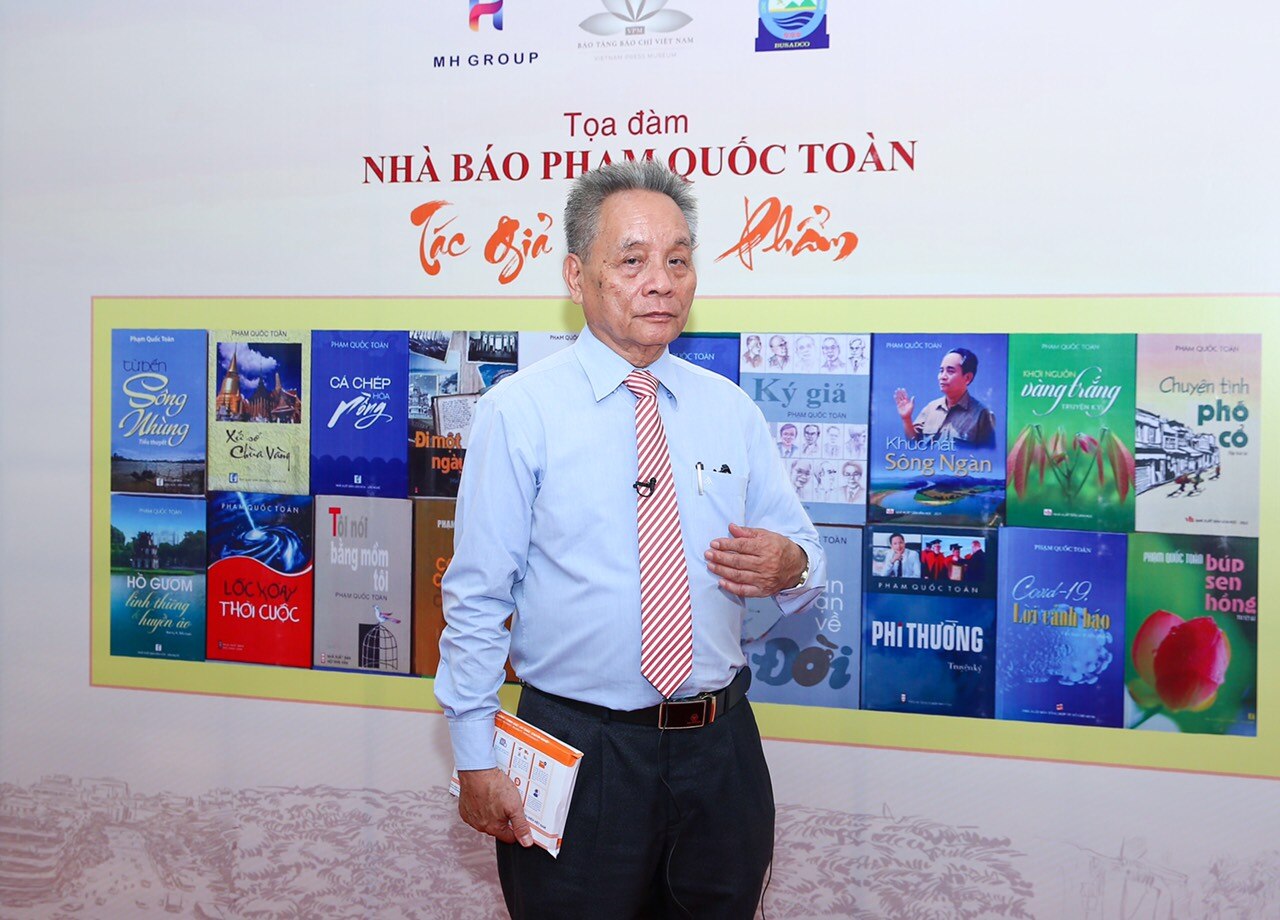
When I learned that in early 2024, the Vietnam Journalists Association, in coordination with the People's Committee of Dai Tu District, organized the groundbreaking ceremony for the restoration and renovation of the Huynh Thuc Khang Journalism School historical site, I was very happy and excited. Today, seeing the beautiful restoration of the Huynh Thuc Khang National Historical Site truly moves me – someone who has dedicated my life to journalism.
Having received an invitation from the Vietnam Press Museum, I set aside my work and hurried from the distant Ba Ria - Vung Tau back to Thai Nguyen to witness this important historical moment. My heart was filled with emotion as I turned the pages of history. During the resistance war, the Huynh Thuc Khang School of Journalism could only organize one short-term course. The number of students was small, just over 40, consisting of political , military, and journalistic cadres from across the country. However, the 30 lecturers were all experienced leaders with rich political experience and extensive theoretical and practical knowledge, as well as renowned cultural and artistic figures such as: Truong Chinh, Vo Nguyen Giap, Hoang Quoc Viet, Tran Huy Lieu, Le Quang Dao, To Huu, Nguyen Thanh Le, Quang Dam, Nguyen Dinh Thi, Nguyen Huy Tuong, Xuan Dieu, Nam Cao, The Lu, Nguyen Tuan…
From this thatched-roof school nestled in the vast forests of Viet Bac, its students dispersed in all directions, present in the most fierce battlefields, the hottest and most complex fronts, such as journalists Thep Moi, Chinh Yen, Tran Kien (Nhan Dan Newspaper); Mai Thanh Hai, Mai Ho (Cuu Quoc Newspaper); or director Banh Bao, writer Huu Mai, poet Hai Nhu, poet Tu Bich Hoang (Viet Phuong)...
Remarkably, this class always received the attention of President Ho Chi Minh , who twice sent letters to the class to encourage and advise the students. On July 6, 1949, the Huynh Thuc Khang School of Journalism held its closing ceremony, and President Ho Chi Minh, busy with other work, sent a letter praising the students and giving them many valuable lessons. His advice to the students of the Huynh Thuc Khang School of Journalism, in two letters dated June 9, 1949 and July 6, 1949, has become a handbook for revolutionary journalists and a textbook for all textbooks to this day...
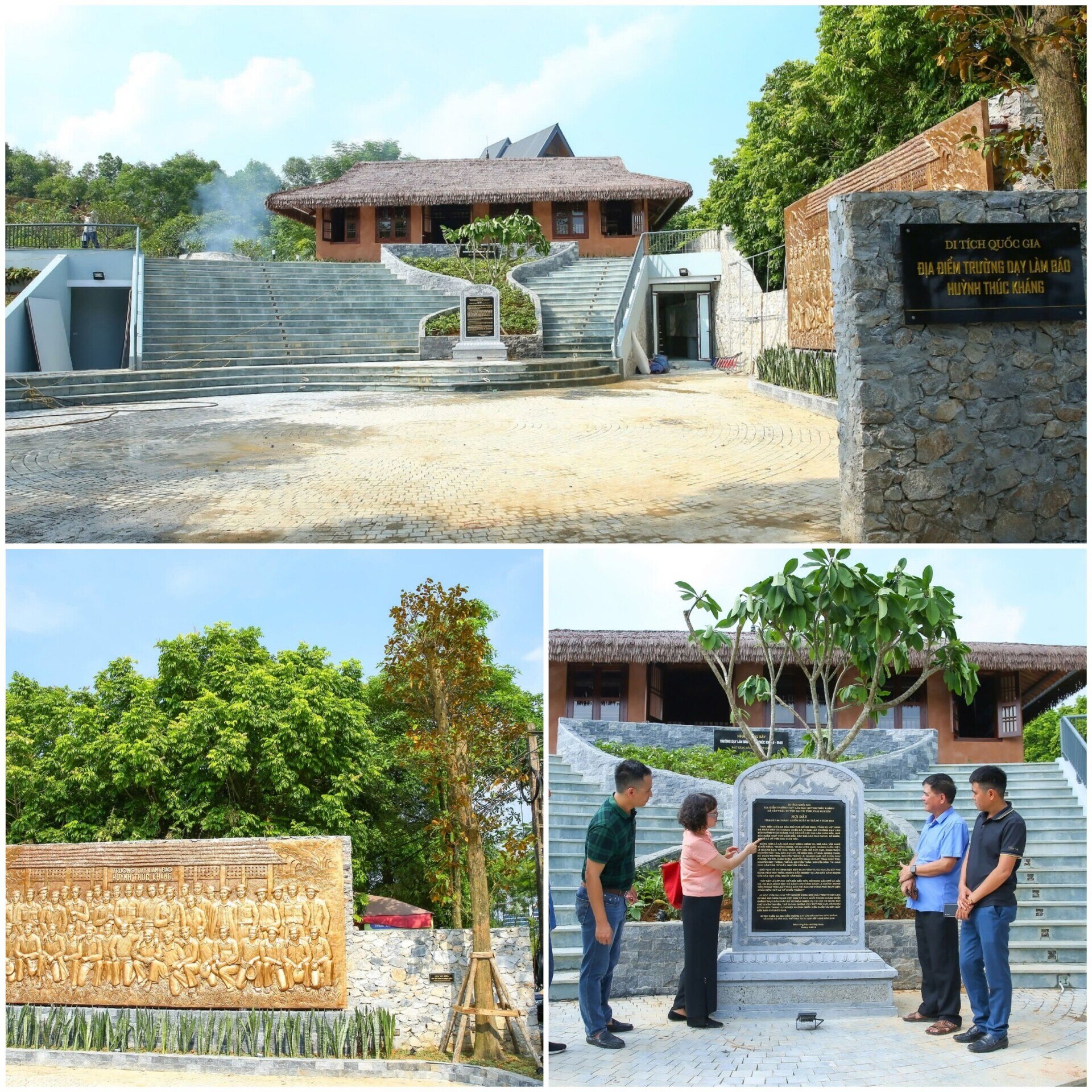
National Historical Monument: The site of the Huynh Thuc Khang Journalism School. Photo: Son Hai
The inauguration and handover ceremony of the renovated and restored Huynh Thuc Khang School of Journalism National Monument today is a significant political event, contributing to making the Huynh Thuc Khang School of Journalism National Monument a meaningful "red address" in the entire system of revolutionary historical relics related to President Ho Chi Minh, the Central Committee, the Government, the Viet Bac war zone, and the revolutionary Vietnamese press. And for us, future generations, we now have a beloved place to return to, a true home of memories to always cherish, preserve, and emulate.
Journalist Ha Minh Hue - Former Standing Vice President of the Vietnam Journalists Association: The Huynh Thuc Khang School of Journalism Historical Site - from nostalgia to reality.
Thus, the aspiration to establish the Huynh Thuc Khang School of Journalism as a National Historical Monument, at the place where 75 years ago the first journalism training course of revolutionary Vietnamese journalism was held—a wish not only of the former students of this unique school of journalism, but of the entire journalistic community—has been fulfilled.
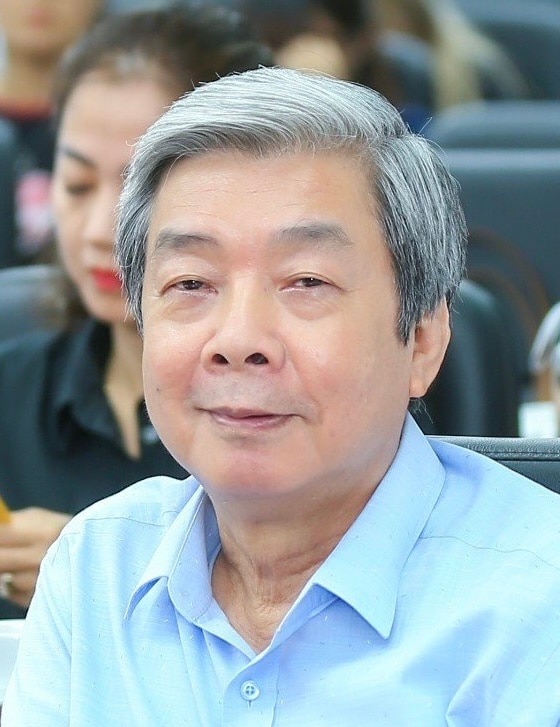
More than a decade ago, when I held a position at the Vietnam Journalists Association, I met and spoke with Ms. Ly Thi Trung, former Editor-in-Chief of the Vietnam Women's Newspaper, one of three female journalists among the students of the Huynh Thuc Khang School of Journalism. She told me about the shared aspiration of the former students to erect a memorial plaque at the school's location in Bo Ra hamlet, Tan Thai commune, Dai Tu district, Thai Nguyen province. Through our research, both she and I learned that most of Bo Ra hamlet was once submerged under Nui Coc Lake due to the development goals of Thai Nguyen province, a province rich in revolutionary traditions. Because of the historical significance of the event, in 2019, the Huynh Thuc Khang School of Journalism was granted National Historical Monument status. Therefore, the authorities decided to restore the remaining part of the site near the picturesque Nui Coc Lake.
With the passage of time, it is said that only two people remain from the first and only class of the Huynh Thuc Khang School of Journalism 75 years ago – Mrs. Ly Thi Trung, now 96 years old, and Mr. Pham Viet Thieu, 101 years old. Thanks to the enduring efforts of the Vietnam Journalists Association and Thai Nguyen province, the restoration and preservation of the National Historical Monument of the Huynh Thuc Khang School of Journalism was inaugurated on the occasion of the 79th anniversary of the August Revolution, National Day on September 2nd, and especially in anticipation of the 100th anniversary of the Vietnamese Revolutionary Press Day (June 21, 1925 - June 21, 2025) and the 75th anniversary of the founding of the Vietnam Journalists Association (April 21, 1950 - April 21, 2025). This is a very significant event, and there couldn't be more reason to celebrate for generations of revolutionary journalists.
The journalism school, founded and directed by President Ho Chi Minh just four years after the successful August Revolution amidst a multitude of major events, demonstrates the vision and special attention of the leader of the revolutionary government. He directed the construction of a training facility for journalists who were both politically sound and professionally competent, serving the resistance and the long-term revolutionary cause. Even President Ho Chi Minh's naming of the school after Mr. Huynh Thuc Khang is very significant, showing his intention to train journalists who were highly skilled, possessed noble qualities, were patriotic, compassionate towards the people, had impeccable morals, and were knowledgeable and insightful, like Mr. Huynh Thuc Khang, a person whom President Ho Chi Minh trusted…
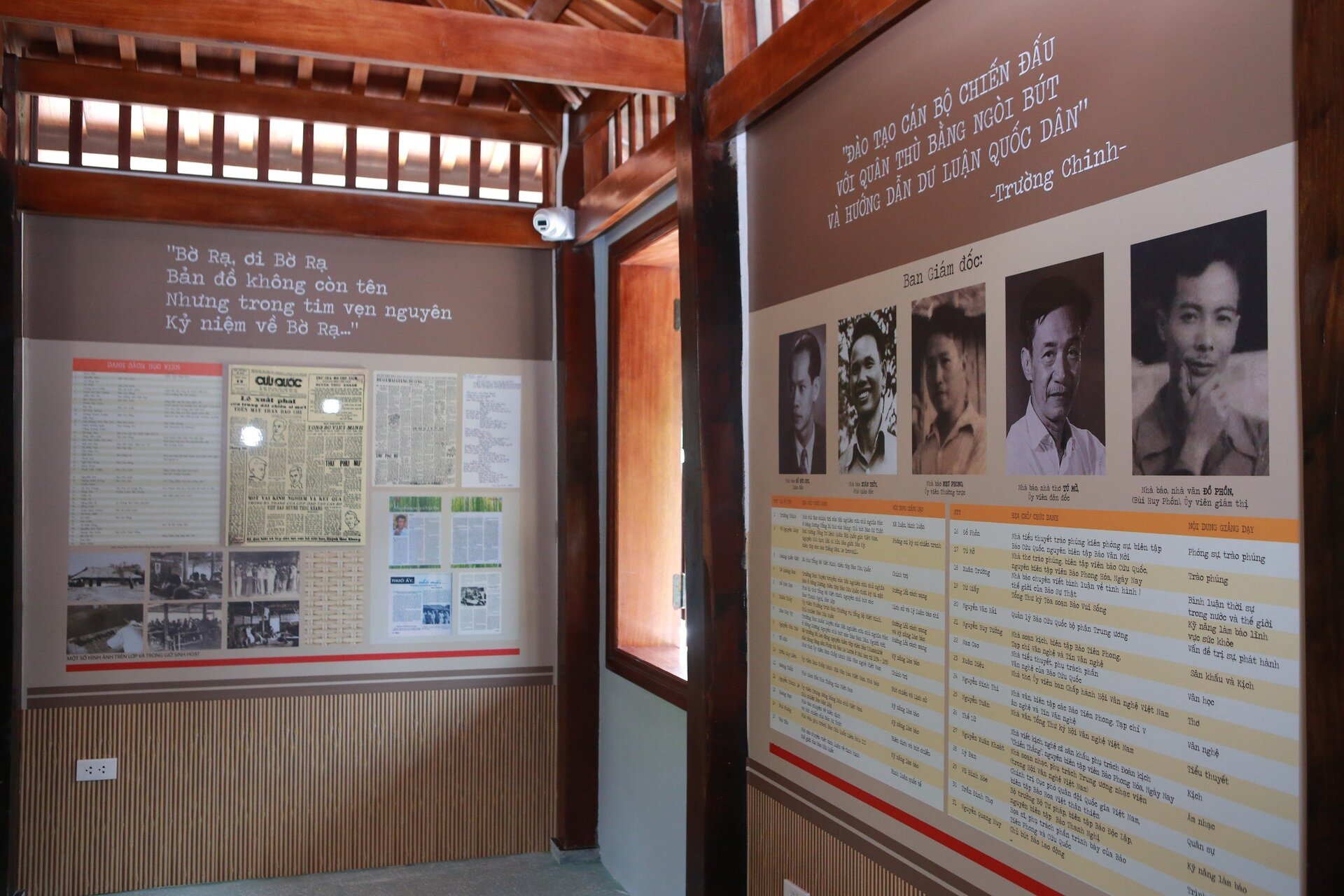
Many valuable documents are displayed on the walls. Photo: Son Hai
According to surviving documents, the 30 instructors of the Huynh Thuc Khang School of Journalism at that time were all staunch revolutionaries, cultural figures, and veteran journalists with rich political experience and extensive theoretical and practical knowledge, such as comrades Truong Chinh, Vo Nguyen Giap, Hoang Quoc Viet, To Huu, Nguyen Thanh Le, Quang Dam, Nguyen Dinh Thi, etc. They passed on to the students not only practical journalism skills but also revolutionary theory and professional ethics. With all that care, over 40 students, who were political, military, and journalistic cadres sent from across the country, mostly became key and successful journalists in various media organizations, serving the revolutionary cause later on.
It can be said that, along with the Exhibition House of the Founding Site of the Vietnam Journalists Association in Roong Khoa hamlet, Diem Mac commune, Dinh Hoa district, Thai Nguyen province, inaugurated in 2010, and the Vietnam Press Museum in Hanoi, which opened to visitors in June 2020, the National Historical Monument of the Huynh Thuc Khang School of Journalism, which opened this autumn in August in Dai Tu district, Thai Nguyen province, has become a place of remembrance for generations of journalists, marking the efforts of the Vietnam Journalists Association in preserving traditions, conserving and promoting the historical values of the revolutionary press founded and nurtured by President Ho Chi Minh.
Journalist, Major General Doan Xuan Bo - Editor-in-Chief of the People's Army Newspaper: Amidst the windswept capital, the Huynh Thuc Khang School of Journalism has emerged as a shining cultural beacon.
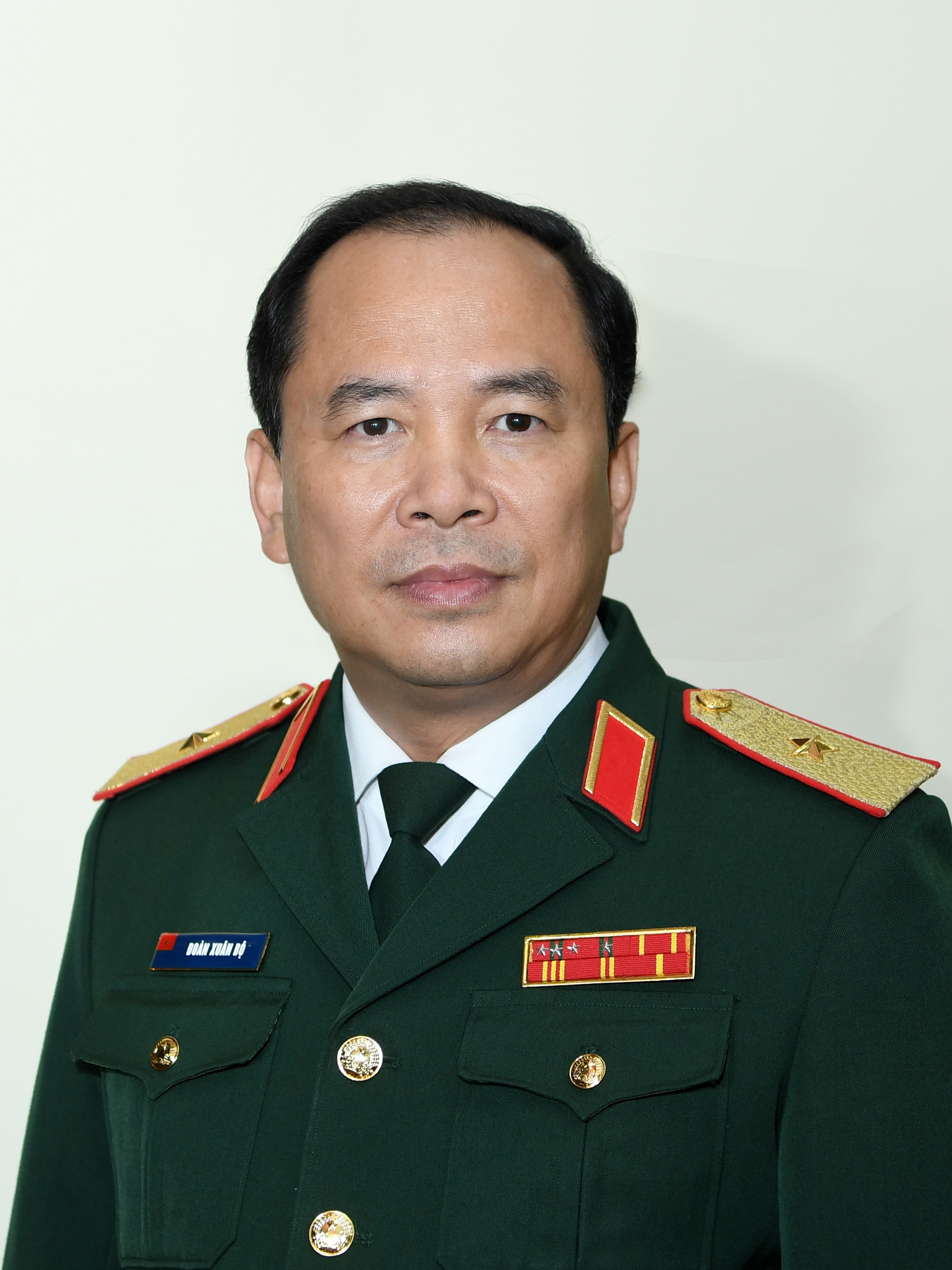
The Huynh Thuc Khang School of Journalism is a source of pride for Vietnamese revolutionary journalists. Founded in the Viet Bac revolutionary zone, amidst the countless hardships of the revolution, the Party and President Ho Chi Minh always paid special attention to the position and role of journalism and journalists. This demonstrated foresight, a clear understanding of the role of journalism, and the Party's strong determination on the cultural and ideological front.
Revolutionary journalism became a revolutionary force, a cultural element with the mission of guiding the nation. Newspapers during the resistance war were truly like revolutionary proclamations, possessing immense power to inspire, move, and rally forces. Vietnamese revolutionary journalism emerged later than world journalism, but it inherited the best aspects of global journalism. The first teachers who laid the foundation for revolutionary journalism, as well as for the Huynh Thuc Khang School of Journalism, were great intellectuals, knowledgeable in Eastern and Western cultures, ancient and modern, and well-versed in Western journalism. They had been very active in journalism or served as editors-in-chief of many newspapers.
In the heart of the then-backward and impoverished capital city, the Huynh Thuc Khang School of Journalism, though only existing for three months, emerged as a shining cultural beacon. Perhaps even the French could not have foreseen the value and power of this cultural beacon; it was like a morning star foretelling a bright future for our nation. This is also a unique characteristic of Vietnam.
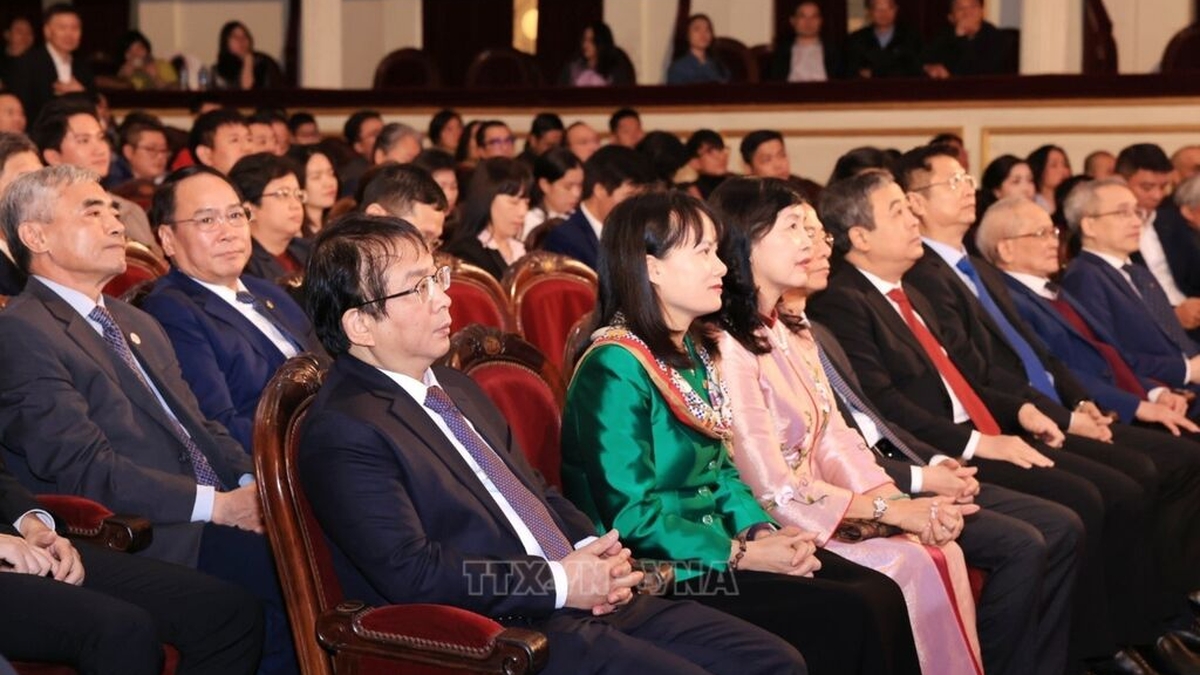
Today, in these August days, the restoration and renovation project of the Huynh Thuc Khang Journalism School National Historical Monument was inaugurated and handed over, marking a significant milestone in the course of history. From now on, this monument will become a destination for a wide range of people and tourists. Visiting here, we will not only gain a deeper understanding of this special school but also of the journalism of the Viet Bac war zone, and of the long but glorious resistance war against the French waged by the Vietnamese people.
This is also a place of interest, learning, experience, and pride for journalists and journalism students. We cherish history, and we feel even more strongly that today's journalists have a responsibility to continue preserving, enhancing, and supplementing the historical site with additional materials, making it a vibrant center for cultural activities, learning, and historical tourism for the people and the press nationwide…
Journalist Phan Huu Minh - Former Standing Committee Member and former Head of the Inspection Committee of the Vietnam Journalists Association: A 40-year journey of reflection…
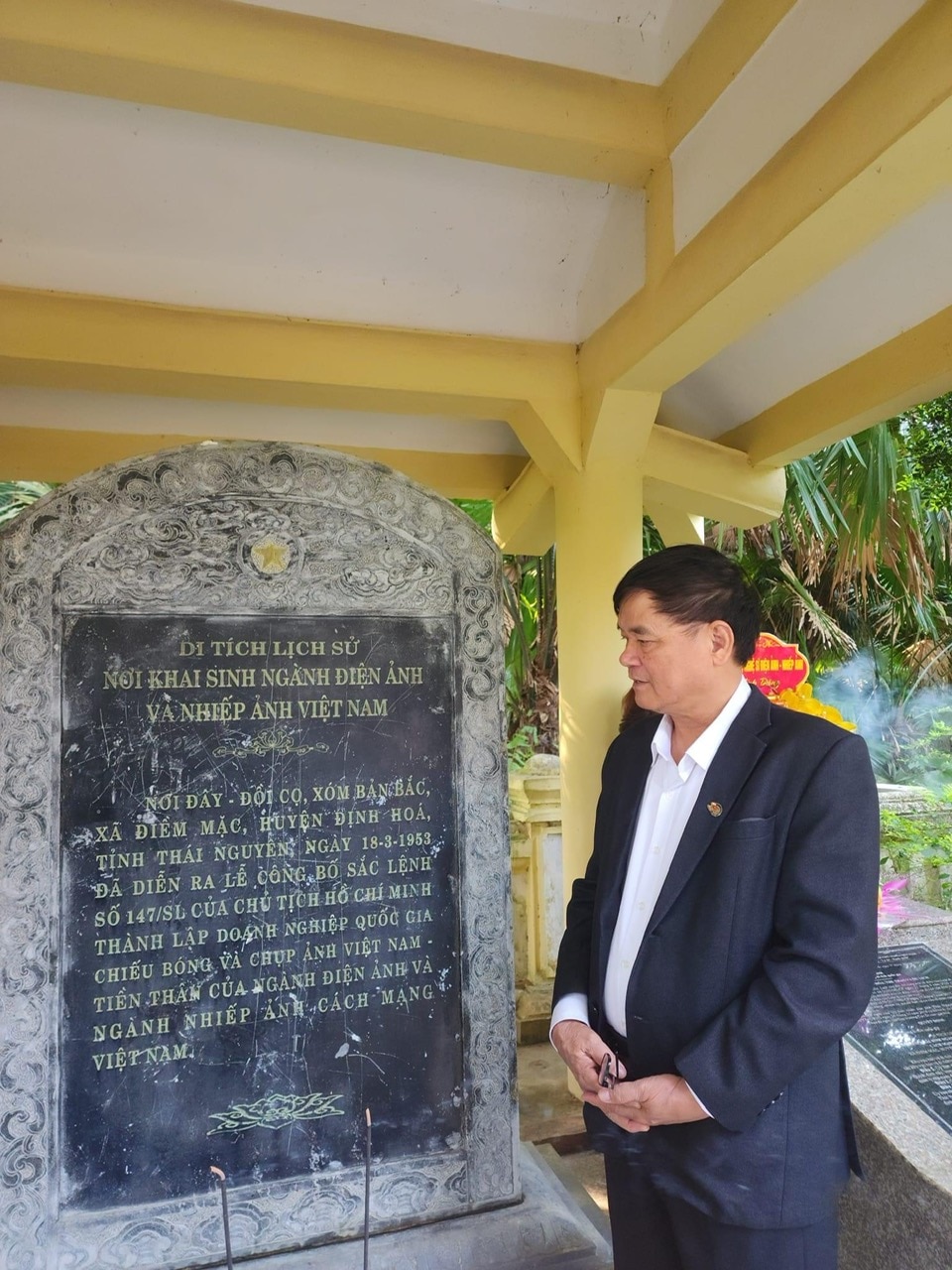
In early April 1949, following the directives of President Ho Chi Minh, in Bo Ra hamlet, Tan Thai commune, Dai Tu district, Thai Nguyen province, the "Huynh Thuc Khang School of Journalism" officially opened, becoming the first journalism training institution established amidst the flames of the war against French colonialism. During a working trip with journalist Chinh Yen of the Nhan Dan newspaper, a student of the class, he told me about this place where he learned journalism. Journalist Chinh Yen's wish was for this place to be recognized and become a model for journalists in general.
He further shared that, while working as a reporter, staff member, and leader of the Bac Thai newspaper (Thai Nguyen), he had three encounters (in 1990, 1994, and 1996) with groups of students from the "Back to the Roots" class. From then on, he devoted even more effort to this endeavor. Since 1979, he has known about and followed the verification of the location of Huynh Thuc Khang School. For decades, he has been diligently searching for documents, meeting with individuals and working groups to learn about the school's location. Fortunately, on the occasion of the 70th anniversary of the founding of Huynh Thuc Khang School of Journalism, it received the National Historical Monument designation.
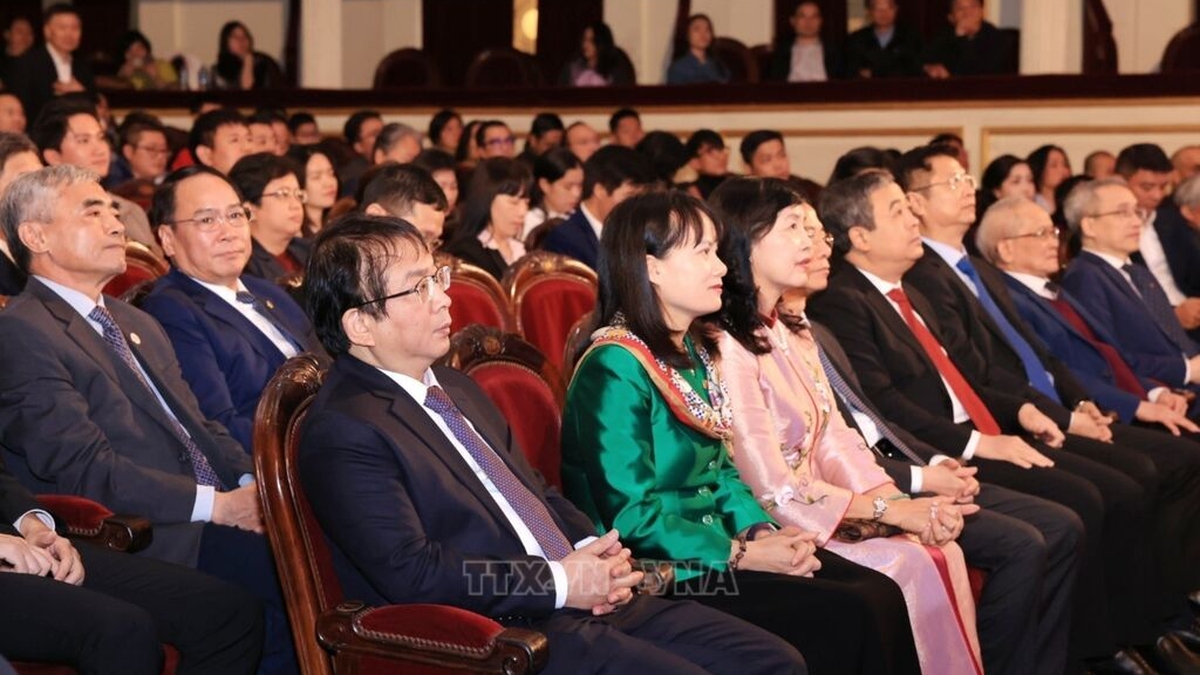
This National Historical Monument, with its three "treasures" (two letters from President Ho Chi Minh and the handwritten notes of General Secretary Truong Chinh), serves as a guide for revolutionary journalists in Vietnam today. On August 9, 2024, the Vietnam Journalists Association and the Provincial Party Committee and People's Committee of Thai Nguyen Province jointly organized the inauguration and handover ceremony of the renovated and restored National Historical Monument, the Huynh Thuc Khang School of Journalism – an event of great significance to me personally; it is truly the "sweet fruit" of my dedication and that of my colleagues.
Furthermore, this event reflects the fervent desire of Vietnamese journalists in the present era to return to their roots. The thoughts and concerns about origins of the leaders of the Vietnam Journalists Association and its members have crystallized into a shared will to return to the birthplace of journalism training. The Huynh Thuc Khang School of Journalism, holding a special position in the nation's journalism history, is built in a grand style, like a brick, a stone monument inscribed in the history of traditional education for future generations. And from now on, Vietnamese journalism has another place to return to…


Journalist Nguyen Nam Hai - Deputy Director of Thai Nguyen Radio and Television Station, Vice President of Thai Nguyen Journalists Association: Pride and emotion intertwined with responsibility.
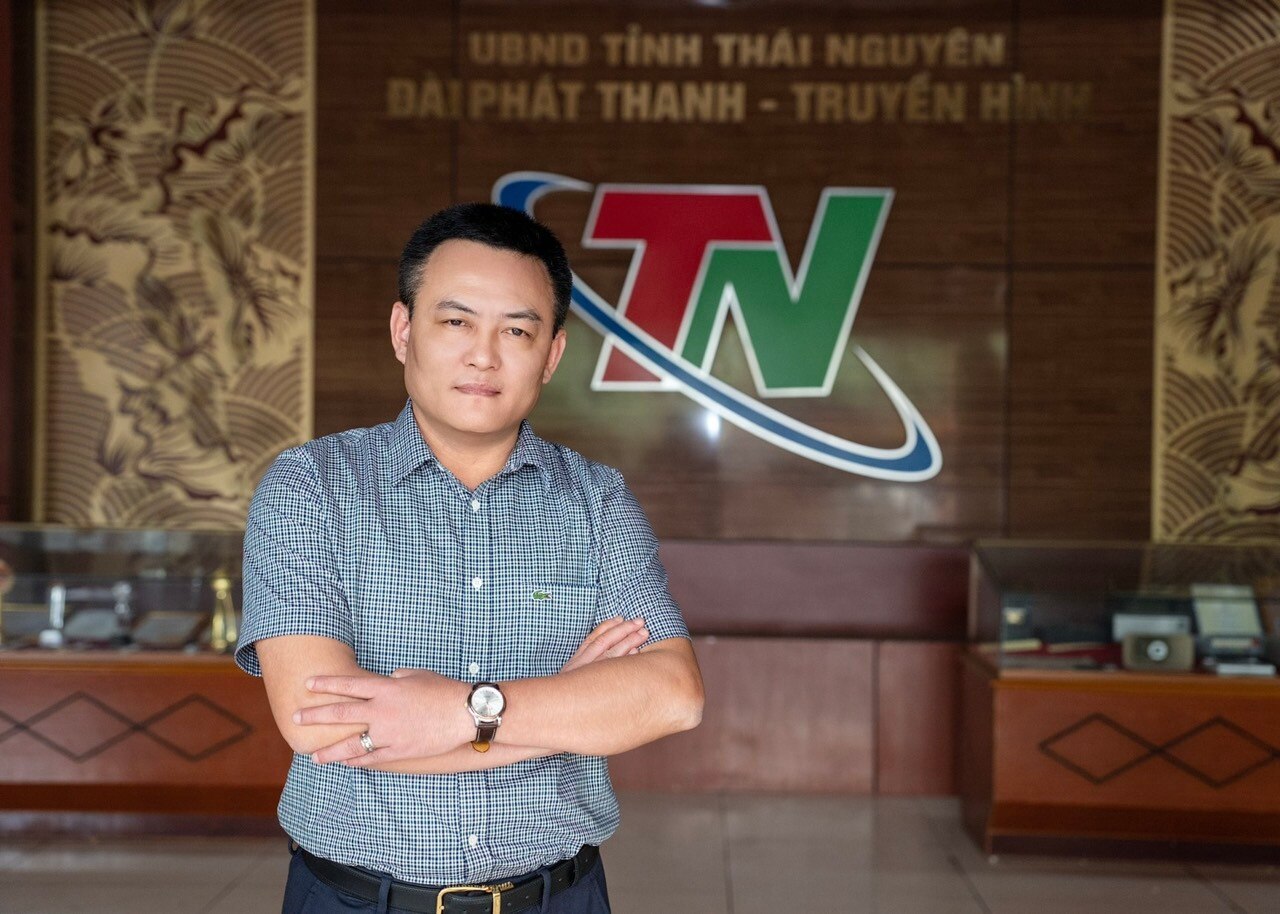
The project to restore and renovate the Huynh Thuc Khang School of Journalism is a timely and highly significant decision by the Vietnam Journalists Association in preserving and promoting the historical value and significance of the site. A new appearance befitting a National Historical Monument is now present here, a meaningful milestone that journalists nationwide have been waiting for.
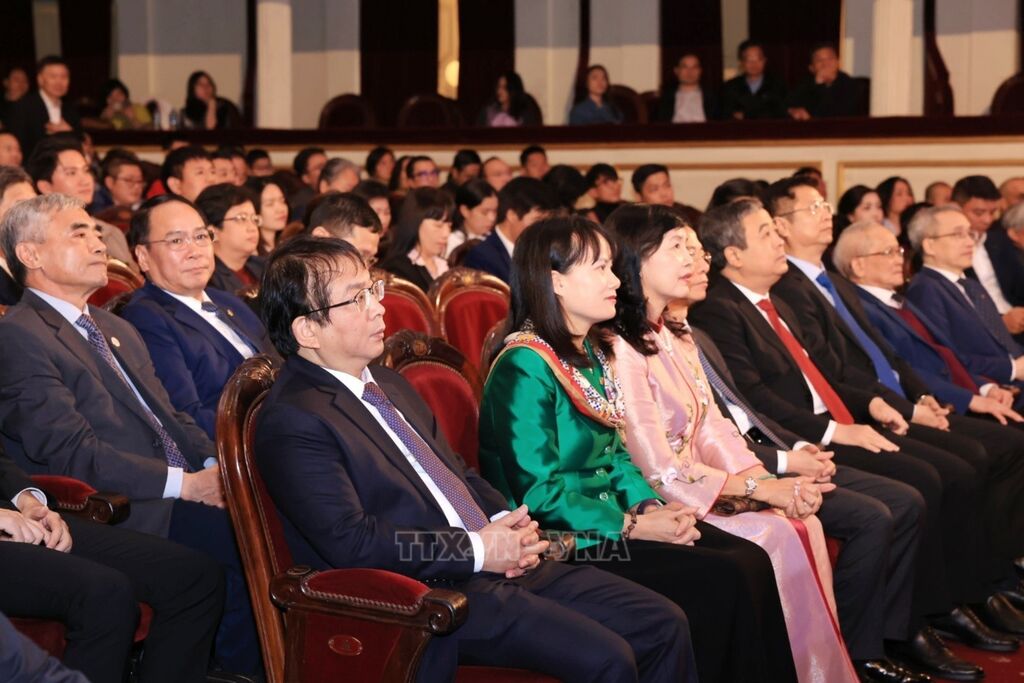
The inauguration and handover ceremony of the renovated and restored national historical site of the Huynh Thuc Khang School of Journalism, held on August 9th, was the first activity in a series of events leading up to the 100th anniversary of Vietnam's Revolutionary Press Day (June 21, 1925 – June 21, 2025) and the 75th anniversary of the founding of the Vietnam Journalists Association (April 21, 1950 – April 21, 2025).
From here, the National Historical Site where the first revolutionary journalism school was established will be an important part of the overall National Tourism Area Planning of Ho Nui Coc Lake in Thai Nguyen province. The project is not only significant for the revolutionary journalists of Vietnam, but also affirms the position and importance of Thai Nguyen province in the history of national journalism.
We are filled with pride and emotion, coupled with a sense of responsibility to further promote the value of this heritage, effectively introducing to the public both domestically and internationally the unique and distinctive features of a journalism school formed amidst the flames of the resistance war. At the same time, continuing this history, today's revolutionary journalists are determined to constantly strive and train themselves, using their pens and love for the profession to live up to the expectations of previous generations.
Ha Van - Hoa Giang (Recorded)
Source: https://www.congluan.vn/bao-chi-viet-nam-co-them-mot-cho-di-ve-post306795.html