
Since 2018, the UNESCO Non Nuoc Cao Bang Global Geopark has been actively promoting the conservation and development of its heritage values, building five sustainable geopark experiential tourism routes. As a result, it has been highly appreciated by members of the UNESCO Global Geoparks Network and has been selected to host the 8th International Conference of the UNESCO Global Geoparks Network for the Asia-Pacific region in 2024 in Cao Bang.
This land preserves many ancient heritage values.
The Cao Bang Geopark boasts over 130 diverse and rich geological heritage sites, covering an area of over 4,000 km2 across 10 districts and cities, providing evidence of the Earth's crust formation more than 500 million years ago. With its diverse geological features and mild subtropical climate, nature has bestowed upon Cao Bang many outstanding natural landscapes with diverse ecosystems.
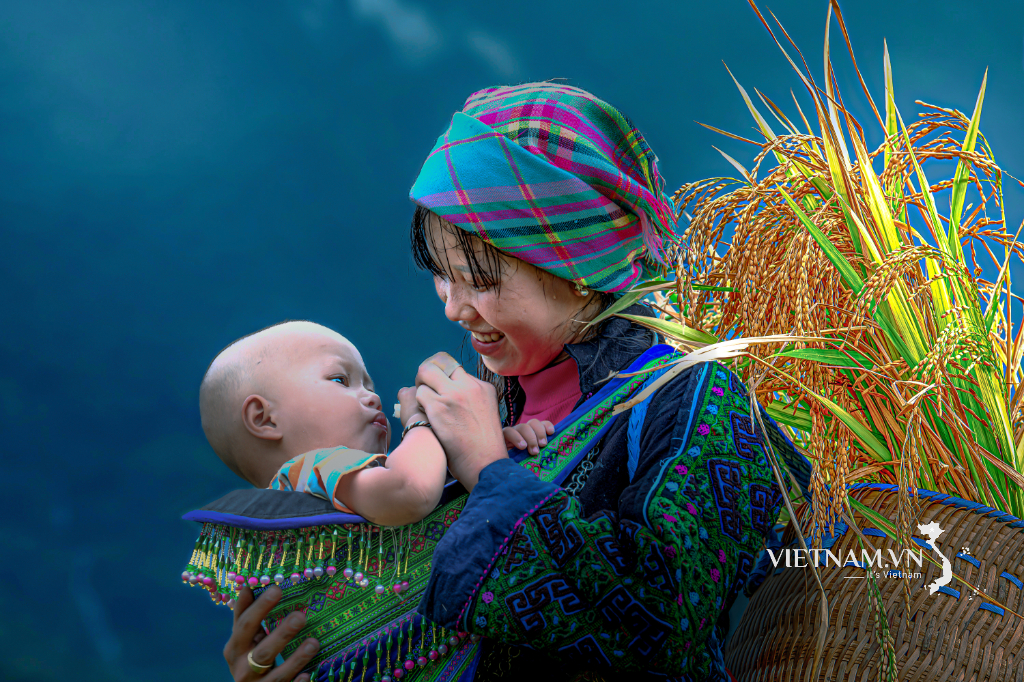
This is where ethnic minority groups such as the Tay, Nung, Mong, Dao, San Chi, and Lo Lo have lived for thousands of years, forming and developing a unique, rich, and distinctive traditional culture imbued with humanistic values. The Cao Bang Geopark area boasts 5 national-level scenic spots, 96 ranked historical and cultural relics, including 3 special national relics, 25 national relics, and 68 provincial relics; 5 national intangible cultural heritage sites, 1 national treasure, and 1 intangible cultural heritage site representing humanity.
To date, the UNESCO Global Geopark Non Nuoc Cao Bang has developed five experiential tourism routes, including: “Journey to the Roots” in Hoa An and Ha Quang districts; “ Exploring Phja Oac - The Mountainous Region of Changes” in Nguyen Binh district; “Experiencing the Indigenous Culture of the Fairyland” in Quang Hoa, Trung Khanh, and Ha Lang districts; “A Time of Fire and Flowers” in Thach An district and Cao Bang city; and “Connecting the UNESCO Global Geopark Dong Van Karst Plateau, Ha Giang - UNESCO Global Geopark Non Nuoc Cao Bang” in Bao Lam and Bao Lac districts.
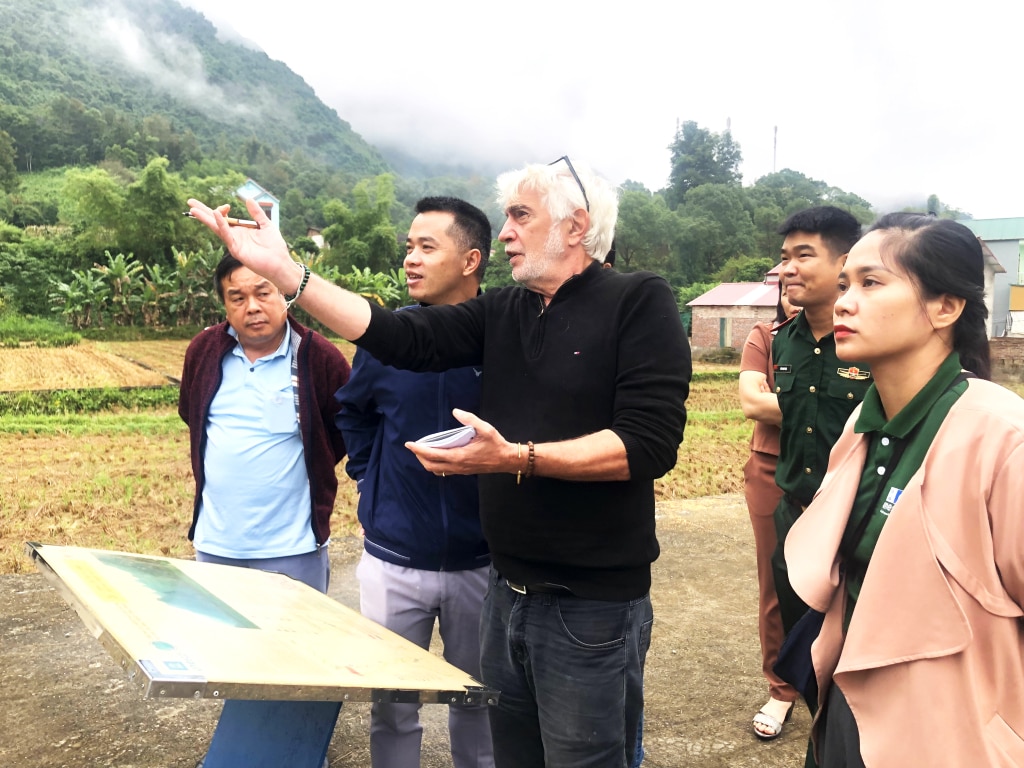
Mr. Guy Martini, Senior Expert and Chairman of the UNESCO Global Geoparks Network Council, inspects the landscape protection work in the Soc Ha Hanging Valley (Ha Quang).
Mr. Guy Martini, Senior Expert and Chairman of the UNESCO Global Geopark Network Council, shared: Cao Bang Geopark is an ideal place for tourists to learn about the Earth's crust formation process over 500 million years with many evidence-based heritage sites such as: fossil sites, marine sediments, volcanic rocks, minerals, limestone landscapes, caves, waterfalls... forming famous beautiful landscapes such as the Keo Yen rock formation (Ha Quang), Ban Gioc Waterfall - Nguom Ngao Cave, the Eye of the Mountain, Quay Son River (Trung Khanh)... and experience the diversity of cultural and historical heritage of ethnic minority communities.
With its diverse geological features, numerous pristine landscapes, and rich and unique local culture, Cao Bang, particularly Non Nuoc Cao Bang Geopark, has been selected by many magazines in developed countries as an ideal destination for admiring beautiful, majestic, and poetic natural scenery and experiencing distinctive local culture. This opens up a sustainable direction for tourism development in Cao Bang, promoting the resolution of global issues such as combating climate change, protecting environmental resources and biodiversity, and creating livelihoods for ethnic minority communities in particularly disadvantaged areas.
Implement the recommendations of the UNESCO Global Geoparks Network effectively.
Immediately after being recognized as a UNESCO Global Geopark, Non Nuoc Cao Bang, the Provincial People's Committee, the Department of Culture, Sports and Tourism, the Management Board of Non Nuoc Cao Bang Geopark, and the districts, cities, and people in the Geopark area actively implemented recommendations on the conservation and development of the Geopark's heritage values.
According to Vi Tran Thuy, Director of the Cao Bang Geopark Management Board: Every two years, experts from the UNESCO Global Geopark Network conduct a reassessment of the Geopark. Failure to implement the recommendations will result in the revocation of the title. Recognizing this as a crucial task, the Cao Bang Geopark Management Board advises the Department of Culture, Sports and Tourism, the Provincial People's Committee, and the districts and cities to strengthen the conservation and promotion of the heritage values of the Cao Bang Geopark.
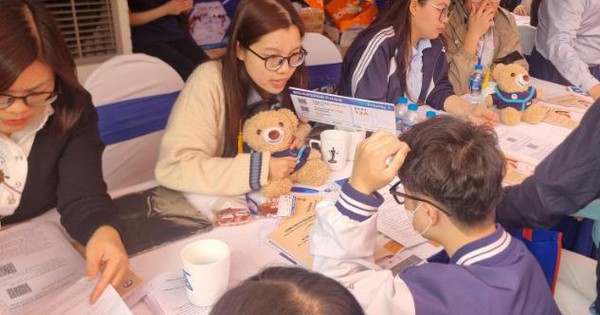
The program involved organizing awareness campaigns and training sessions for tens of thousands of people at all levels, including departments, agencies, 10 districts, the city, teachers, and students. It included educational programs on Geoparks, raising community awareness and local people's understanding of the United Nations Sustainable Development Goals (SDGs). A provincial-level workshop was held to introduce a set of guidelines for sustainable tourism development in the Non Nuoc Cao Bang Geopark. Geopark education through the "Club to Explore Geoparks with Children" model in schools was also evaluated by UNESCO experts and the Vietnam Geopark Network as an innovative initiative that could be shared with other global geoparks.
Every year, in response to World Clean-up Day (September 19th), the Management Board, in coordination with the Provincial Youth Union, organizes a campaign to mobilize youth union members from villages and communes within the Cao Bang Geopark to collect waste, plant trees and flowers to create a clean and beautiful landscape at heritage sites along the 5 Geopark tourist routes, especially the basalt heritage site at Ma Phuc Pass (Quang Hoa) and the Eye of the God Mountain site in Cao Chuong commune (Trung Khanh) - places where many tourists stop to check in. Districts and cities strictly control and prevent stone mining and deforestation, strengthen reforestation, protect forests, and preserve biodiversity and the ecosystem.
In the construction, development, and management of Geopark tourism routes, the Cao Bang Non Nuoc Geopark Management Board, in coordination with the UNESCO Global Geopark Network expert team, worked with districts and communes within the Geopark area to review, inspect, and evaluate the management, protection, and exploitation of infrastructure; invest in and upgrade infrastructure to build new check-in points showcasing the value of the Geopark heritage; inspect the system of explanatory signs and boards; and strengthen the participation of local authorities and communities in environmental sanitation, protection, preservation, and promotion of Geopark heritage sites. They also conducted surveys, research, supplemented, evaluated, and ranked new heritage values to develop the 4th experiential tourism route, "A Time of Fire and Flowers," in Quang Hoa - Thach An - Cao Bang City, and the 5th route, "Connecting the UNESCO Global Geopark Dong Van Karst Plateau, Ha Giang with the UNESCO Global Geopark Non Nuoc Cao Bang," in Bao Lac and Bao Lam districts.
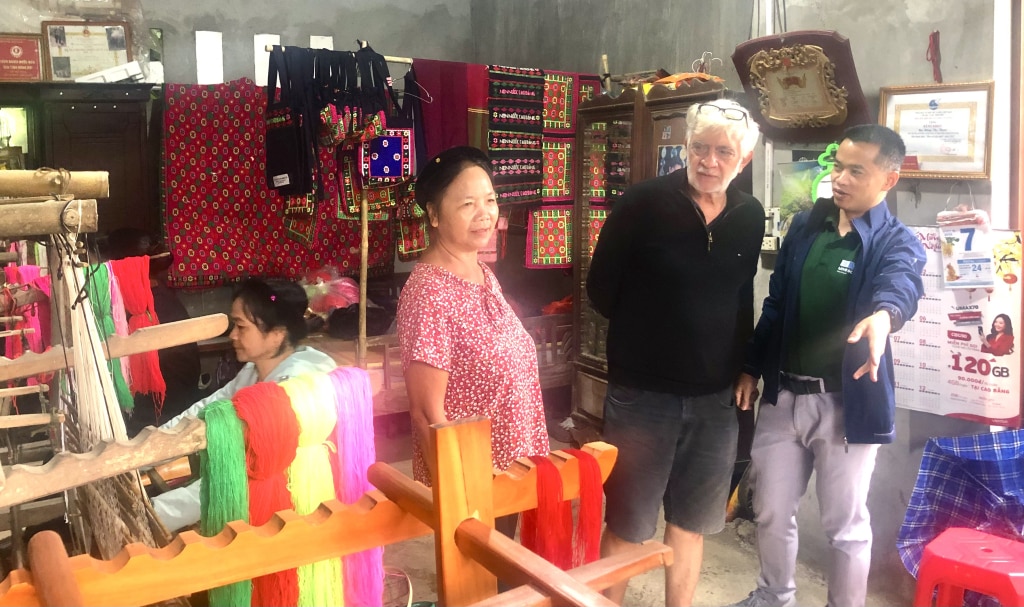
Mr. Guy Martini, Senior Expert and Chairman of the UNESCO Global Geoparks Network Council, visited Luong Noi brocade weaving village in Ngoc Dao commune (Ha Quang district).
Through two reassessments (in 2020 and 2023), the Cao Bang Geopark implemented the recommendations of the UNESCO Global Geopark Network. Mr. Guy Martini, Senior Expert and Chairman of the UNESCO Global Geopark Network Council, commented: Although Cao Bang still faces many difficulties, all levels of government, departments, and agencies consistently prioritize and encourage the people to effectively implement the UNESCO Global Geopark Network's recommendations on protecting and promoting the values of the geopark heritage. Each time I visited Cao Bang for reassessment, I saw a more active involvement of state management agencies and the people working together to protect environmental resources, biodiversity, geological landscapes, combat climate change, and develop traditional crafts such as knife forging, incense making, Do paper making, handcrafted roof tile making, cassava vermicelli making, and traditional brocade weaving in Quang Hoa, Ha Quang, and Nguyen Binh districts… connecting them with tourism; Many districts are developing community-based homestay tourism linked to agriculture and traditional crafts, creating sustainable livelihoods for ethnic minority communities. Experiences in preserving and promoting the heritage values of the Cao Bang Geopark need to be shared with member countries of the UNESCO Global Geopark Network to jointly protect and promote these geopark heritages more effectively.
To enhance exchange, learning, and sharing with member countries of the UNESCO Global Geopark Network on implementing Geopark recommendations, the Cao Bang Geopark Management Board has promoted, preserved, and developed the heritage values of the Cao Bang Geopark and its five Geopark experience routes through central and local media channels; published bilingual English-Vietnamese documents, newsletters, leaflets, and the CAO BANG GEOPARK website, attracting thousands of foreign visitors and contributing to sharing, promoting, and introducing Cao Bang province to the world. Participating in numerous activities organized and launched by the UNESCO Global Geopark Network, strengthening ties with member countries of the Geopark, such as: participating in online courses on managing UNESCO Global Geopark titles; attending the summary meeting of the Global Geopark Network in the Asia-Pacific region; and responding to the "International Day for Ethnic Minority Communities" living in UNESCO Geopark areas on August 9th. International Museum Day on May 18th, organized by the UNESCO Global Geopark Network; participating online in honoring new Geoparks; promoting the development of Geopark brands and products, incorporating Geopark logos into OCOP products of the province such as Kolia tea, Phja Thap incense, Nguyen Binh vermicelli, Luong Noi brocade, and brocade printed with beeswax patterns of the Dao Tien ethnic group...
After six years of operation, the UNESCO Global Geopark Non Nuoc Cao Bang has successfully implemented UNESCO's recommendations, including: geopark education; raising awareness among the community and local people regarding the United Nations Sustainable Development Goals (SDGs); strictly prohibiting the trade of geological specimens/materials within the geopark area; upgrading and improving infrastructure for convenient travel; and strengthening the participation of the Management Board in the activities of the UNESCO Global Geopark Network...
Natural landscapes, forest resources, river and stream systems, national parks, and biodiversity are better protected. In particular, some ethnic minority areas have developed community-based homestay tourism linked to traditional crafts and agriculture. Local people both protect the value of the Geopark heritage and benefit from the protection of geological and indigenous cultural heritage. This elevates and enhances the effectiveness of the Geopark heritage, contributing to the creation of many new, unique, and distinctive tourism products, attracting visitors to Cao Binh from under 1 million in 2018 to nearly 2 million in 2024.
By effectively implementing the recommendations of the UNESCO Global Geopark Network, the Cao Bang Geopark has contributed to promoting sustainable tourism development; addressing global issues of environmental protection and climate change; creating livelihoods for ethnic minority communities in particularly disadvantaged areas; achieving the United Nations Millennium Development Goals on sustainable poverty reduction; and preserving the cultural identity of ethnic minorities. This affirms Cao Bang's prestige in hosting the 8th Conference, making it a reliable forum to share with domestic and international partners the implementation of UNESCO Global Geopark Network recommendations and the promotion of the United Nations Millennium Development Goals.
Source: https://bvhttdl.gov.vn/nang-tam-cac-gia-tri-di-san-cong-vien-dia-chat-non-nuoc-cao-bang-20240807080608267.htm